Topline
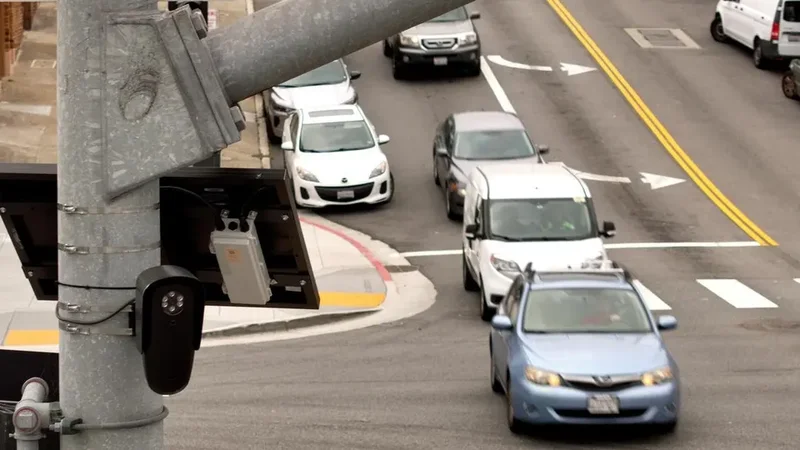
A Georgia researcher's public records request has revealed that the police department in the small Chicago suburb of Schaumburg is sharing its automated license plate reader data with more than 400 Illinois law enforcement and government agencies—a finding that comes as public debate over the mass surveillance of Flock and other plate-reader networks intensifies across the country.
Key Facts
Jason Hunyar, an open-records researcher whose efforts have been credited with helping to power the “Have I Been Flocked?” website, recently obtained a data-sharing report listing more than 400 organizations with access to Schaumburg’s Vigilant/Motorola LEARN network.
Those agencies—spanning municipal police departments, county sheriffs, university campus police, railroad police, park districts and state agencies—have access to data grabbed by the LEARN network cameras including vehicle plates, location and timestamps.
Schaumburg's data is also available to some non-traditional law enforcement recipients including the Illinois attorney general, Cook County state's attorney's office, Norfolk Southern Railroad, Harper Community College and several public and private universities.
Hunyar filed the request as part of a broader campaign through the "Have I Been Flocked?" site, which was created to document how widely law enforcement agencies share plate-reader access.
The website has escalated a public debate over the use of commercial Automated License Plate Readers (ALPRs) and the wide sharing of such data, which critics argue allow agencies to essentially create a map of a citizen's everyday movements without any individualized suspicion or warrant.
Key background
Vigilant/Motorola LEARN, the plate system used by Schaumburg, is a subscription-based commercial network that lets law enforcement agencies pool access to automated license plate reader data. Every camera in the network logs a vehicle’s plate, location and timestamp, and participating agencies can query each other's feeds. But this type of technology can capture more than just plates: University of Minnesota law professor William McGeveran told MPR News that Flock cameras, a rival platform widely associated with the practice, also record a vehicle's make, model, color, bumper stickers and physical damage. Hunyar said his personal concerns with the idea of vehicle tracking escalated after he learned a camera in his neighborhood had been hacked and broadcast live online. He then pulled records from nearby agencies and concluded the technology was being misused, and channeled that concern into "Have I Been Flocked?” The website allows users to enter a license plate number and search a database of publicly obtained Flock audit logs.
TANGENT
ALPR cameras systems, like those built by Flock Safety, are marketed for use by law enforcement agencies, neighborhoods and businesses. When small or mid-sized towns deploy the automated cameras, the sales pitch to the community is usually hyper-local and aimed at catching neighborhood car thieves or finding missing people. But when that data is shared with hundreds of outside agencies, like what’s happening in Schaumburg, it creates a seamless surveillance web. A single vehicle traveling across Illinois can now trigger alerts and leave a searchable digital footprint across an entire network of jurisdictions. Sharing the feed also erases any local control over how that sensitive information is queried or safeguarded, and anyone with access can use it however they please. Recent audits in states like Georgia have led to criminal charges against officers and deputies for allegedly using plate-reader networks to stalk ex-partners, track personal acquaintances or spy on neighbors.
CRUCIAL QUOTE
"With Flock, you're not only collecting data on where people are going and when, but all that data from at least many, many cameras around the country are going to this centralized company,” Jay Stanley, privacy and technology policy analyst for the American Civil Liberties Union, said. “That changes what it means to live a private life. Changes the relationship between the individual and their government."