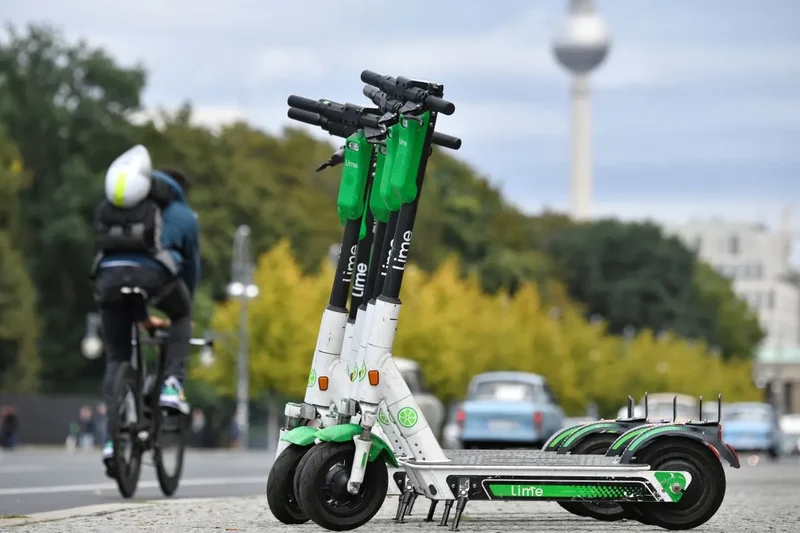
Electric scooters (monopattini) have become very common on Italian streets, but an increasing number of accidents has forced Italian authorities to introduce new rules to go alongside existing ones.
In 2025, there were 4,130 accidents involving electric scooters and 25 deaths, according to data collected by Istat, Italy’s national statistics institute.
Riders need to be aware of the rules governing their use, especially as new requirements have come into force in recent months.
Who can ride an electric scooter?
You must be at least 14 years old to ride an electric scooter in Italy, and you do not need a driving licence.
You cannot carry passengers, animals or objects, and you must wear a helmet and keep both hands on the handlebars. Towing another vehicle or being towed is also prohibited.
Where can you ride?
Electric scooters can only be used on urban roads where the speed limit is no more than 50 km/h.
The maximum speed is 20 km/h on roads and 6 km/h in pedestrian areas, unless riding is expressly prohibited in those areas.
Riders cannot use electric scooters on sidewalks, where they must be pushed by hand, or in the opposite direction of traffic.
You can park e-scooters in spaces for bikes and motorcycles, but it’s prohibited to leave them on sidewalks. In general, riders shouldn’t park in areas where they could obstruct traffic, pedestrian crossings or access to businesses.
What are the requirements to drive an e-scooter?
Helmets are compulsory for all riders, regardless of age. They must comply with the relevant UNI EN 1078 or UNI EN 1080 standards, according to the Automobile Club of Italy (ACI).
People who do not wear a helmet can face a fine of between €50 and €250.
E-scooters’ power cannot exceed 0.50 KW, and the vehicles must have front and rear lights and reflectors, a bell, indicators and brakes on both wheels. Riders must also wear a high-visibility reflective vest after dark.
READ ALSO: Which countries have driving licence exchange agreements with Italy?
Insurance is now mandatory as well, according to a new directive by the Italian business ministry.
Since July 16th, 2026, third-party liability insurance has become compulsory for electric scooters to ensure compensation for those involved in an accident caused by the e-scooter’s driver.
An identification plate also became mandatory in May 2026. According to ACI, riders can request a plate for their scooter through the Portale dell'Automobilista, using SPID or an electronic identity card, or through ACI offices and vehicle-registration agencies. The plate, which costs €8,66, must be displayed visibly on the front or back of the scooter.
The identification number is linked to the owner rather than the scooter, so it can be transferred to another scooter if the owner replaces it.
Riders who use a scooter without the required identification plate and insurance can face a fine of between €100 and €400.
Police checks following the new regulations have resulted in an increase in fines, so if you use an electric scooter in Italy, make sure you comply with the new requirements.
What about rental and sharing scooters?
While private owners will have to make sure they meet all the requirements themselves, tourists and residents who use e-scooters from sharing companies such as Lime, Bird, Dott, Bit Mobility or Cooltra, do not have to worry about the insurance and the identification plate, as these are the responsibility of the operator.
However, riders still have to comply with the other rules and carry their own helmet, as helmets are not generally provided by the rental companies.
If you use Lime e-scooters frequently in Rome, you should also be aware that the company’s e-scooters won’t be available until September 5th, as reported by Adnkronos. The company violated a contractual obligation requiring scooters to be available across different areas of the city, rather than being concentrated in the city centre and wealthier areas.
In 2024, the company was already ordered to remove its scooters for seven days for the same reason. The Municipality of Rome has now imposed a 30-day suspension after finding that the company had not complied with the conditions.