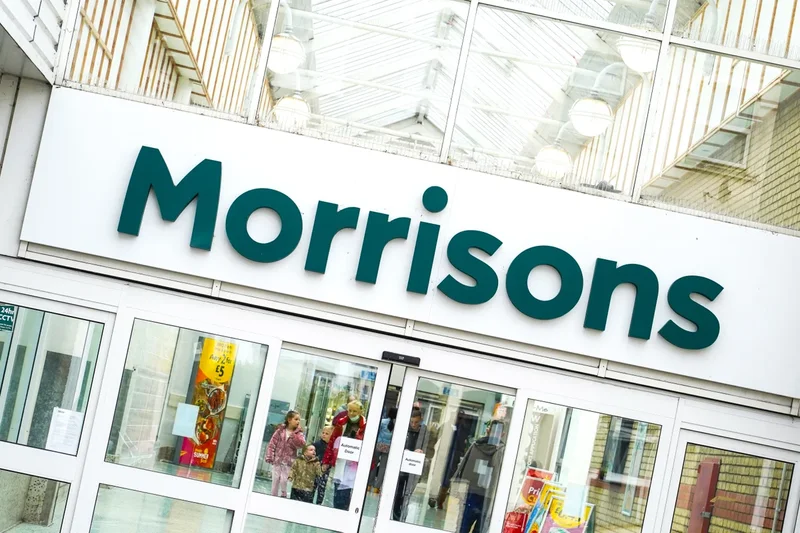
Supermarket group Morrisons cut close to 5,000 positions over the past year as the private equity-owned retailer sought to strengthen its overall financial position.
Filings lodged at Companies House reveal that total debt levels at the Bradford-headquartered business grew further, despite widespread efforts to reduce costs.
Average monthly staffing at the UK’s sixth-largest grocer declined from 101,144 people to 96,232 in the year leading up to last October, representing a drop of 4,912 workers.
The workforce reductions included more than 4,200 shop-floor positions, alongside further job losses across its food manufacturing and distribution operations as well.
A Morrisons spokesman said: “Colleague numbers in the year ending October 2025 primarily reflect the impact of the closure of the newspaper home delivery service in convenience, the restructuring of the retail people team and the downsizing of the Rathbones bakery business.
“There was no additional redundancy programme in stores, where numbers were only reduced by not replacing those who had chosen to leave.”
The retailer is in the process of a major turnaround programme under boss Rami Baitieh to reverse its fortunes after losing market share to rivals.
German discounters Aldi and Lidl have overtaken Morrisons in their share of the grocery market in recent years.
Revenues were higher over the year, up 2.8% at £15.7 billion, despite disruption from a cyber incident that caused an IT systems outage just before Christmas 2024, impacting product availability.
The group – owned by US private equity firm Clayton, Dubilier & Rice – also revealed that its reported net debt increased to £7.52 billion for the year, from £7.07 billion a year earlier.
It said the figure included lease liabilities and preference shares, with net debt of £3.2 billion excluding these.
Morrisons also fell to an £629 million annual pre-tax loss, before exceptional items.
The company stressed that underlying earnings before interest, tax, depreciation and amortisation remained at £835 million for the year despite cost increases linked to the previous autumn budget.
The spokesman added: “In our 2025 full year we grew like-for-like sales every quarter, maintained Ebitda and our market share, and demonstrated our resilience in the face of some tough external headwinds, from the cyber incident, rising inflation and government cost increases, which we worked hard to offset.”