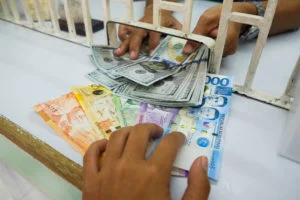
PH remittances growth skids to over 4-year low in June
MANILA, Philippines — A prolonged conflict in the Middle East and the resulting surge in prices across countries that host Filipino migrants slowed the growth of cash remittances to its weakest pace in more than four years in June, a trend that could persist in the coming months.
Money sent home by Filipinos abroad through banks rose 1.7 percent from a year earlier to $3.04 billion in June, according to data from the Bangko Sentral ng Pilipinas (BSP). It was the highest monthly inflow in the first half of the year, but the slowest rate of growth since February 2022, when remittances increased 1.3 percent.
READ: PH remittance growth stayed at 4-year low in May
Article continues after this advertisement
In the first six months of the year, Filipinos abroad wired $17.15 billion to their families in the Philippines, an increase of 2.4 percent from a year earlier. Even so, the pace remains below the central bank’s revised forecast of 2.7-percent growth for the full year.
The slowdown comes as higher prices in host countries, compounded by the prolonged Middle East conflict, squeeze the money available to Filipino migrants to send home.
“The slowdown may be attributed to a combination of factors, including lingering uncertainties arising from the Middle East conflict, which have weighed on labor deployment,” Ruben Carlo Asuncion, chief economist at UnionBank of the Philippines, said.
“Higher living costs in several host economies may have also limited the amount available for transfer, while base effects from relatively stronger inflows a year ago likely contributed to the softer year-on-year growth rate,” he added.
Remittances remain an important source of purchasing power in an economy where consumer spending has historically accounted for about 70 percent of economic activity. But as a share of gross domestic product, such inflows slipped to 7.1 percent at the end of the second quarter, from 7.4 percent in the previous three months.
Article continues after this advertisement
Still, Robert Dan Roces, group economist at SM Investments, said remittances continued to support household spending.
READ: OFWs want more say over how remittances are spent
Article continues after this advertisement
“While the 1.7 percent-growth is modest, these inflows provide OFW families with additional income for food, retail, housing and other essential spending,” Roces said. “This should help sustain domestic demand, although inflation will continue to weigh on purchasing power.”
The United States remained the largest reported source of remittances, followed by Singapore and Saudi Arabia. The figures, however, do not necessarily indicate where the money was earned, as many remitting and correspondent banks are based in the United States.
“Looking ahead, we expect remittance inflows to remain positive but growth may stay modest in the near term amid global economic uncertainties and geopolitical risks,” Asuncion said.
“However, the diversified geographic distribution of Filipino workers and sustained global demand for skilled labor should help keep remittance flows broadly stable through the rest of the year,” he added. INQ