Expensive Edsa potholes
Transportation Secretary Vince Dizon was recently mortified when he inspected the newly rehabilitated Epifanio de los Santos (Edsa) and found portions of the highway riddled with potholes.
It had only been over three months since the first phase of the much-touted rehabilitation of Metro Manila’s main thoroughfare was completed—at a cost of P1.18 billion. The rehabilitated section from Roxas Boulevard in Pasay City to Orense in Makati City was completed in April, two months ahead of schedule.
But alas, the expensive rehabilitation fared poorly after unprecedented rainfall from tropical cyclones and the enhanced southwest monsoon inundated Metro Manila and parts of Luzon for two weeks, causing flooding in many areas and disrupting work and classes.
Article continues after this advertisement
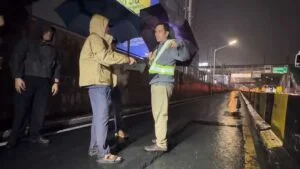
When Dizon inspected the aftermath on Aug. 10, he found the southbound portion of the Edsa busway in Buendia Avenue in Makati City riddled with potholes.
“Pa naman oh … Ano ba nangyari? Kabago-bago, bakit nagkaganoon? … Pa talaga. Dapat na-anticipate natin ito eh … Barado eh, oh?,” Dizon said, his expletive-laden reaction shown in a video posted on social media by the Department of Public Works and Highways (DPWH).
Hobbled by problems
Dizon’s anger was directed at the contractor of the Edsa rehabilitation project, whom he blamed for not putting up a drainage system in the lowest elevation where water accumulated during the relentless rains. “Ideally, you should have a drainage here in the middle so that the water drains out here. But there’s none! And because of the busway barriers, the water couldn’t get out.” Dizon said.
The DPWH chief ordered that the potholes be fixed by the contractor at no cost to the government.
Article continues after this advertisement
His outrage is at best performative, and he will have to include himself in the blame game. After all, the multibillion-peso Edsa rehabilitation was a project under his supervision since he was secretary of the Department of Transportation and now that he is chief of the DPWH.
From the start, the ambitious project was hobbled by problems. Initially announced in early 2025, the plan was to transform the notoriously congested Edsa into a “modern commuter- and pedestrian-friendly” thoroughfare. The rehabilitation of the entire 23.8-kilometer highway, from Pasay City in the south to Caloocan City in the northern part of Metro Manila, was originally pegged by the DPWH at P17 billion, to be completed in over two years.
‘Carmaggedon’
This immediately raised nightmarish scenarios of “carmaggedon.” Even without repairs, Edsa’s traffic congestion is a daily burden for commuters. The Japan International Cooperation Agency has estimated daily losses of P3.5 billion to the economy because of traffic problems in Metro Manila, while a global traffic index report found the Philippines to be the most traffic-congested country in Asia in 2025.
Article continues after this advertisement
President Marcos halted the June 2025 schedule of the Edsa rehabilitation, citing mounting concerns of Metro Manila residents and workers that they would suffer longer hours of commute. He said two years of rehabilitation work would entail a very big sacrifice for the public, thus he ordered Dizon and then DPWH Secretary Manuel Bonoan to suspend the project and find a “better way” to do it.
Following the President’s directive to revamp the plan and use newer technology, the rehabilitation was pared down to P5.18 billion and the duration shortened to six months. The DPWH awarded the contract for Phase 1 to Readycon Trading and Construction Corp. for P1.18 billion. Since the work was completed two months ahead of schedule, the DPWH awarded Phase 2 to Readycon in joint venture with Dumduma Construction and Trading Corp. for P4 billion. The rehabilitation, covering the stretch from Orense Street to Monumento, started in July.
Sloppy work
Did the DPWH contractors find a “better way” and use new technology? Did Dizon and his engineers at DPWH scrutinize the design and implementation of the rehabilitation? The Buendia potholes say otherwise. As Dizon belatedly found the need to install drainage along the highway, why was it not incorporated early enough into the design and construction?
Such sloppy work not only costs money, but more inconvenience for the public as repairs might now be necessary to be done not only along the water-damaged portion. Were similar adjustments made in the ongoing rehabilitation of the longer portion of Edsa?
Sen. Panfilo Lacson has filed a resolution seeking a Senate investigation on the Edsa rehabilitation project, noting that the potholes mean the rehabilitated portion will require another round of maintenance.
“Rapid deterioration of recently rehabilitated roads, most notably Edsa, just months after completion exposes deep-seated flaws in the planning, design, construction, and management of high-cost public infrastructure projects,” Lacson’s resolution said.
Indeed, the DPWH and the contractors should be held accountable for the haphazard work before it eats up the entire P5.18 billion. Dizon has no one else to blame for the embarrassing, costly project.