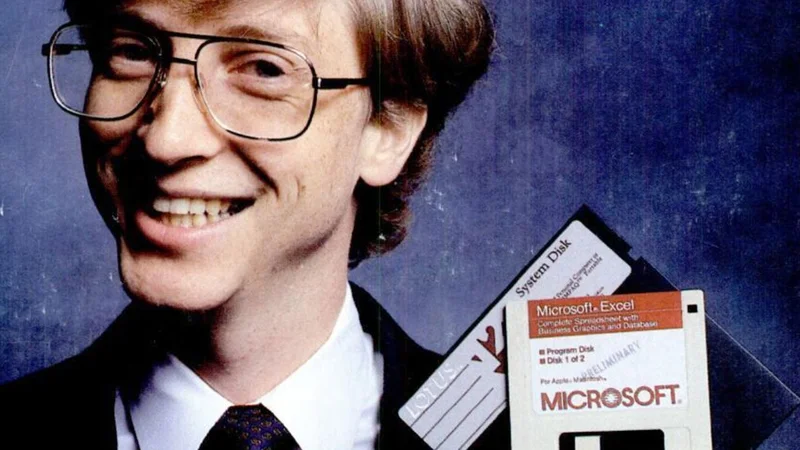
The ideas that we take for granted in today's computing landscape were once all original thoughts that somebody had to devise and implement out of nothing. Both Apple and Microsoft were pioneering companies in this space, but not all great ideas that stuck necessarily came from either company.
Best of frenemies
When word got out that Bill Gates had announced Windows for the first time at the Comdex trade show, Steve Jobs was furious and asked for a face-to-face meeting.
This article is part of TechRadar Pro's QOTD project to provide an insight into the minds of the brightest and most recognized figures in the technology industry today and in years gone by. Read the full series here.
According to an account from Apple's designer of Macintosh system software, Andy Hertzfeld, Jobs "went ballistic" upon learning that Microsoft's new mouse-based system had made its debut.
The two companies had agreed a staggered release – with Windows only allowed to launch in 1983, a year after Mac. Because Mac had been delayed, and that possibility was never defined in their 1981 agreement, Microsoft was still within its rights to launch Windows.
Jobs felt this was a stolen idea anyway and that it represented a betrayal of a fragile partnership. In this meeting, Hertzfeld wrote, Gates simply pointed out the fundamental idea wasn't either of theirs – and that the terms of a 1981 agreement still held up.
North star
Gates' witty quote underlines the frosty relationship that he shared with Jobs throughout their careers, until they buried the hatchet a couple of decades later.
This conflict originated when Jobs recruited Microsoft to be the first software developer for the Macintosh. Both companies, at this point, had exposure to the ideas being developed at Xerox's Palo Alto Research Center (PARC) – especially the mouse-based system the company's engineers had refined. For instance, Xerox Star was a highly influential predecessor operating system.
Microsoft didn't shift a working version of Windows until almost two years later, and, according to Hertzfeld, it was just as crude as Jobs had predicted. When Microsoft launched a version of Windows in 1988 that Jobs deemed good enough, he sued Microsoft for copyright infringement but lost on a technicality.
Keumars Afifi-Sabet is a freelance contributor for Tech Radar and the Technology Editor for Live Science. He has written for a variety of publications including ITPro, The Week Digital and ComputerActive. He has worked as a technology journalist for more than five years, having previously held the role of features editor with ITPro. In his previous role, he oversaw the commissioning and publishing of long form in areas including AI, cyber security, cloud computing and digital transformation.