Excavations at the ancient city of Aspendos in Turkey have unravelled a trove of 2,400-year-old silver coins bearing engravings of wrestlers from the era, shedding light on the life of an athlete from around the fifth century BC.
Findings from the newly unearthed burial site also shed light on the region’s classical history, the Turkish ministry of culture and tourism said in a statement.
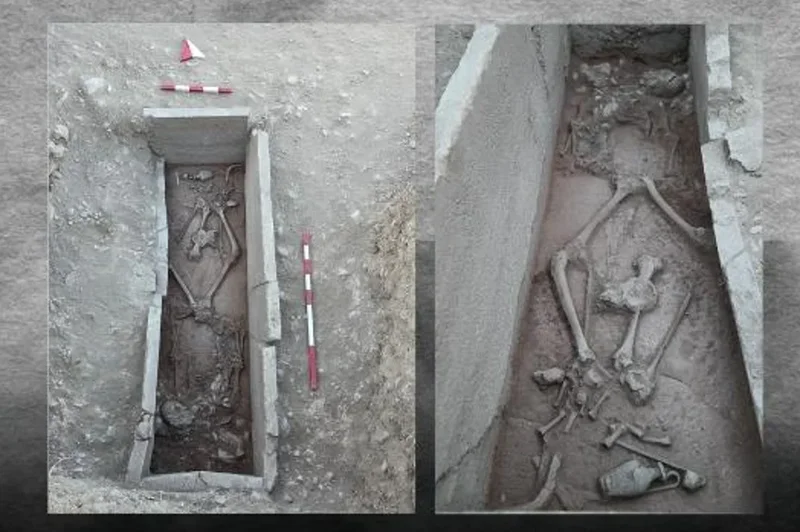
“In the Eastern Necropolis, whose existence was first detected in the city, we unearthed a coffin-type tomb dated between the last quarter of the 5th century BC and the 4th century BC,” said Mehmet Nuri Ersoy, the Turkish minister of culture and tourism.
“Aspendos coins and other finds found in the grave, with wrestler descriptions on them, indicate that the person buried here may be a sports-related, or even a wrestler from Aspendos,” Mr Ersoy said.
At the necropolis, dated between the last quarter of the 5th century BC and the 4th century BC, archaeologists found a chest-type tomb that seemed to have been created by putting stone plates together.
The find is considered one of the most important from the Classical Period of Aspendos, which has not been sufficiently represented by archaeological data until today.
At one of the graves here, a single individual was found buried.
Based on the coins and the motifs present on them, researchers suspect the person buried here may be a sports-related individual.
The owner of the grave may be a wrestler from Aspendos, they suspect.
By the time the individual buried here had died, the city had already become one of the most thriving ones of the ancient world, researchers say.
Some of its traditions were similar to those of ancient Greece, but parts of it were previously under Persian control.
The findings provide important data on the life of Aspendos in the Classical Period, its burial traditions and social structure, researchers say.
Previous studies of silver coins from the ancient city region had discovered engravings depicting over a dozen different wrestling positions, including ones where athletes are gripping arms, necks, leg and waist.
It is unclear whether the coins were meant as tokens or served as a mode of payment for the general populace.
The remains within the tombs where the coins were found also bore signs of repeated injury, including a healed broken nose, or damaged joints, indicating they were athletes.
Scientists hope further excavations could contributes significantly to understanding the history of Aspendos and its buried athletes.