Korea’s Rural Development Administration (RDA) has achieved landmark successes in its overseas agricultural official development assistance projects, turning decades-long challenges into sustainable food security solutions.
The most notable achievements include rice cultivation projects in Mongolia and several African countries, and Uzbekistan, where Korean agricultural technology is paving the way for machinery and livestock exports.
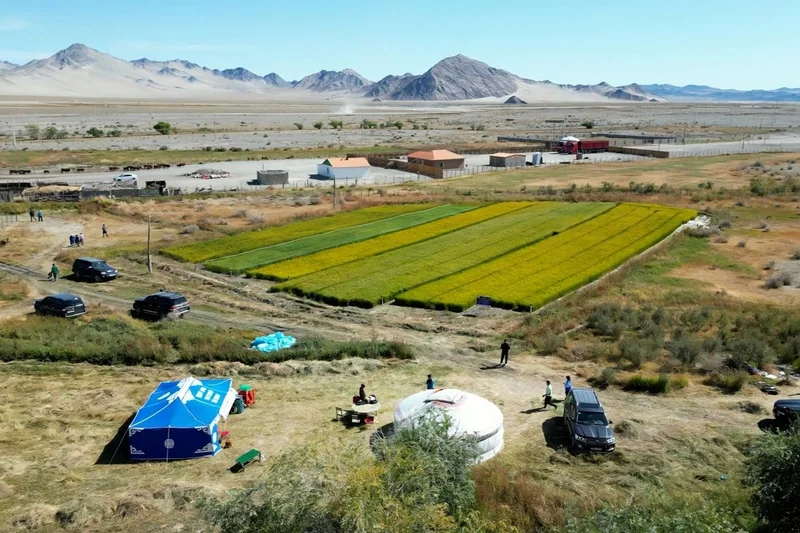
Mongolia, which has been entirely reliant on imports to supply the 50,000 tons consumed annually, saw its first successful domestic rice harvest in 2025 thanks to the RDA’s Korea Program on International Agriculture. Using an early-maturing Korean rice called "jinbuolbyeo" with a 40-day seedling technique and early September harvest schedule adapted to Mongolia’s short growing season, test plots in Bulgan District, Khovd Province, yielded about 310 kilograms per 1,000 square meters .
The breakthrough not only demonstrated that rice can be grown in Mongolia’s harsh climate but also opened opportunities for Korean irrigation systems, milling equipment, fertilizers and seeds to enter the local market.
Seven countries in Africa, including Ghana, Senegal, Kenya and Uganda, are participating in the K-Rice Belt project to increase rice output. High-yield seed production rose from 2,321 tons in 2023 to 6,365 tons in 2025, while average productivity jumped from 2.2 to 4.6 tons per hectare, more than doubling local yields.
By 2027, the RDA aims to supply over 10,000 tons of seed rice annually, producing 2.16 million tons of rice to feed 30 million people, with a 2030 target of feeding 50 million people. The project is building a full agricultural value chain from seed production to processing and distribution.
In Uzbekistan, the RDA’s technical assistance has evolved into several different export opportunities. Korean dairy cattle embryo transfer technology achieved a 50 percent pregnancy success rate, 20 percent higher than previously imported embryos.
The breakthrough prompted the signing of a new bilateral memorandum of understanding on livestock artificial insemination expertise. The deal also included simplifying veterinary drug registration procedures, which is expected to accelerate Korean companies’ entry to the Uzbek market.
Korea’s mechanized rice transplanting techniques reduced labor required by 70 percent while boosting productivity by 52 percent. Plans were also established to introduce a 200-hectare seed production complex by 2027.
Building on these successes, the RDA, under the Ministry of Agriculture, Food and Rural Affairs, is moving toward an integrated, multi-ministry Innovative Rural Community Development model in partnership with the Korea International Cooperation Agency and the Ministry of the Interior and Safety.
The approach combines climate-smart agricultural technologies with storage, processing and distribution infrastructure and support for farmer organizations, aiming to create self-sustaining rural economies rather than providing one-off technical assistance.
“Korean agricultural technology is now evolving beyond individual technological assistance into a new model of international cooperation that leads the sustainable development of rural communities around the world,” RDA Administrator Lee Seung-don said.
“By globalizing K-Agriculture, we will continue to contribute to global food security while creating new growth engines for Korea’s agricultural sector.”