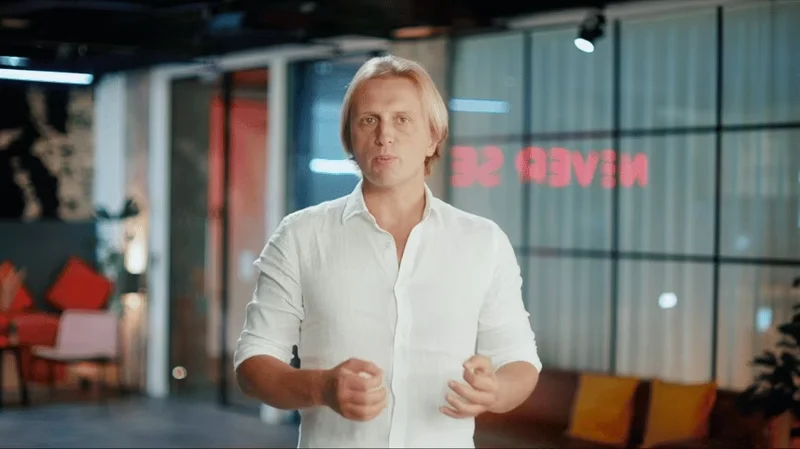
Nik Storonsky, the man behind Revolut, has closed a $500m second fund for QuantumLight, the algorithmic venture-capital firm he co-founded to let software, rather than partners, decide where the money goes.
The fund is double the size of QuantumLight’s $250m debut vehicle from last year, a swift escalation for an outfit still trying to prove that data can out-pick the humans.
Nik Storonsky, whose personal fortune has climbed with Revolut and who is reportedly in line for a vast share award, is the firm’s most conspicuous backer.
QuantumLight’s pitch is a direct challenge to the clubby traditions of venture capital. Instead of a bench of star partners trading on instinct and network, the firm runs a systematic, data-driven model that screens companies at scale and generates investment decisions quantitatively, something closer to a quant hedge fund than a Sand Hill Road partnership.
The approach is of a piece with Nik Storonsky’s reputation as fintech’s most relentless optimiser. He built Revolut into Europe’s most valuable private tech company on a culture of aggressive targets and data over sentiment, and last year QuantumLight published a hiring playbook distilling the management methods behind that rise, a set of blunt tips that read like an operating manual for high-growth companies.
QuantumLight applies the same conviction, that most decisions are better made by system than by instinct, to the business of picking winners.
Doubling the fund in barely a year is a statement of confidence, though whose confidence is the interesting question.
QuantumLight has not detailed its outside backers, and Storonsky’s own wealth gives him ample means to seed his own experiments.
An oversubscribed close suggests limited partners are buying the thesis too, wagering that algorithmic sourcing can surface growth-stage companies that traditional funds overlook, and that the model deserves twice the firepower after a single year.
QuantumLight’s first fund is only a year old, far too young to have produced the exits that would show whether the machine actually beats the market, and venture returns take the better part of a decade to judge.
Plenty of firms have promised to “quant-ify” venture capital before, and the discipline’s best returns still tend to come from a handful of outlier bets that are notoriously hard to model, precisely because they look unreasonable at the moment they are made.
Still, the timing is apt. As AI reshapes every knowledge industry, the people who allocate capital are hardly exempt, and a wave of funds now claim to use machine learning to source deals, score founders and time markets.
QuantumLight is among the most committed to the idea, and the most credibly funded, which makes its record a useful test case for whether software can genuinely industrialise a trade that has always prized taste and relationships over spreadsheets.
There is also the matter of a chief executive’s attention. Storonsky is steering Revolut through a pivotal stretch, having lately won a French banking licence and pushed into business banking, with an IPO reportedly a couple of years away and likely to list in the US, all while running a second act in venture capital.
Founders are rarely one-company people, but the split focus is the kind of thing Revolut’s eventual public-market investors may come to weigh.
For now, $500m is a serious sum with which to test a serious idea: that the qualities venture capitalists have always sold, judgment, instinct, a good eye, can be replaced, or at least bettered, by code.
If Nik Storonsky is right, QuantumLight will look prescient. If he is wrong, it will be an expensive reminder that some bets resist being reduced to a model. Either way, the experiment has just doubled in size.
Get the TNW newsletter
Get the most important tech news in your inbox each week.