The southern Spanish province of Granada, including the city of Granada, registered a new earthquake of magnitude 4.8 this Tuesday, at 10.37 am.
Its epicentre was northwest of the municipality Gójar, a short drive south from Granada city centre.
The Andalusian regional government has confirmed that three people sustained minor injuries as a result of the quake.
The seismic movement, which occurred at a depth of 5 kilometres, was one of the strongest tremors recorded so far within the series of terremotos (earthquakes in Spanish) that has affected the province since August 14th.
The main quake up to now was the 4.8 magnitude one recorded on Saturday August 15th, just as powerful as Tuesday 18th's.
There were similar scenes on Tuesday, with damage to building façades, vehicles and public infrastructure.
🔴 Coches destrozados, toldos caídos y daños en fachadas y mobiliario urbano: un nuevo terremoto de magnitud de 4,7 sacude Granada https://t.co/H005fqBXhz pic.twitter.com/Sj89Q4HQOG
— Europa Press (@europapress) August 18, 2026
According to Spain’s National Geographic Institute (IGN), nearly a hundred aftershocks had been recorded since the initial earthquake on August 14th, although the largest until now had reached a magnitude of 3.3.
This new tremor was felt in parts of other Andalusian provinces such as Almería, Málaga and Córdoba.
Tuesday's earthquake has had several aftershocks already recorded by IGN, the strongest occurring at 11:35am, according to provisional calculations, with a magnitude of 4.2 and its epicentre in Alhendín.
Toda Granada en las calles. Imágenes de los daños causados por el último #terremoto en #Granada Calle Poeta César Vallejo. Cedo su uso a medios bajo mención. pic.twitter.com/rMH7hy2A00
— Luz Arcos✨ (@luzarcsan) August 18, 2026
Previously, at 10:53am, another aftershock of magnitude 4 occurred with its epicenter in Churriana de la Vega, which was particularly felt by the population throughout the Granada metropolitan area.
Other tremors were recorded in Alhendín, Gójar, and Las Gabias, in these cases with magnitudes of 2.7, 2.9, and 2.6 respectively .
Andalusia’s First Vice President Antonio Sanz confirmed that three injuries are minor, but one of people affected, a young girl, has been taken to the hospital.
The Andalusian Regional Government already activated its Emergency Plan for Seismic Risk in Granada, currently at operational level 1, following the 4.8 magnitude earthquake on August 15th, which was centered in the town of Alhendín.
Sanz indicated that the advisory committee for Granada’s seismic risk emergency plan will be convened "imminently."
Andalusian regional president Juanma Moreno has asked the public for "utmost caution."
"Experts indicate that seismic activity and aftershocks may continue in the area, and it is important to know how to act in these situations. Let's follow the advice and remain calm, please," he stated on his official social media account.
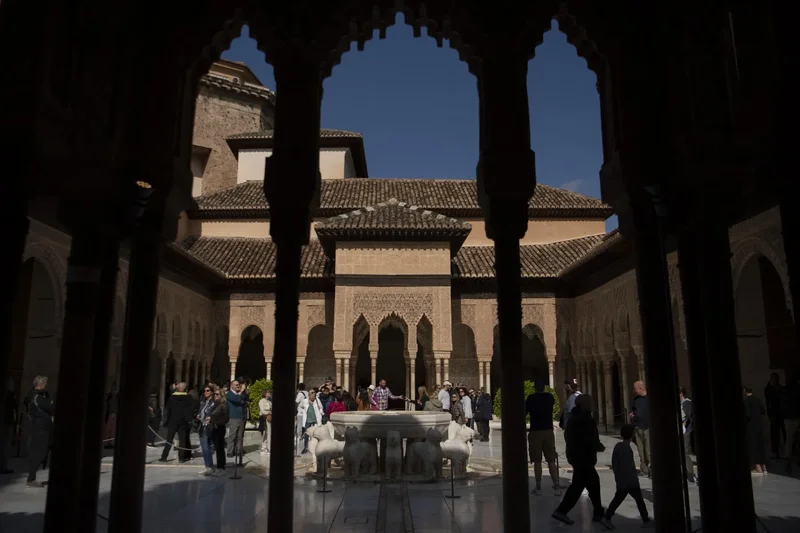
Granada’s iconic Alhambra palace and fortress, a UNESCO World Heritage Site, has been evacuated as a precaution and visits will be suspended for the rest of Tuesday.
Visits to the Nasrid Palaces have also been suspended, although the Partal and Generalife gardens are currently operating normally while specialists assess the impact of the earthquakes.