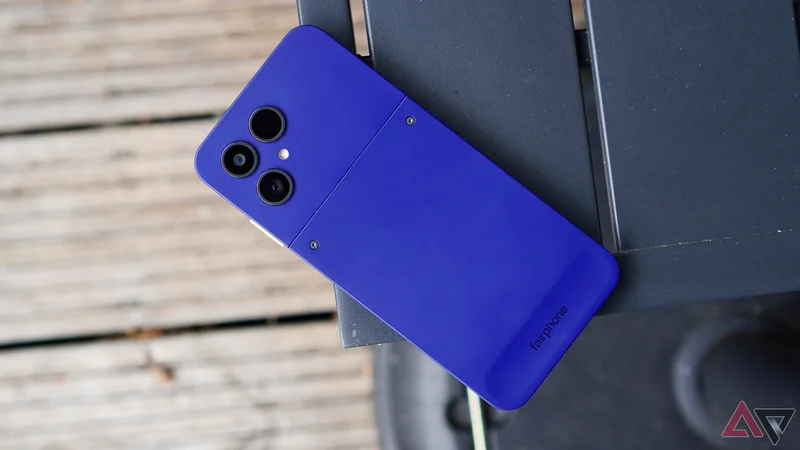
The Fairphone (Gen 6+) is coming to the US, and not with Murena’s e/OS like the Fairphone (Gen 6), but with Google Android 16 installed.
You’ll be able to buy it from Amazon or from Fairphone itself, and it’s all set to work with AT&T and T-Mobile, giving you easy access to a phone promised to be supported until 2033.
I’ve got the Fairphone (Gen 6+) in for review, and here’s what you need to know about the sustainably produced, upgraded, and still modular and easily repairable smartphone. It may change the way you think about a new phone in the future.
What’s new in the Fairphone (Gen 6+)
Upgraded Snapdragon processor
As the name implies, the Fairphone (Gen 6+) is an upgraded version of the Fairphone (Gen 6). The design is the same, as is the excellent software support period of seven years, taking it up to 2033. It matches Google and Samsung’s software update commitments.
Fairphone has made some crucial internal changes, which is where the (Gen 6+) name comes in, to make sure the phone can compete with other devices for the same price.
A Qualcomm Snapdragon 7S Gen 4 processor is joined by 12GB of LPDDR5 RAM to give the phone a performance boost. This brings it inline with the Nothing Phone 4a, and a step up from the Motorola Edge 70 Fusion’s 8GB of RAM.
Otherwise, the specification is the same as the Fairphone (Gen 6). It has a 6.31-inch, 120Hz pOLED screen with a 2484 x 1116 pixel resolution, a 4,415mAh battery with 30W charging, a 50-megapixel autofocus main camera, a 13MP wide-angle camera, plus a 32MP selfie camera.
A few other notable specs include 256GB of internal storage space plus an SD card slot, NFC, 5G connectivity with the correct bands for use in the US, and dual-SIM support too.
Modular design and repairability
All done at home, no help required
If you’re underwhelmed by the Fairphone (Gen 6+)’s specs, it’s understandable, but Fairphone’s devices are rarely all about specs. Instead, it’s the sustainable way they’re built, and the modular, highly repairable design.
There are 12 components that can be replaced at home, using only a simple tool, including the battery, display, all three cameras, both rear panels, the speaker, and the USB-C port.
Long software update commitments are only part of the reason we’re encouraged to keep a phone long-term. The Fairphone (Gen 6+)’s repairability takes away concerns over battery longevity or accidents like breaking the screen, as you can replace these components at home, yourself, multiple times over if necessary.
It’s not especially cost prohibitive either. A battery for the Fairphone (Gen 6+) is $40 and a new display is $90.
There’s an appropriate level of seriousness to the Fairphone (Gen 6+)’s modularity, but there’s some fun to be had with some of the accessories.
The plain rear panel can be removed and replaced with a cardholder or a finger loop, or kept in place with an optional screw-down lanyard instead.
What’s the Fairphone (Gen 6+) like?
Important software change makes it desirable
I’ve got the new Cobalt Blue version of the Fairphone (Gen 6+) to review. The color was chosen to commemorate Fairphone co-founding the Fair Cobalt Alliance and being the first electronics manufacturer to introduce a Fair Cobalt Credits program, where it pays a fair premium for cobalt.
It’s a lovely deep, traditional royal blue shade, and looks great. It’s a refreshing change from the muted shades we often see from brands like Samsung. The phone is light at 191 grams, but fairly thick at 9.6mm. The fingerprint sensor is flush with the side of the phone and can be a little hard to quickly locate.
The use of Corning Gorilla Glass 7i glass over the screen is unfortunate, as it gets covered in fingerprints and smudges almost immediately. The screen is also surrounded by a bezel which is larger than some may like.
Android 16 is entirely free from bloatware, outside the Fairphone app and an incoming new Gallery app.
Introducing the Fairphone (Gen 6+) in the US with Android and not Murena’s e/OS software makes it considerably more desirable. Murena’s software is great for anyone wanting to avoid Google’s software, but requires considerable patience and determination to get working for first-time switchers.
How much does the Fairphone (Gen 6+) cost?
What about the competition?
The Fairphone (Gen 6+)’s Android software and US carrier compatibility is a big step forward for the brand. Interest in repairable devices and sustainability is high, and the phone’s updated specs should all help it gain attention in those circles.
It costs $650 and comes in the Cobalt color seen in our photos, plus black and green too.
At this price, it competes with the Google Pixel 10a, the Samsung Galaxy S25 FE, Honor 600, Nothing Phone 3, and the Samsung Galaxy A57. None share Fairphone's simple repairability, and software update commitments vary. You can read more about Fairphone’s sustainability efforts, which further separate it from the competition, on the company’s website.