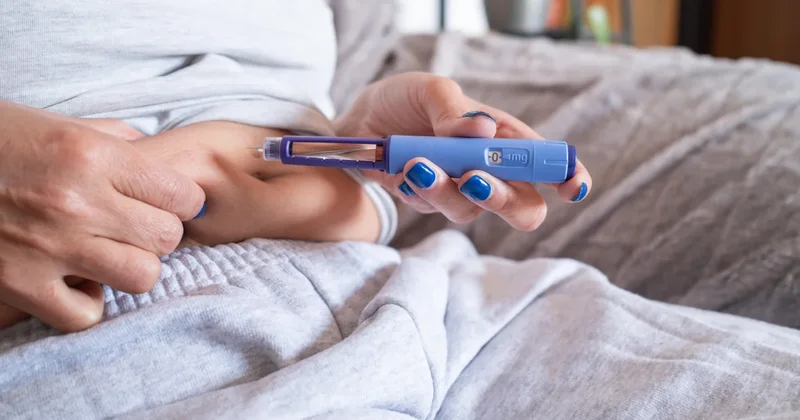
A Food and Drug Administration advisory panel will spend the next two days discussing whether compounding pharmacies can fill prescriptions for some unapproved peptides. The meeting comes amid a surge of interest in the .
Peptides are short strings of amino acids, the building blocks of proteins, linked by chemical bonds. The human body naturally produces some peptides, and there are more than 80 peptides approved for use by the FDA. Those approved peptides can be found in insulin, skincare products and GLP-1 medications.
Recently, there has been a surge in demand for unapproved peptides, which are typically sold as being for "research use only" and do not have scientific evidence like clinical data or human trials to back up their claims. Some unapproved peptides advertised by influencers online claim to be able to slow aging or increase muscle growth. Health and Human Services Secretary Robert F. Kennedy Jr. said that he is a "big fan" of the unapproved therapies and that he has used them to help with injuries.
The panel will review seven peptides and decide if they should be added to a list of substances that can be safely produced by compounding pharmacies, which mix medications that aren't available from standard drugmakers. Patients will need a doctor's prescription and need to take the therapy for a specific medical condition. The decision will not constitute FDA approval.
The peptides under discussion include some that are popular online, including BPC-157, which is marketed as being able to heal injuries and reduce inflammation. NYU Langone's Dr. Rachel Pessah-Pollack emphasized that BPC-157 has only been tested in about 30 humans, as compared to the hundreds of thousands of patients GLP-1s were tested on.
Dr. Jessica Duncan, the chief medical officer for IVIM Health, a for-profit company that prescribes FDA-approved peptides, said that she believes because there is demand for the unapproved therapies, the FDA should work to ensure they can be provided by doctors.
"People want them. They have proven to us that they are going to seek them out," Duncan, who is scheduled to testify before the panel, told CBS News. "What I'm asking and advocating for is that the conversation with them, the education that's provided, is in the exam room."
Many peptides can be purchased online, in a space known as the "gray market," which practitioners have called risky because of the potential for contamination or impurities.
"At this point, we all need to be wary about putting an injection in your body without actually knowing the product," said Pessah-Pollack. "I mean, they could have arsenic in it, they could have lead. So we all need to pause. We all need to speak to our doctors."
During the Biden administration, the FDA added nearly 20 peptides to the federal list of substances that should not be produced by compounding pharmacies. The FDA panel said at the time that the peptides did not meet the criteria for substances that can be safely compounded. FDA regulators said at the time that the substances "present significant safety risks" because of the lack of testing.
Many of the FDA advisers and internal staff present for that decision no longer work for the agency. Former FDA official Dr. Peter Lurie, who now leads the Center for Science in the Public Interest, told CBS News in April that he believed Kennedy's statements made it unlikely that unapproved peptides would receive real scrutiny at the hearing.
"Everybody knows the outcome that the secretary wants," Lurie said. "I don't believe for one moment that what's going on here is an honest investigation of whether these products should be compounded."