Sign in. It’s quick, free and it’s up to you.
An account is an optional way to support the work we do. Find out more.
FACEBOOK POSTS PAYING tribute to the teenagers killed on the M9 on Sunday are being pushed into the feeds of ordinary users – and attracting waves of angry comments.
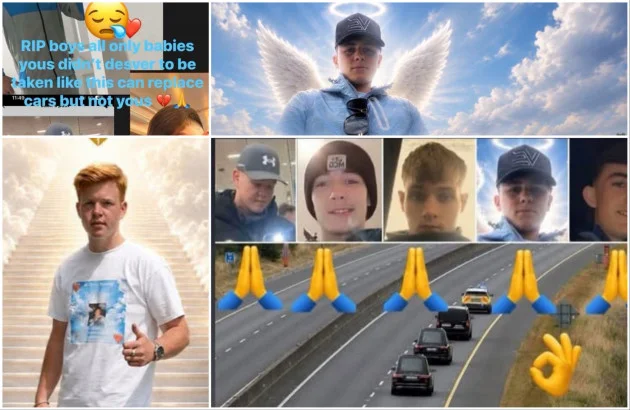
The Journal has seen around a dozen posts on the Meta-owned platform by individuals paying tribute to the five teenage boys who died.
The public posts have increasingly appeared in the feeds of Facebook users who don’t follow those accounts, which is causing them to attract a slew of angry comments and emoji reactions.
The posts seen by The Journal have amassed more than 2,000 comments collectively, with the backlash against the teenagers leading to even more engagement with them.
The commenters are generally critical of the teenagers, with many expressing sympathy for the four individuals in a second vehicle who were injured in the collision.
The teens died when the BMW they were travelling in drove into oncoming traffic on the motorway near Athy, causing a head-on collision, as they sought to evade gardaí.
Four people in another vehicle, including a mother and her seven-year-old son, were seriously injured.
The five boys have been named as Jack Kennedy, Kamil Pustkowski, Joe Carthy, Alex McCarthy and Jeremy O’Brien.
In the wake of the crash, a number of posts surfaced on Facebook paying tribute to the boys, often in the form of AI-generated images that showed them next to the gates of heaven.
The posts, some of which were apparently from relatives of the teenagers, contained captions including “rest in heavenly peace boys”, “hope you get the best bed up there” and “can replace cars but not yous”.
None of these captions reference the circumstances in which the boys died, or any of the four other people travelling in the second car who were hospitalised.
The individuals who posted the tributes on Facebook may reasonably have expected them to be seen mainly by friends, relatives or others connected to those involved.
However, Facebook’s recommendation systems have placed some of the posts in front of other people who do not follow the accounts that originally shared them.
Facebook’s algorithm uses what Meta calls “signals” such as reactions, comments and shares to predict which posts people are likely to engage with, pushing them higher into people’s news feeds.
This means heavily commented-on public posts can be recommended into people’s feeds beyond the account’s existing followers.
In practice, angry or critical engagement can inadvertently amplify certain posts, because every reaction or argument is another signal that a post is generating interest and makes Meta think it’s worth showing to more people.
Engaging with the tribute posts as a form of anger may therefore be counterproductive, because additional comments and reactions provide Facebook’s algorithm with signals that users are interested in it.
That can increase the likelihood of similar posts being recommended both to the person engaging and to other users, because the algorithm does not distinguish between positive and negative reactions.
Both the Wall Street Journal and Washington Post have previously reported on internal Facebook documents that showed that earlier versions of the platform’s algorithm rewarded content that provoked strong reactions and arguments, including outrage.
A spokesperson for Meta was contacted for comment.
To embed this post, copy the code below on your site