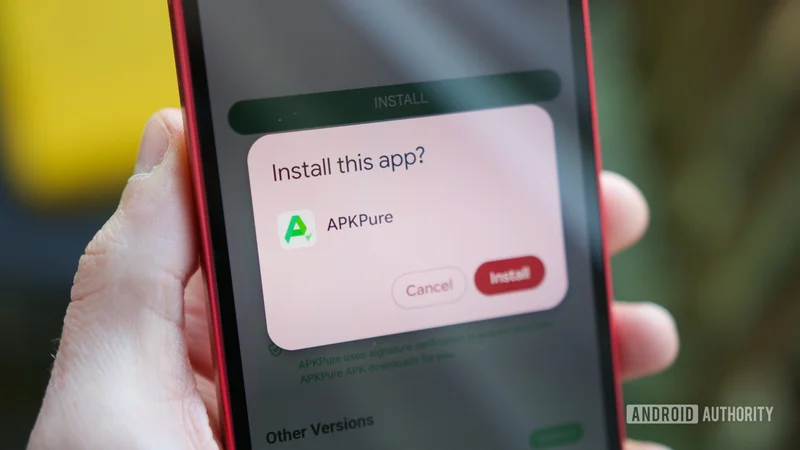
Google begins rolling out Android’s controversial new sideloading flow
Aug 18, 2026 — 4:26 PM ET
- Google has started rolling out Android’s advanced flow for installing apps from unverified developers.
- The sideloading process includes a restart and a 24-hour wait, while ADB remains exempt from the verification requirement.
- The rollout comes ahead of developer verification enforcement, which starts September 30 in four countries.
Google’s controversial new rules for installing apps from unverified developers are getting very real fast. We first learned in March that Android would introduce a new process for users who still want to sideload those apps, complete with a 24-hour waiting period. Google has now started rolling out that “advanced flow” ahead of the first checkpoint for developer verification.
Do you think Google's new sideloading flow will have a significant impact on scams?
The news comes from Google’s Android Community Engagement Manager Mishaal Rahman (formerly of this parish), who announced the rollout in a post on the r/Android subreddit. Google is calling this the first version of the advanced flow and says it’s rolling out gradually, so you may not see the new setting immediately. The post also fills in several important details about how the system works in practice.
As a refresher, when Google announced the new sideloading rules in March, we learned that the advanced flow is the route you’ll need to take if you want to install an app from a developer who hasn’t registered with Google. The process is deliberately cumbersome, as follows:
- Open Developer Options and select Apps from unverified developers.
- Turn on Allow apps from unverified developers.
- Authenticate using your screen lock.
- Confirm that nobody is pressuring you to change the setting.
- Restart your phone and wait 24 hours.
- Return to the setting and choose whether to allow apps from unverified developers for seven days or indefinitely.
You’ll still see a warning when you then try to install one of these apps, but you’ll be able to select Install anyway. As you’ll have realized, the friction is a feature, not a bug. For example, the restart and 24-hour delay are intended to disrupt scams in which victims are coached through installing malicious apps.
Today’s post also clears up a few practical questions. You won’t need to leave Developer Options enabled after turning on the advanced flow, and if you temporarily disable the flow itself, you’ll get a 10-minute grace period to turn it back on without triggering another 24-hour wait before sideloading. We also get confirmation that the flow also applies to updates, not just fresh installs. So if you switch it off, normal updates to apps from unregistered developers will fail until you enable it again. ADB remains exempt, so users comfortable with that route can still install or update those apps without going through the advanced flow.
The rollout involves a new Android Developer Verifier system service, which Google says you can also install manually from Google Play and which may make the advanced flow appear sooner.
Enforcement of developer verification starts September 30 in Brazil, Indonesia, Singapore, and Thailand. It will initially cover apps distributed through Google Play, HONOR App Market, OPPO App Market, Galaxy Store, Palm Store, V-Appstore, and GetApps, before expanding more broadly to all regions and app installations in 2027.
The sideloading changes haven’t exactly been embraced by everyone. When we polled our readership after the March announcement, 79% of more than 7,300 respondents either felt the new rules hurt Android’s openness or understood the reasoning but called the approach overkill. The reaction to Google’s Reddit post is similarly wary, with commenters questioning the extra friction and why updates to already-installed unregistered apps should also be blocked.
Rahman has been quick to address these concerns in the replies, pointing out that an app installed before verification takes effect could later receive a malicious update. He also reiterated that it doesn’t matter whether an APK comes from F-Droid, another app store, or elsewhere — only whether the developer behind it is registered.