- See more Daily Mail on Google - save us as a Preferred Source
The Great ADHD Myth? (C4)
Four stars out of five
Are you easily distracted? Do you fidget? Are you talkative, and apt to interrupt others or blurt out answers before the question is finished? Do you lose your keys and feel frustrated in queues?
Congratulations! You have ADHD — or at least, you've got it if you want it. All those traits, unbelievably, are officially symptoms of attention deficit hyperactivity disorder, according to the bible of psychiatric medicine, the fifth edition of the Diagnostic and Statistical Manual of Mental Disorders.
What was a largely unknown condition until recent decades has become an epidemic, with an estimated 2.5 million adults now claiming to have ADHD in Britain. Diagnosis among children aged ten to 17 has more than doubled since 2018, with many of them on heavy-duty medication that has been compared to 'slow-release cocaine'.
Practically every famous person you've ever heard of now claims to have ADHD, said the Daily Mail's Dr Max Pemberton as he Googled celebs from Emma Watson to Ryan Gosling, on The Great ADHD Myth?. But he vigorously challenged the popular idea that this means 'their brains are wired differently'. That's simply not supported by scientific evidence, he insisted.
This bold assertion was backed by a panel of experts who were unafraid to debunk ADHD in even stronger terms. 'It's certainly not a medical condition as far as I'm concerned,' said Dr Iona Heath, a former president of the Royal College of GPs.
'The industry around ADHD is about making money, at the cost of misery for others,' said Professor Dinesh Bhugra, a past president of the Royal College of Psychiatrists. Dr Sami Timimi called it, 'a big cultural experiment,' and warned, 'We're drugging so many young people's developing nervous system. We have very little idea about what the long-term consequences might be.'
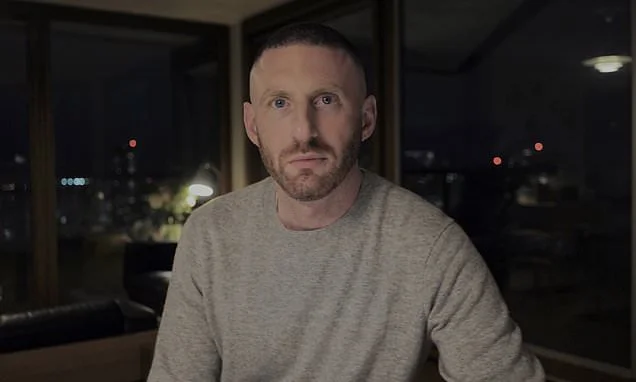
The Daily Mail's Max Pemberton in The Great ADHD Myth?
Max's main case study followed a ten-year-old boy, Mason, who wanted to stop taking his ADHD meds because, he said, the pills stripped all the 'fun-ness' out of his life. In place of drugs, he tried to regulate his behaviour by cutting down on sugar and screen time, and taking more outdoor exercise.
The condition is both so nebulous and so widely recognised that it seems almost anyone can qualify for the label. To prove the point, Max took an online test with a private clinic. Yes, he was forever losing his phone, he said. Yes, he tended to work into the small hours and then zonk out. The instant verdict was unambiguous. Max was diagnosed with the 'combined type' of ADHD: impulsivity, hyperactivity and inattentiveness.
What the documentary failed to explore was how widely these tests are being exploited for benefits claims. More than 100,000 people claiming Personal Independence Payment [PIP] cite ADHD as their main 'disability'.
This one-off programme could have made an even more compelling case if it had tackled this side of the problem, perhaps over two hours. We've got the attention span.