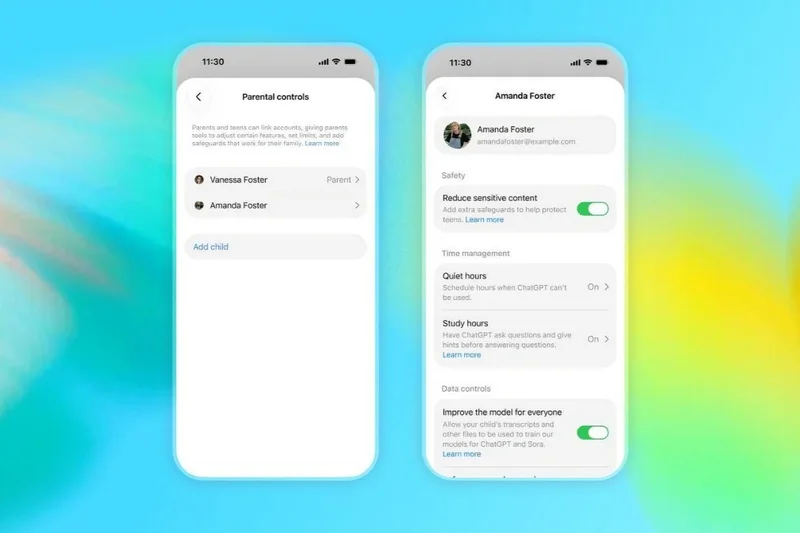
OpenAI said Wednesday it has launched "ChatGPT for Teens," a version of its chatbot designed to encourage learning and reduce the risk of emotional dependency among younger users.
The teen experience activates automatically when OpenAI's systems estimate a user is under 18 or when a user identifies themselves as between ages 13 to 17.
The product is built around getting teenagers to work through problems themselves rather than simply receiving answers. Students studying for exams can ask for explanations of unfamiliar concepts, work through practice problems step-by-step and check their own understanding.
If a user appears to be trying to get a direct answer to an assignment, ChatGPT will redirect them to "Study Mode," which walks them through the reasoning process instead. The system also includes prompts that steer users away from skipping assignments, along with directing them to with quizzes and visual learning aids.
A new "Study Hours" feature lets teens or their parents schedule times when Study Mode turns on by default.
Study Mode was developed with teachers, scientists and education specialists, and provides guided questions and comprehension checks rather than direct answers. OpenAI said the design reflects the principle that AI should support learning outside the classroom while teachers remain in charge of how it's used in classrooms.
Age-appropriate safeguards are applied by default for teen users, with stronger protections against exposure to content related to self-harm, violence, eating disorders and explicit sexual or violent material.
The standards are based on OpenAI's "Under-18 Principles." Parents linked to a teen's account can set "Quiet Hours" restricting how long and when the program can be used and will be notified in limited high-risk situations.
The chatbot is also designed to avoid expressing romantic feelings toward teen users or implying it has emotions or consciousness, and to periodically remind users that it is an AI, not a person.
This article was published with the assistance of generative AI and edited by The Korea Times.