Spain has registered a record number of drownings this year, according to the Spanish Lifesaving and Rescue Federation with 333 deaths in the seas, rivers and lakes. At this time last summer (mid August), the number was 303.
What’s worse is that so far in 2026, there has been a 40 percent increase in drownings among children and teenagers.
The regions with the most drownings are Andalusia and Castilla y León with 53 each, 52 in Catalonia and the same number in the Balearic Islands.
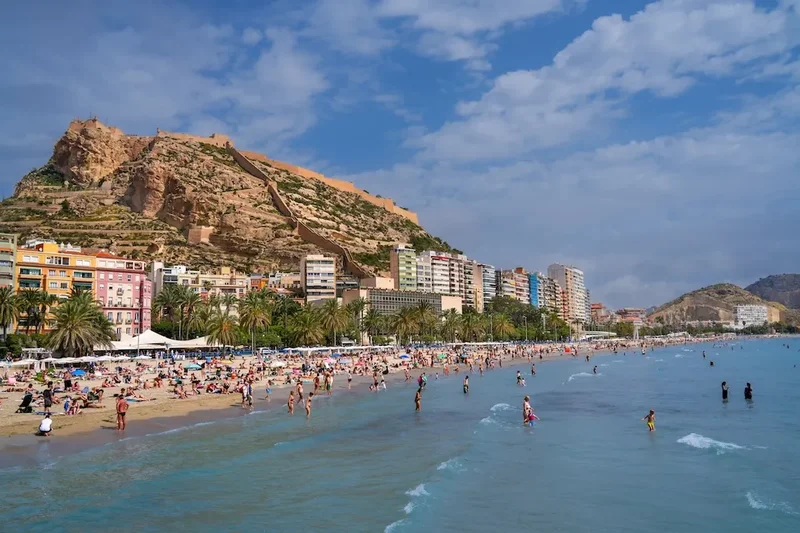
It’s a different story in the Costa Blanca city of Alicante, however, where no drownings have been recorded this summer and serious incidents have decreased thanks to increased staffing and prevention efforts.
The lifeguard service in Alicante has undergone a significant transformation in recent years, which has made it a benchmark for water safety in the country, despite receiving millions of bathers throughout the year.
The city and municipality of Alicante has coastline which stretches for about 15 kilometres and has a total of 53 lifeguards during the high season.
At all times they are in contact with and coordinate with the Maritime Rescue, Civil Protection and local police.
READ ALSO: What's behind the recent spike in drownings in Spain?
The coordinator of the Alicante lifeguard and rescue service, José Miguel Jiménez, told newspaper El Español that they have increased surveillance significantly in recent years.
“For example, San Gabriel beach and the dog beach went from having only one lifeguard to having two lifeguards on duty daily," he told the newspaper.
Not only have the number of lifeguards increased, but also the number of lifeguard stations and the numbers directly assigned to the shore area.
These increased numbers and proximity of the chairs to the water provides greater safety for bathers.
"This means it’s extremely difficult for a serious accident to occur at sea," Jiménez adds.
READ ALSO: How to stay safe while swimming in the sea in Spain
In Alicante they don’t just hire any lifeguards either, they have to have highly specialised technical training and clearly defined roles. In addition to the lifeguards themselves, there are coordinators, first aid kit managers, nurses and jet ski captains.
Another big advantage is that they use police surveillance drones to help monitor the beaches and keep an eye on everything.
Jiménez also believes that the increase in incidents and the need for extra lifeguards is down to the fact that people are now using the beaches differently.
"Fifteen years ago, mornings at the beach belonged almost exclusively to the older residents of the neighbourhoods who came down for a walk. Today, in the early hours, the beach is already full of groups of young people who practice sports," he explained.
The number of visitors from several different countries has increased too.
Could other towns and cities in Spain learn from Alicante’s example?
Other municipalities with a similar length of coastline include Nerja in Andalusia and Sitges and Lloret de Mar in Catalonia.
Sitges for example has just 30 lifeguards to monitor a similar number of beaches, while Nerja has 44 and Lloret de Mar has 25, according to the Town Halls of each place.
They are all far fewer than the 53 that are employed during the high season in Alicante.
They may also not have has many extra people on duty either such as first-aid managers, nurses etc like Alicante does.