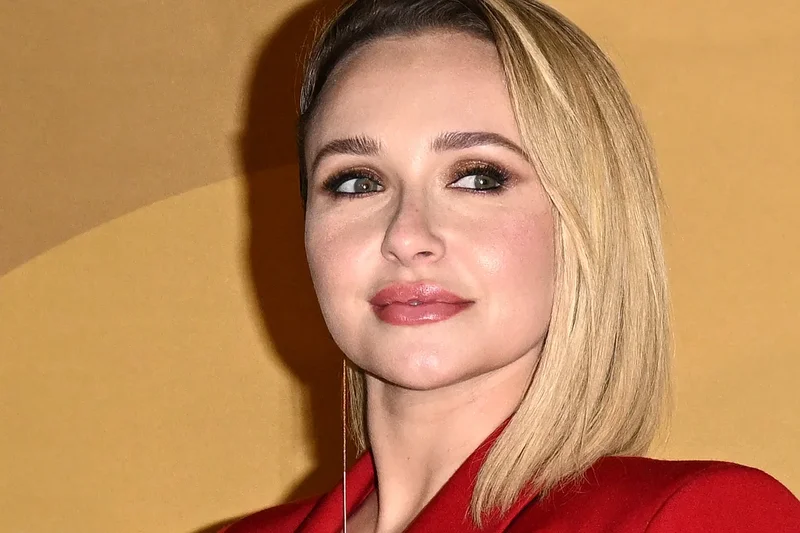
Hayden Panettiere, who died Sunday 16 August at the age of 36, was an actor famed for her all-American sunniness, the kind that the Disney Channel likes to bottle and monetise, and entire films and TV shows are shaped around. I grew up watching her, from when she voiced a plucky young ant in Pixar’s A Bug’s Life, through to her time in the Y2K kids movie trenches in Ice Princess and Bring It On 3, and then later as an indestructible cheerleader on the superhero series Heroes and as a sharp horror movie aficionado in the Scream films.
I wish I spoke to her earlier than I did, when her career seemed so bulletproof and before everything became so complicated. Instead I interviewed her twice over the course of the last three years, the second time mere months before her death in an Airbnb in North Carolina. Her cause of death has not been announced. I left both interactions incredibly sad, Panettiere seeming both stricken by grief and wounded by a volume of private traumas that few of us would be able to withstand.
In 2023 I spoke to her and her co-star Dermot Mulroney for the release of Scream VI, and just days after her little brother Jansen – an artist and, like her, a former child actor – had been found dead. I was surprised that the interview went ahead, and Panettiere was visibly if understandably withdrawn. She spoke slowly, her voice a sticky quiver. When Mulroney would speak, Panettiere’s smiling expression dropped, her eyes wet with moisture.
In April I spoke to her for the release of her memoir, a haunting if slightly withholding book called This Is Me. In it she describes her descent into addiction during a period of severe postpartum depression, her struggles with mental illness, and the numerous horrible calamities she experienced in her 36 years: the dysfunctional dynamic she had with her mother, who Panettiere told me wasn’t interested in having a normal relationship with her; her entanglements with older women who’d shove her onto expensive yachts with men of dubious repute, where she was treated like a “call girl”; an on-again/off-again relationship with a man named Brian Hickerson, who was arrested several times on domestic abuse charges. A police incident report states that, on Sunday, a 911 call was made by Hickerson, who is referred to by first responders as Panettiere’s boyfriend, and that he turned over to police a “bag of medication” purportedly belonging to Panettiere.
I’ve interviewed a number of celebrities for The Independent who’ve struggled with addiction over their lifetimes, or deep-seated trauma. Charlie Sheen told me about the depths of his dependence on crack cocaine. Natasha Lyonne told me about what she termed her “junkie years”. The veteran filmmaker Abel Ferrara told me about being addicted to heroin along with his one-time muse Zoë Lund, and how guilty he still felt that he managed to get sober and thrive, while Lund was dead at 37.
Speak to enough people in recovery and you can spot the similarities in how they talk about themselves – there is a clarity to how they discuss their histories and their relationships, a bluntness, or an almost procedural specificity. The second time I spoke to Panettiere, I felt as if she wasn’t quite in that space yet. Her answers leaned towards the vague, and she would more often speak in platitudes – she said the words “brutally honest” several times – than actively reflect.
All of her pain and struggle seemed uncomfortably fresh, which it was. And also, despite the comeback narrative that her book tour leaned into, largely unresolved. Her 11-year-old daughter, to whom she lost custody in 2018, was still living overseas with her ex, the Ukrainian boxer Wladimir Klitschko; Panettiere was estranged from her mother, the former actor Lesley Vogel, who ran to the tabloids in May to claim that Panettiere had caused her “20 years of trauma”; Hickerson, who was at one point jailed for injuring Panettiere, was giving interviews to TMZ about their relationship. Panettiere told me excitedly about her professional plans – more acting, more writing, a cosmetics line – but it was clear that her personal life remained incredibly turbulent.
By now, we are sadly used to stories of child stars meeting tragic ends in their adult years. Panettiere died exactly two months after the Lilo & Stitch star Daveigh Chase, another icon of 2000s children’s entertainment, died in hospital due to complications of Aids. She spent her final years living on the streets of Los Angeles amid a severe drug addiction. Like Lindsay Lohan, Drew Barrymore and Macaulay Culkin before her – their own survivals seeming more miraculous by the day – Panettiere also had a chaotic family background, much of which played out in the tabloids during the peak of her fame. It’s often a toxic combination – a child who becomes the breadwinner of a dysfunctional family at an early age, who is also confronted with rejection and adult responsibility on a daily basis as a jobbing actor, and who must then grow up under a microscope. You have to question whether the sheer existence of “child actor” as a job is legally or morally appropriate at this point, particularly when it seems so ripe for misery, exploitation and hardship. Panettiere certainly deserved better. She was dealt a set of cards, both personally and professionally, that meant little was ever easy. It was, for all of Panettiere’s on-screen sunniness, a very, very difficult life.
In the 48 hours or so since I learnt of Panettiere’s death, I’ve kept wondering why she persevered through a press junket in spite of her brother’s death, or released a book that she didn’t seem psychologically ready to release. But then you realise that she was pushed into the entertainment world by her mother at eight months old, and genuinely knew nothing else. The show had to go on. You do an interview because you have a movie out. You release a book about everything awful that’s ever happened to you, because it’s just what famous people do. I wonder if anyone told her that there was another way. I wonder if she ever believed there could be.