Following the creation of the Mecca Joint Deterrence Agreement, Türkiye is now in two military alliances targeting Russia and Iran. While Ankara supports the efforts to weaken the two powers in its neighborhood, the country’s position on the front lines has typically meant that Turkiye needs to tone down its support for these conflicts out of economic necessity. The neo-Ottoman dream, which overlaps with much of Western Zionist goals, is that Turkish influence will grow as Russian and Iranian power fades.
To some extent, this has happened as we see Türkiye playing a lead role in places like Syria, the Caucasus, and Central Asia where Russian and Iranian influence has been weakened.
At the same time, however, Türkiye’s worst fears are being realized. Those small, and likely temporary gains have come at the cost of both Russia and Iran emerging stronger with the former readying to take Ukraine’s Black Sea coast and the latter in control of the Strait of Hormuz and the dominant power in the Middle East.
Türkiye is now faced with the decision to either accept these outcomes or take more active roles in preventing them, thus risking severe economic damage—or worse.
NATO is increasingly leaning on Türkiye for action in the Black Sea. The Mecca Agreement, too, is expected to call on Türkiye for as-yet unknown part in weakening Iran and potentially another fight against Ansarallah in Yemen.
Pakistan, while it possesses nuclear weapons, is among the global leaders in arms imports along with Saudi Arabia. Pakistan’s military is also heavily reliant on China. Türkiye’s defense industry, meanwhile, is on the “indigenization” upswing but remains dependent on the US and Western Europe.
A key tenant of Islamic NATO, however, is that Pakistan brings the nukes, Saudi Arabia puts up the dough, and Türkiye provides the defense industry muscle. NATO 3.0 is also looking to Türkiye to help supply its proxies. But can Türkiye actually deliver?
NATO 3.0 and Turkish Military Industry
NATO better be hoping the Turkish industry fares better than what was described in a recent ProPublica story about an ammunition plant in Texas where it was reportedly Turkish robotics machinery that were regularly catching fire:
The robots, giant metal arms with clamps for hands, would end up drenched in oil, which would then — no surprise — combust as they moved steel blocks heated to 1,800 degrees into and out of a machine that periodically erupted columns of fire.
To be fair such fiery incidents weren’t all the fault of Repkon, the Turkish company. The US gambled the machinery could handle a task it had never performed before:
Army officials learned that the production line that Repkon wanted to sell had been designed to produce an older, simpler model of 155 mm shells, which was made with different steel. It wasn’t clear that the Turkish equipment could even work with the steel used to make the newer 155 mm model, as the equipment had never actually produced it, according to four former General Dynamics and Army officials.
Yet they went with it anyway.
Elsewhere there has been constant chatter about Türkiye playing an outsize role in rearming Europe and becoming a mega supplier for NATO. At this year’s NATO summit in Ankara, Türkiye was included in 3 of the 4 high-visibility projects NATO unveiled at its July summit in Ankara. Those are Ground-Based Precision Strike Capabilities, Generic NATO Indirect Fire Round, and Airbus A400M Multinational Fleet. The alliance also made a five-year $40 billion commitment for drone defense capabilities, which will likely bode well for Turkish companies Baykar and Turkish Aerospace Industries, both drone leaders among the NATO countries.
Yet, while Türkiye’s defense industry has grown in recent years, there are still major limitations. From Can Kasapoğlu, a Turkish NATO expert:
Türkiye is becoming a more important defense manufacturing actor inside NATO, but the term “hub” should be assessed carefully. A true hub is not only a country that exports platforms. It is a country that provides production depth, sustainment, upgrades, spare parts, training, software support, industrial security, and interoperability over the full lifecycle of a system.
Türkiye is moving in that direction, especially in drones. But the next stage will require deeper and broader supply chains.
So, my answer would be yes, Türkiye has the potential to become one of NATO’s important defense manufacturing hubs. But this will depend more on long-term sustainment…
Türkiye can contribute to NATO’s innovation agenda, but the key issue is integration. Emerging technologies do not matter in isolation. Artificial intelligence, autonomy, cyber capabilities, and space-based systems become militarily decisive only when they are integrated into sensors, command-and-control, electronic warfare, secure communications, and operational decision-making.
Türkiye has already built a strong base in unmanned systems, defense electronics, sensors, electronic warfare, and command-and-control. These are relevant foundations for AI-enabled and autonomous warfare. However, the next phase will be more demanding. NATO’s future battle networks will require secure data standards, cyber resilience, coalition interoperability, cloud architecture, and trusted software supply chains.
This is where Türkiye should position itself. Not simply as a drone exporter, but as a contributor to NATO’s future combat-data ecosystem.
Short answer to the question of whether Türkiye can deliver on rearming Europe and be the military industrial engine for Islamic NATO: no, not right now. But that looks to be something of a long term goal for the NATOs. Still, even adding beefed up Turkish military industrial capacity and capabilities to NATO and NATO-aligned states, it would still be no match for Russia, Iran, and, seeing as NATO 3.0 is determined to confront the world’s industrial engine, China.
The latter holds all the trump cards at the moment, as Larry Johnson put it. So Türkiye could construct thousands of factories, it won’t make much difference if it can’t get a hold of critical minerals for advanced weapons.
That doesn’t mean Türkiye can’t make some major contributions, however.
CIA Islamic Mercenaries
Elsewhere Türkiye is facing similar difficulties. While the challenge—if not impossibility—of inflicting military defeat on Iran is now plain to see, an even worse regional conflagration than the one already occurring looms on the horizon.
Along with the ultimate prize in Iran, Zionists and allies continue to target Iran-aligned groups in the region like Hezbollah and Ansarallah.
According to Mohammed Marandi, the Mecca pact is primarily about Yemen and Ansarallah’s ability to whip the Saudis yet again. Riyadh needs Türkiye and Pakistan to help it on that front. Will they be any more successful than past attempts to defeat Anarallah?
Often overlooked in the array of analyses on Islamic Nato is that each of the involved countries have a strong history of fostering and deploying what Professor Marandi calls CIA Islam, a radicalized version that is more often than not directed at targets which advance imperial objectives.
An obvious recent case is Türkiye, which for years was the primary backer of jihadist groups in northern Syria, which with assistance from Washington and Tel Aviv, finally overthrew the government in Damascus in 2024.
The Al Qaeda government in Syria, which is now backed by all the West, was unsurprisingly looking to join in the fight against Hezbollah. Iran put an end to that — at least for now.
🇮🇷🇱🇧🇸🇾 BREAKING: Iran informed Syria through Türkiye that 100s of locations would be targeted with drones and missiles throughout Syria, including the Presidential Palace, if the Syrian Army intervened in Lebanon against Hezbollah – Tasnim
Following the warning, Syria tuned down…
— DD Geopolitics (@DD_Geopolitics) August 13, 2026
That could mean that Iran essentially warned Türkiye, which backed down. So what’s an al-Qaeda Syrian army to do? And how might the Mecca Pact come into play?
Well, one component of Islamic NATO touted by supporters is how all that Saudi money will help increase Turkish defense production capacity of drones and other weaponry which will no doubt flow to CIA Islam groups in Syria and elsewhere.
Black Sea Breakdown
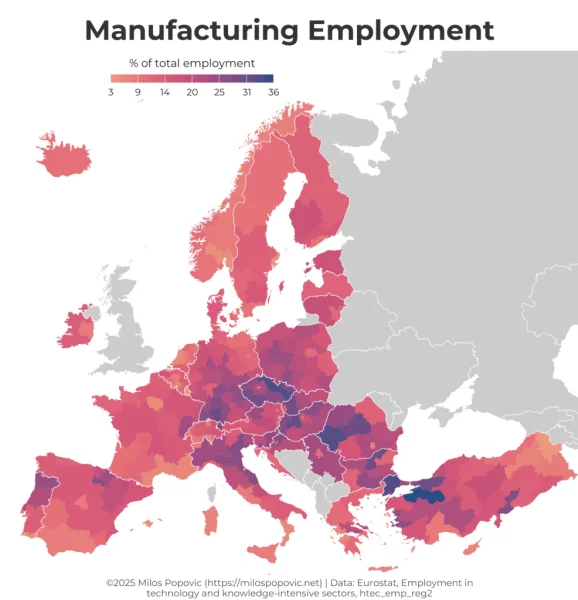
One reason, along with suppression of unions and wages, that Turkish industry is competitive is due to the country’s access to cheap and reliable Russian gas and oil. The TurkStream pipeline brings gas across the Black Sea from Russia to Türkiye, which also sends supplies along to Bulgaria, Hungary, Romania, Serbia, and Slovakia.
One can see on the following 2025 map how high industrial employment is concentrated along a TurkStream belt.
That flow of gas (and oil) from Russia looks increasingly fragile, however. Not only have the Ukrainians (allegedly) been trying to blow up TurkStream for years, but the attacks on Black Sea tankers has also forced Türkiye to scale back its imports of Russian oil.
Now, much like Türkiye’s renewed support for a peace deal between Iran and the US (that can be broken whenever is convenient for Washington), Ankara is suddenly very interested in a renewed Black Sea truce. Erdogan and his government were awfully silent when it was Ukraine striking and the Western media crowing, but now that Russia is hitting back—and hard—it’s time for peace.
Türkiye of course controls access to the Black Sea from the Mediterranean and looked like it was toying with the idea of trying to force a “moratorium” on attacks by closing the Bosphorus and Dardenelle Straits, which would work as an effective blockade on Russia. Numerous ships were delayed at the straits earlier this month before Türkiye allowed them to pass.
It’s unclear if Moscow had a word with Erdogan over this threat.
Türkiye imports a lot of Russian and Ukrainian grains and Russia has the ability to hit Türkiye hard economically on multiple fronts, including oil and gas, tourism, and agricultural imports from Türkiye.
So what is Erdogan to do? Sit back and watch Russia take the Ukraine Black Sea coast?
Well, why not? Some might argue that’s better for long term stability in the region compared to the Azovites (allegedly) trying to blow up TurkStream.
Yet the goal of Erdogan and much of the Turkish ruling class for decades has been to “restore” Turkish power. And in order for this neo-Ottoman vision to become a reality, Türkiye must first expand its influence in regional spaces occupied by Russia and Iran before becoming a true global power. Sound far-fetched? Sure, but images like this one of Turkish leaders with maps of unified Turkish lands stretching across Central Asia and into Russia and China is the lucrative long term goal.
After years of failure in pursuit of such a strategy that saw Turkish influence abroad curtailed and Erdogan’s near electoral defeat, there have been many more successes recently. First was the long-sought overthrow of Bashar al-Assad in Syria. Then came the successful push to open a corridor through southern Armenia connecting Türkiye and Azerbaijan, which comes as Ankara is making serious inroads cementing its influence in Central Asia.
Türkiye is also being welcomed back into the NATO fold and now has its Islamic NATO. Despite coming ever-so-close to crashing and burning, Erdogan’s strategy of influence expansion has finally borne fruit. And yet…An empowered Iran and Russia weren’t part of the plan.
And it’s pushing Erdogan into an even more difficult balancing act.
How does Türkiye more actively attempt to thwart Moscow and Tehran without coming into direct conflict or inflicting serious economic self-harm? There are no easy answers.
As Russia blockades Odessa and pounds an air-defenseless Ukraine, NATO is powerless to stop it. Türkiye is planning on sending more weaponry to Ukraine, including cluster munitions, but it’s not air defense. And while likely to kill and maim some Russian troops and many civilians, it won’t make a difference in the war. It will harm Russia-Türkiye ties however.
Russia demanded explanations from the U.S. and Türkiye over reported plans to transfer a “substantial arsenal” of American weapons and ammunition held by Ankara to Ukraine, warning it would cause “serious harm” to bilateral relations, according to the spokeswoman for Russia’s…
— Faytuks Network (@FaytuksNetwork) August 15, 2026
If those bilateral relations are harmed enough, then Türkiye’s aspirations to become a military industrial hub would be dealt a major blow. Türkiye gets about 40 percent of its gas imports from Russia and nearly half of its oil imports. Türkiye also imports a significant amount of gas from Iran.
This reality highlights how there are limits to Turkish-Washington strategic overlap.
While Zionist Cold War warriors would in a second volunteer Türkiye to fight Iran and/or Russia, Erdogan is talented at finding ways to slip out of conflict while simultaneously maintaining economic ties with Russia and Iran and working with NATO(s) to sink their boats so Türkiye’s can rise. Erdogan can likely do it; he’s a master at such games, but he’s also going on 73 and looks a little worn out. Will his successor be as skilled at such geopolitical maneuvering?