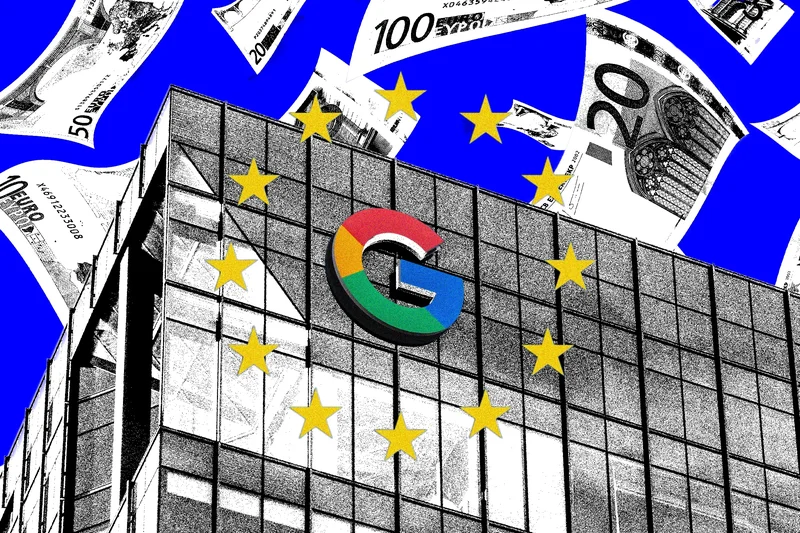
The European Commission has levied a $1 billion penalty against Google over alleged competition law violations.
An EC investigation found that Google had abused its dominanEuropean Union’sce in the search and app store markets to funnel people towards its own apps and services, in violation of the European Union’s Digital Markets Act.
The body has ordered Google to refrain from giving preferential treatment to its own services—like shopping, accommodation, transport, and flights—in search rankings. Google must also allow app developers to communicate and transact with users outside the Play Store, where it takes a commission on sales.
“The best products should succeed because they're better, not because they're owned by the company running the search engine,” says Teresa Ribera, an executive vice president at the EC. “European consumers have a right to be told by app developers where to sign up to the best offers, even when the app store owner does not get a cut.”
In a statement to WIRED, Google said it will consider appealing the penalty.
"This isn't fair competition; it's product degradation driven by a small group of self-serving complainants, with European businesses and consumers taking the hit,” says Kent Walker, President of Global Affairs at Google.
Tech industry trade bodies argue that heavy-handed enforcement of the DMA is self-defeating. “Reducing the quality of what Europeans have access to is not a positive outcome,” Daniel Friedlaender, senior vice president at trade organization CCIA Europe, tells WIRED.
The EU has brought numerous multi-billion-dollar fines against Google in the last decade over a medley of antitrust violations. In early July, a European court upheld a record $4.1 billion fine brought against Google in 2018 over agreements that required phone makers to install Google Search and the company’s Chrome web browser on their devices.
“Certainly, the stakes are really high for companies. How they are ranked affects their businesses a great deal,” says Kathryn McMahon, an associate professor of law at the University of Warwick. “The way EU competition law looks at it, firms in a dominant position—like Google—have a special responsibility not to distort competition.”
To address the latest complaints, Google has proposed alterations to the way it administers the Play Store and presents its products in search rankings, which the EC has characterized as "progress towards compliance.”
Recently, US president Donald Trump vowed to impose steep new tariffs on European countries that seek to restrict American technology companies. The White House did not respond to a request for comment.
The latest penalty is “quite a strong response, in the context of the transatlantic complaints—the way that Trump can leverage fines,” says McMahon. “It shows the Commission is willing to be tough.”