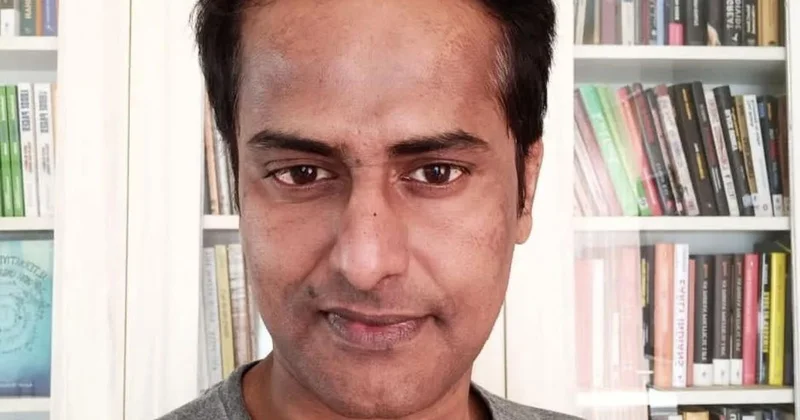
The police conducting searches at the home of journalist Ravi Nair and seizing electronic devices in connection with a first information report relating to social media posts about an article he had written in The Washington Post on the Life Insurance Corporation’s investments in the Adani Group “paint a sorry picture of press freedom in India”, press bodies have said.
On Tuesday, the Gujarat Police searched Nair’s Delhi and Kerala homes under a warrant issued by an Ahmedabad court and seized some electronic devices.
The Press Club of India said that the seizure of the devices, including those belonging to Nair’s son and his colleague Sachi Hegde, was “extremely disturbing”, The Hindu reported. It said Nair’s son and Hegde “had nothing to do with the case or the social media post it was based on” and that “it is unacceptable that their devices were also taken away”.
The press body also noted that the FIR names only Nair and not his co-author or the international publication. “This hounding of an independent journalist is unacceptable,” the newspaper quoted the organisation as saying.
It also described the police action as a “clampdown on information”, saying that the journalists doing their jobs were “having to pay a heavy price”. It urged the police and government agencies to “stop behaving in ways that undermine the very principles independent India was built on”.
Digipub News India Foundation, an association of independent digital news organisations and journalists of which Scroll is a member, said the seizure of devices belonging to people who were not accused raised “serious questions about the legal basis, necessity and proportionality of such action”.
“An authorisation to search for evidence relevant to an alleged offence should not, by itself, be treated as a blanket justification for the seizure of private digital devices belonging to unrelated or non-accused persons,” it said.
The organisation also criticised the reported failure to provide hash values for the seized devices, saying that such safeguards were necessary to preserve the “integrity, authenticity and forensic reliability” of digital evidence and “must be scrupulously followed”.
A hash value is a unique digital fingerprint of a file, storage drive or an electronic device. The value changes if the device is tampered with after it is seized, making it useful to check if the gadget has been manipulated.
It added that the focus on Nair over an article published by an international organisation also raised concerns about “selective enforcement and the possibility that he is being targeted”.
The FIR against Nair
An employee had filed an FIR on behalf of Adani Ports and Special Economic Zone Limited alleging that Nair “wrote and posted false and fabricated information” that “attempted to tarnish the image and reputation of the Adani Group of Companies”.
The FIR alleges that the statements in the report and the documents and information relied on to support them were false and fabricated.
The FIR against Nair lists the sections of the Bharatiya Nyaya Sanhita pertaining to cheating and dishonestly, forgery committed with the intent to harm the reputation of any party and using fake or forged paper or digital file as real.
The devices were seized six days after the Gujarat High Court on August 11 refused to quash the FIR against Nair.
The Washington Post report alleged that the LIC, a public sector company, had made investments of $3.9 billion in industrialist Gautam Adani’s Adani Group following directions from the Union government at a time when the conglomerate was facing financial and legal challenges.
The LIC had at the time rejected the report, describing the allegations “that the investment decisions of LIC are influenced by external factors are false, baseless and far from truth”.
The Adani Group had also categorically denied involvement in “any alleged government plans” to direct LIC India funds, according to the newspaper.
The first information report against Nair is based on his social media posts relating to the report, not the article itself.
*Written by Sara Varghese. Edited by Tanya Shrivastava. *
We welcome your comments at letters@scroll.in.