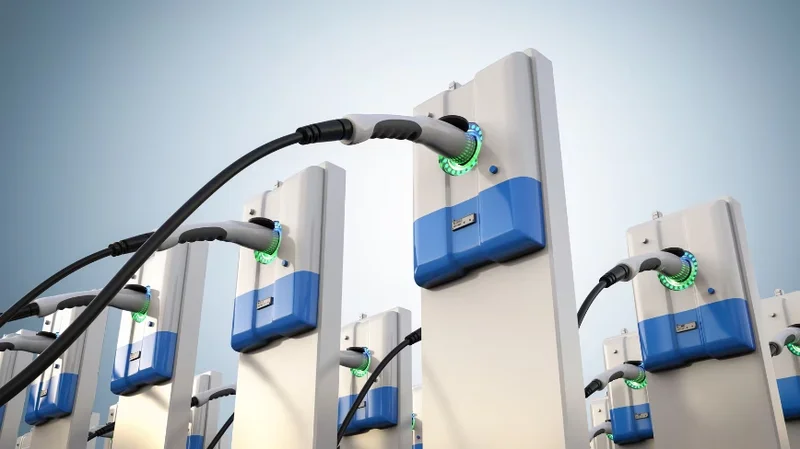
Germany’s ADAC measured charging losses on five EVs and found that a household socket wastes between 12.7% and 24.2% of the electricity drawn. An 11 kW wallbox cut every car’s losses to between 5.1% and 7%.
Some of the electricity you buy to charge an electric car never reaches the battery. Germany’s ADAC measured how much, and on a household socket the new Mercedes CLA lost 24.2% of it.
The meter does not care where the energy ended up. If the wall delivers 30 kWh and the battery accepts 27, the bill is for 30.
The charger matters more than the car. Every model ADAC tested improved sharply on an 11 kW wallbox, and the Mercedes fell from 24.2% to 6.9%.
On a 2.3 kW household socket the rest of the field ran closer together. The Tesla Model Y lost 12.7%, the Renault 5 13.7%, the Volvo EX30 14.2% and the Volkswagen ID.7 15.3%.
At 11 kW the spread almost disappears. The Renault 5 was best at 5.1%, ahead of the Model Y on 6.1%, the CLA and ID.7 on 6.9% and the EX30 on 7%.
The Mercedes result has a specific cause rather than a mysterious one. ADAC found the CLA’s on-board charger draws only 8 amps from a household socket, below the 10 amps such a socket already limits you to.
The losses happen in the conversion. Mains electricity arrives as alternating current and the battery needs direct current, so the on-board charger does the work, while heating and cooling take their own share, which is where kW and kWh stop being interchangeable.
In money the gap is not trivial. At the 37 cents per kWh BDEW reports for German households this year, a driver covering 15,000 km would pay roughly €231 more a year charging that Mercedes from a socket than from a wallbox, and between €76 and €101 more with the other four cars.
That is the argument for the box on the wall, before you reach the one about sending power back. A wallbox is a hardware purchase that pays itself off in electricity nobody has to waste.
Fast charging is not exempt either. ADAC puts DC losses between 5% and 15%, at 1% to 4% when the battery is preconditioned and warm, and at 6% to 10% at 0C when it is not.
The lesson is about where the number is measured. Manufacturers quote consumption at the battery, and the household pays at the wall, and those two figures are further apart than most owners expect.
Get the TNW newsletter
Get the most important tech news in your inbox each week.