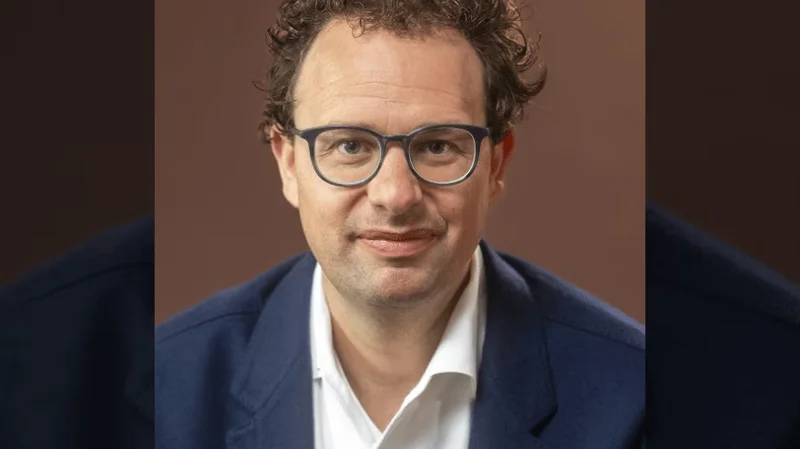
Anthropic is preparing to give its founders shares with extra voting power before it goes public, according to The Information. The company is setting up the structure ahead of an initial public offering that could rank among the largest ever, Cory Weinberg and Valida Pau reported. Bloomberg matched the report.
The plan would hand chief executive Dario Amodei and his co-founders a new class of stock. Those shares would carry more votes each. The point is to keep their say over the company’s direction once outside shareholders come in. Anthropic did not respond to requests for comment from either outlet.
Why the structure matters here
The move is unusual for a specific reason. Amodei owns only about 2 percent of Anthropic, a person close to the company told The Information. That is one of the smallest stakes for any founder-chief executive taking a company public in recent decades.
A small stake normally means a small vote. Supervoting shares break that link. They let the founders keep control even as their economic ownership stays low. That is the whole purpose of the design.
The founders are unusually level with one another, too. Amodei said on a podcast last year that the founders split the company fairly evenly. He and the six other co-founders each own a roughly equal share, The Information reported. That group includes his sister, Anthropic President Daniela Amodei.
An even split among seven people leaves each founder with a modest slice, which is part of why the voting structure matters. Without it, their combined economic stake would translate into a limited voice once public shareholders arrive.
The plan also fits a wider pattern in tech. Dual-class share structures have become common, and are meant to protect founders from shareholder pressure, Bloomberg noted. Mark Zuckerberg at Meta and Evan Spiegel at Snap both hold super-voting rights of their own.
A trust sits on top
Supervoting shares are only part of Anthropic’s governance setup. The structure also includes a long-term trust that controls the membership of the board of directors, The Information reported. The trust aims to keep the company’s mission-focused governance in place after a listing.
Taken together, the two mechanisms point the same way. Both concentrate long-term control at the top. Power sits with the founders and the trust, not with whichever investors buy the most stock. Anthropic has long argued that its safety mission requires that kind of insulation.
An IPO the whole market is watching
The governance work is happening because a listing is close. Anthropic and its rival OpenAI have both filed confidential paperwork to go public, Bloomberg reported. Anthropic could make its Wall Street debut as soon as this autumn, ahead of OpenAI.
The numbers behind that debut are large. Anthropic was valued at $965bn after a funding round in May, Bloomberg said. That ranked among the biggest valuations for any private company, and marked the first time it had eclipsed OpenAI. Its planned mega-IPO has been the subject of steady reporting for weeks.
The financial picture has firmed up alongside it. Anthropic told investors its revenue run rate topped $65bn by the end of July, Bloomberg reported. The company also posted more than $11.5bn in its latest completed quarter, up from $787mn a year earlier. It reported positive adjusted operating income as well.
Banks are circling the deal.
Anthropic’s pre-IPO revolving credit facility is set to climb past a roughly $10bn target, Bloomberg reported separately. Lenders are competing for roles on the offering. The company is working with Morgan Stanley, Goldman Sachs and JPMorgan on the IPO itself. A $10bn-plus revolver would dwarf the $2.5bn facility Anthropic secured last year, Bloomberg said.
The playbook echoes SpaceX, which expanded its own revolver to $5bn from $1.5bn a month before its record-breaking IPO. The wider IPO market has been busy, with listings raising $257bn this year, the most since 2021. OpenAI is moving on a similar track. Bank of America extended a $520mn credit line to the company this summer, taking its available capital above $5bn, Bloomberg reported.
Anthropic is expected to list first.
What it means for public investors
For anyone who buys the stock, the structure sets the terms. A public shareholder in Anthropic would own a piece of the company without a matching say in how it is run. In practice, the founders would keep the final word on company strategy and leadership. That is the trade-off dual-class founders have long offered.
Plenty of index funds and governance advocates have pushed back on it elsewhere. Supporters counter that it lets leaders plan for the long term without chasing each quarter’s share price.
Anthropic’s case leans on its mission. The company has framed its unusual governance, including its trust, as a way to keep safety commitments intact under public-market pressure.
Whether investors accept that framing at this size is the open question, and it sits against a backdrop where Amodei himself has conceded AI companies have not always delivered on their promises.
The details are not final. Discussions are still going on, and the exact terms of the share classes and the trust could shift before any filing. What is clear is the direction. Anthropic wants its founders to keep control of a company that the public is about to part-own.
The comparison the market keeps reaching for is SpaceX and its peers, the other giant private firms testing how much founder control public investors will stomach.
Get the TNW newsletter
Get the most important tech news in your inbox each week.