Host Community Development Trusts (HCDTs) in Akwa Ibom State have been urged to move beyond reliance on statutory contributions from oil companies and develop stronger systems for attracting grants, partnerships and other legitimate sources of funding.
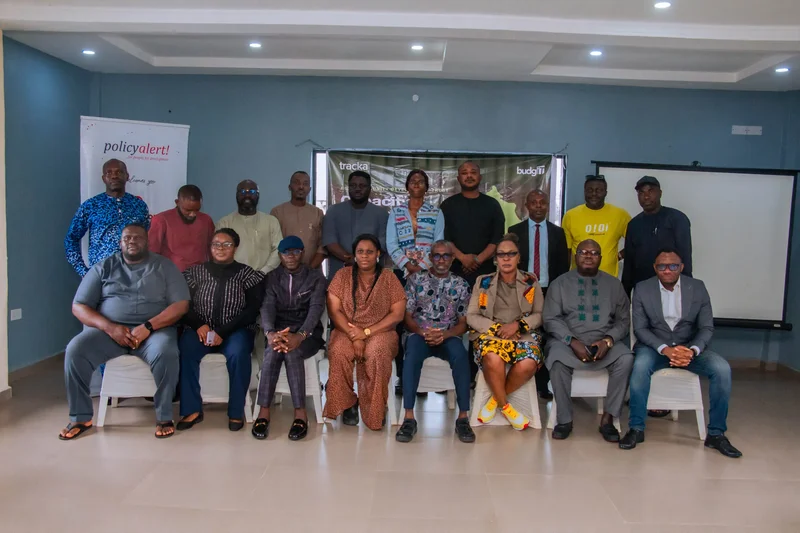
The call was made on 13 August at a capacity-strengthening session for HCDT leaders in Akwa Ibom, organised by Policy Alert in partnership with BudgIT Foundation.
A presentation themed “Beyond Statutory Funding: Positioning HCDTs for Grants and Partnerships” focused on strengthening the capacity of HCDTs to mobilise resources, improve governance and transparency, and demonstrate measurable development outcomes in their host communities.
Head, Energy, Extractives and Climate Justice Programme at Policy Alert, Edidiong Dickson, said the Petroleum Industry Act (PIA) 2021 provides a legal basis for HCDTs to receive donations, gifts, grants and honoraria in addition to statutory contributions from oil companies.
| | |
|---|
He said Section 240(3) of the Act permits HCDTs to receive such resources, provided they are used to achieve the trust’s objectives.
According to him, this means statutory contributions should be regarded as “seed capital” that can help HCDTs build sustainable resource mobilisation strategies rather than as their only source of funding.
He called on HCDTs to begin seeing themselves as development institutions with systems similar to those of non-governmental organisations, rather than merely as structures established to receive and spend money from oil companies.
Mr Dickson identified institutional identity, good governance, strategic planning, professional financial management, programme management, monitoring and evaluation, documentation, evidence-building, resource mobilisation and partnerships as critical requirements for the transition.
Five-year development plans as fundraising tools
Mr Dickson also called on HCDTs to utilise their five-year Community Development Plans not only as compliance documents but also as fundraising and investment tools.
He said the plans could serve simultaneously as a development strategy, programme pipeline, investment prospectus, partnership framework and fundraising roadmap.
He advised the trusts to divide their development plans into clearly defined, fundable programmes covering areas such as education and skills, health, livelihoods and enterprise, women and youth empowerment, environmental sustainability, climate resilience, infrastructure, energy access and disability inclusion.
He said potential funders would scrutinise the governance structures, financial systems, transparency mechanisms, programme capacity, safeguards and evidence of impact of HCDTs before committing resources.
Mr Dickson identified six institutional improvements that could make HCDTs more attractive to funders: professional documentation, stronger financial systems, institutionalised transparency, inclusion of women, young people and persons with disabilities, evidence-based reporting and strategic partnerships.
He said HCDTs should maintain organisational profiles, strategic plans, policies, project portfolios, budgets, accounts, audits and project impact reports.
They should also publish information about projects, budgets, expenditure, procurement and results, he said.
HCDTs need measurable development outcomes
The Programme Manager of Policy Alert, Koko Udo, in a presentation titled “Appraising HCDT Projects Against Standardised Monitoring and Evaluation Indicators,” challenged the trusts to focus beyond completing projects to demonstrating the changes produced by their interventions.
He said HCDTs should consistently ask two questions when assessing their projects: “What evidence will show us that this project is making progress or achieving its objective?” and “What changed because of the project?”
Mr Udo presented an HCDT appraisal scorecard based on eight weighted dimensions: relevance and community priority, inclusion and gender responsiveness, project completion and quality, participation, transparency and accountability, functionality and utilisation, sustainability and maintenance, value for money and cost effectiveness, and outcomes and beneficiary benefits.
He said the framework would help HCDTs assess whether projects are responding to genuine community priorities, being delivered to acceptable standards, remaining functional and producing sustainable benefits.
PIA requires regular reporting
The Head of Natural Resource and Climate Governance at BudgIT Foundation, Enebi Opaoluwa, focused on accountability and transparency mechanisms in HCDT operations.
On reporting, Mr Opaoluwa said the PIA imposes specific deadlines on HCDT management and governance structures, making timely reporting an important component of good governance.
He said the management committee is required under Section 255(a) to submit its mid-year activity report to the Board of Trustees by 31 August each year.
Under Section 255(b), the management committee is required to submit its annual report and audited accounts to the Board of Trustees by 28 February of the following year.
The Board of Trustees is required under Section 255(c) to submit the trust’s annual report and audited accounts to the settlor by 31 May, while the settlor is required under Section 255(d) to submit the annual report and audited accounts to the relevant commission or authority by 31 May.
He said auditors are appointed annually to audit the trust’s accounts in accordance with Section 254(b) of the PIA.
Mr Opaoluwa also addressed questions concerning the payment of the statutory contribution by settlors, project approval and taxation.
He said where a settlor fails to pay the required three per cent contribution, the Board of Trustees should formally notify the relevant regulatory authority, such as the Nigerian Upstream Petroluem Regulatory Commission or the Nigerian Midstream and Downstream Petroleum Regulatory Authority depending on the settlor’s operations.
He said non-payment or non-compliance could attract regulatory sanctions against the settlor, including possible revocation of its licence, as provided under Section 238 of the PIA.
On project approval, Mr Opaoluwa said the Host Community Advisory Committee articulates community needs, while the management committee identifies and recommends projects.
The Board of Trustees, he said, has the authority to approve projects.
“Nothing is funded without BoT approval,” he said, referring to the relevant provisions of the PIA governing the roles of the different HCDT structures.
He also noted that HCDT funds are exempt from income taxation under Section 256 of the PIA, while contributions made by settlors to the trusts are deductible from hydrocarbon tax and companies income tax under Section 257.
Gender, inclusion gaps persist
The Gender Focal Person of Policy Alert, Lucy Eyo, presented findings on gender and social inclusion in HCDTs, highlighting gaps in the participation of women and other marginalised groups in decision-making and access to development opportunities.
Her presentation, titled “Inclusion on the HCDT: What the Data Shows and What Would Improvement Look Like,” examined nine HCDTs in Akwa Ibom.
Ms Eyo said gender and social inclusion are legal requirements under the Nigeria Upstream Petroleum Host Communities Development Regulations 2022.
She cited Section 12(4) of the Host communities regulations, which requires due consideration to be given to diversity, including age, gender and physical disability, in determining criteria for appointments to leadership positions such as boards of trustees.
She said the data showed that appointments represented the widest gap among the indicators assessed.
Ms Eyo called on HCDTs to establish targets for the representation of women and marginalised groups in boards of trustees, management committees and advisory committees.
She also called for gender and social inclusion to be incorporated into community development plans and for HCDTs to reserve opportunities in empowerment and livelihood programmes for women-led and other marginalised groups.
She urged the trusts to document participation at meetings and during contract processes rather than merely recording the number of invitations issued.
Ms Eyo encouraged lower-performing HCDTs to learn from better-performing trusts and adapt practices that have improved their performance.
PREMIUM TIMES reported that while HCDTs in Akwa Ibom made governance gains, inclusion has been a challenge.
Ms Eyo said inclusive governance could strengthen the legitimacy of HCDTs and improve community ownership of development projects.
“Women in oil-producing communities often carry the heaviest burden of environmental and economic harm from extractive activity, yet have the least access to decision-making and benefits,” she said.
The organisers said strengthening governance, accountability, inclusion and resource mobilisation would enable HCDTs to maximise the development opportunities created by the PIA and improve the quality and sustainability of interventions in oil-producing communities.