Potentially unsafe levels of fecal contamination have been detected in 85 percent of Missouri’s monitored recreational waterways, according to a report.
The findings, which came just days after the Missouri Department of Natural Resources warned of high E.coli levels in Big River, have raised concerns about the safety of waterways in the state.
The analysis, published by Environment America Research & Policy Center last week, looked at findings from 202 monitoring locations placed at rivers, streams and lakes across Missouri.
A potentially unsafe level of fecal matter was found in 171 of those locations on at least one day in 2024 and 2025, the report reveals.
The agency warns that swimming, diving or even just wading in water contaminated with fecal bacteria can lead to skin, eye, ear and sinus infections, as well as gastrointestinal and respiratory illnesses.
“Having any degree of E.coli contamination or fecal contamination in our waters shouldn't be tolerated,” Abby Longo, who works with Environment America’s Safe for Swimming campaign, told KCUR.
“We ought to be entitled to swim and paddle in our waterways without being concerned about the consequences.”
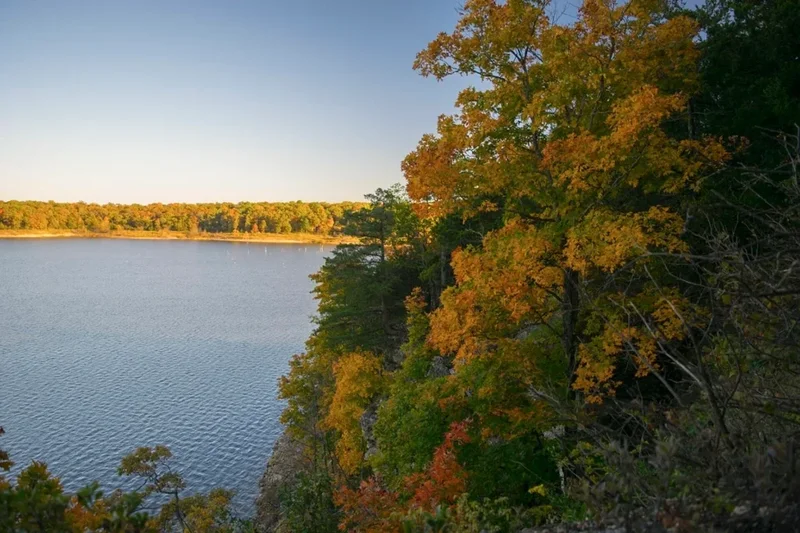
The Harry S. Truman Reservoir, Grand Glaize Creek and Sycamore Creek were all highlighted as areas with persistent bacterial risk in 2024 and 2025, the report continued.
Data used by Environment America for the report was sourced from National Water Quality Monitoring Council’s Water Quality Portal.
The findings were published days after the Missouri DNR confirmed in a press release that parts of Big River both upstream and downstream of the “failing” Leadwood wastewater treatment facility showed high levels of E.coli contamination.
The agency says that temporary repairs to the facility are being made while a lasting solution is found.
E.coli and another microbe known as enterococci are used as indicator organisms to determine if fecal contamination has occurred, the Environmental Protection Agency says.
In the report, Environment America says that polluted stormwater runoff, sewage overflows, livestock manure and failing septic systems can all be responsible for water becoming polluted.
“Communities in Missouri could really reduce their sewage overflows and other sources of fecal bacteria,” Longo told KCUR. “But infrastructure projects like replacing sewer lines or upgrading wastewater treatment plants require pretty substantial resources.”
For now, Longo says Missourians can apply for help through the Clean Water State Revolving Fund.
However, in 2024, the EPA estimated that around $630 billion will be needed over 20 years in order to protect the U.S.’s waterbodies, following its report on wastewater, stormwater and clean water infrastructure needs.
Environment America’s full report covered 17 states, including Alabama, New York, Pennsylvania and Michigan, among others.
The analysis found that contamination levels were potentially unsafe at 69 percent of locations in all 17 states for at least one day.
The full list of states included in Environment America’s report includes:
- Alabama
- Colorado
- Georgia
- Kentucky
- Maine
- Michigan
- Missouri
- Montana
- North Carolina
- New York
- Ohio
- Oregon
- Pennsylvania
- South Carolina
- Texas
- Wisconsin
- West Virginia