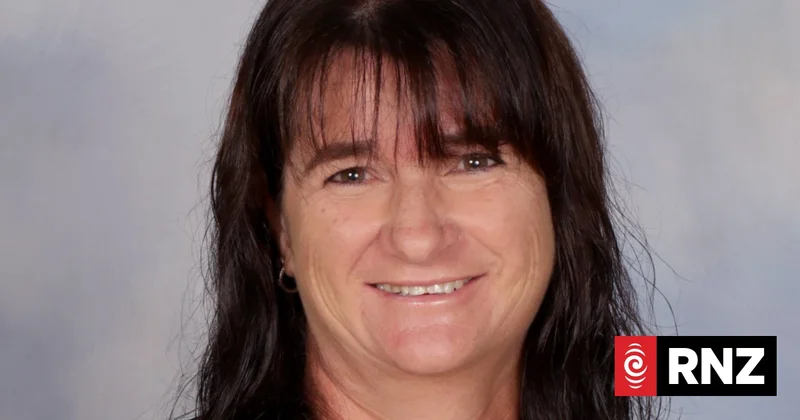
A damning review into the fatal Mount Maunganui landslide details how one of the six victims went to extraordinary lengths to warn and help fellow campers before she was killed. National Crime Correspondent Sam Sherwood reports.
It was day three of what was a "spur of the moment" decision by Morrinsville teacher Lisa Maclennan and her husband Travis to spend a few nights at the Beachside Holiday Park in Mount Maunganui.
They still had one more night booked, but after being woken by a slope coming down behind their campervan at about 4.30am, the couple spent the next several hours helping fellow campers and trying to alert others before deciding, at about 8.30am, that they wanted to leave.
About 9:15am, after emptying the campervan toilet receptacle, Lisa Maclennan went to have a shower in the amenities block.
Also staying at the campground were 15-year-olds Sharon Maccanico and her boyfriend Max Furse-Kee. The couple had travelled with Maccanico's parents.
Maccanico's parents had initially decided to cut the holiday short two days in following some strong windows with heavy rain predicted. However, when Maccanico's father went to cancel the remainder of their booking he was encouraged by a member of the office to stay and said they had the option of renting a caravan or a cabin.
The family decided to rent a caravan to stay in until the storm passed, when they would return to their tent.
On the morning of 22 January, the sky was blue and the family had chosen a new campsite and were ready to move.
Shortly before 9:30am, Maccanico and Furse-Kee went off to the amenities block to have showers.
Minutes later, a large landslide came down, hitting about 30 campsites and engulfing the amenities block which included toilets, showers and laundry facilities.
Six people were killed. They were Maclennan, Maccanico, Furse-Kee and three others who were also in the amenities block, Susan Knowles, Jacqualine Wheeler and Måns Loke Bernhardsson.
On Wednesday, an external review by retired high court judge Hon Paul Davison KSO KC, commissioned by the Tauranga City Council, was released.
The report said information identifying a risk to life was received, filed, discussed, forwarded - and then left.
"The failure was not the fault of any one person; it was the failure of a system that enabled an identified risk to life to remain unowned, un-escalated and unmanaged."
Also inside the 268-page report lies details about the "heroic lengths" Maclennan took to help those around her.
The 'spur of the moment' trip
The Maclennans arrived at the Beachside Holiday Park in the campervan they had borrowed from Lisa's family on 20 January.
At 11.57am the following day, Travis received a Civil Defence Emergency Alert on his phone.
The alert told Travis that MetService had issued a red severe rain warning for Bay of Plenty from 9am to 9am the following day.
"Put safety first. Don't take any chances. Act quickly if you see rising water. Do not try to walk, swim, or drive in floodwater.
"Avoid all non-essential travel. Bring pets indoors and move livestock to high ground where possible."
The alert also said to "be prepared to evacuate".
After returning to the campground that afternoon they remained in the campervan for the night.
About 4.30am on 22 January, Lisa woke up after hearing a noise and feeling the campervan move, the report said.
"She woke Travis who says that Lisa was panicking and initially thought that it was an earthquake.
"She went out and saw that the slope behind the campervan had come down and hit the rear of their vehicle. Some of the mud and soil from the slip had gone under the campervan covering the electric cable which was connected to a power bollard."
Lisa moved the campervan and then woke the people who were in a blue tent that was beside them as she was worried they could be trapped if any more of the slope failed.
The report said the Maclennans wanted to "urgently" contact the management of the holiday park to tell them what had happened "so that other campers would be alerted to the risk of any further slope failures".
At 4.43am, Travis called the numbers printed on the holiday park information sheet.
The call was initially answered by a security firm who transferred him to the Tauranga City Council (TCC) contact centre.
A transcript of the call said Travis told them they were staying at the holiday park and that they were trying to get hold of them.
"There's been a slip where we're staying, and it's affected a few of us, and we obviously don't know.
"Well, we want to get hold of them so that we can let them know, but it's affected a few people here…"
He added that "a few people here need to be relocated".
The contact centre staffer asked Travis if he had tried the intercom which should put him straight to the cellphone of a person whose name is redacted in the report and named Staff Member Q.
He replied he hadn't as they were "a little bit flustered, so we rang straight through to the number, and it put us straight through to you guys".
The staffer put Travis on hold and made two calls to the campground's after-hours number, however neither call was answered.
At 4.52am the staffer called the Emergency Management Officer's (EMO) phone and spoke to a Staff Member B and transferred Travis' call to her.
Travis told Staff Member B about the slip that had come down. He said they had found the intercom which they were going to use. Staff Member B said she would get someone to call them back.
At 5.15am, Staff Member B emailed the TCC Emergency Operations Centre (EOC) operations, welfare and intelligence to tell them about two phone calls she'd had.
One was about a call she'd had from Police about a slip that had taken down a house on Waitaha Road with a 10-year-old and 70-year-old missing.
The other was from Travis. She detailed what he had told her and said she'd told him she would get someone to call him back.
The report said that after his call with Staff Member B, the Maclennans tried the intercom and knocked on the walls of the campground office but had no luck.
They then noticed that another landslip had come down further along the driveway towards two cabins.
The couple woke the occupants of the cabins, as well as some people who were in a campervan nearby.
At 5.21am Staff Member C, who was on duty supporting the EOC controller, called Travis.
In the EOC welfare log she noted the conversation and said Travis indicated he was assisting a neighbouring camper to move their belongings.
"There had been no injuries and Travis had a location in the campground that was appropriate to shelter in place until he could raise assistance from a staff member.
"Travis was advised to call back on the EOC welfare number should he need any further support. No further calls from Travis by 7am handover."
The 111 call
The report says that at 5.47am a local resident (referred to as Member of the Public A), who had been walking near the mountain, called 111 after seeing two large landslides had come down on the ocean side near the surf club building.
His call was transferred to Fire and Emergency (FENZ) who told him that landslides were a council matter and that FENZ would notify them.
A FENZ staffer then called the TCC contact centre and told Staff Member A that they had been informed that there had been a landslide at the bottom of the mountain.
The caller had "mentioned about potentially having some problems at the Holiday Park, if the weather continues".
Member of the Public A went to the surf club to tell the lifeguards about the landslides and started waking some campers.
Staff Member A called Staff Member D, whose responsibilities included the maintenance and repair of the walkways and tracks on Mauao. He then called Staff Member F and they made a decision to immediately close all public access points onto the mountain.
Staff Member D then drove to the campground.
The Maclennans returned to the campground office several times between 5.30am and 7am to try to find someone to tell about the slips. By now, three landslips from the slope above and behind their campervan had come down.
The report said the couple also spoke with other campers.
"Travis Maclennan recalls that while he and Lisa were concerned about what had happened and thought that other campers near the base of the mountain should be warned and moved, there was no panicking."
By dawn, other campers gathered around and the couple told them why they had moved their campervan.
The couple took several photos of the slips and the blue tent, the earliest was about 6.16am.
'Major slip on mount'
At 6.40am, Staff Member J, who had been alerted to the landslide by Staff Member D, sent a message to a Teams chat group used by asset managers at TCC's City Operations and Spaces and Places team.
"Major slip on mount by camp site heading [there] now to meet [Staff Member D]".
The report also referred to a Staff Member Q, who started monitoring the weather on 21 January. About 4pm he received a call advising that heavy rainfall was forecast.
During the afternoon and evening he looked out for any flooding around the holiday park.
About 11pm he called a First Security staffer asking them to keep a look out for any flooding or damage.
"He told them to contact him if there was anything to report, regardless of the time."
About 6.30am on 22 January, he woke and checked the campground's beachfront CCTV camera on his phone and saw flooding all around the beachfront campsites.
Shortly after he got a call from TCC Call Centre and was told that City Operations and other TCC staff were out in front of the campground office.
Staff Member Q went over to the ocean beachfront to see the flooding and saw that a large slip had come down and covered the stone stairs and ramp that provided access from the campground up to the base track.
When Staff Member J arrived at the campground about 6.45am, he parked his vehicle near the office and put on a hi-vis jacket.
As he approached the office he saw some people knocking on the door.
The report said Lisa asked him if he was from the campground. He replied that he was from the council.
Staff Member J said his conversation with Lisa lasted "probably two minutes".
"He described her demeanour as being frustrated and agitated because she had not been able to get hold of anybody and there was no one from the campground around to speak to."
He said Lisa told him that there was a "little slip" that had hit her caravan about 4.30am.
"She said that she was worried about the bank situation where her caravan was parked … [and that] she expressed concern that people around the base of the Mount should be evacuated."
Staff Member J said he told the Maclennans that he couldn't assist them, but he would try to contact the campground manager to tell him about their concerns.
"Staff Member J is clear that Lisa was not suggesting there was any need for an urgent response by the campground management, and she was not asking him to take any urgent action in relation to either the slips or the damage caused to their campervan."
After speaking to the couple he called Staff Member N and asked them to contact Staff Member Q and get someone down to the office.
Travis said that when he and Lisa saw Staff Member Q he was speaking to some campers.
He said his wife approached Staff Member Q and said he needed to come over to their side of the campground because there had been some slips there, and they had been trying to get hold of him all morning.
Travis alleged Staff Member Q responded with what the report describes as a "rather dismissive wave of his hand" saying "I'll get there when I get there".
The couple then went back to their campervan to wait for him.
Staff Member Q's version of the conversation was different. He said he was approached by four people while he was looking at the flooding around the ocean beach campsites.
He said the Maclennans told him their camper had a bit of damage to the rear bumper.
"I said as soon as I was finished, I would come over directly to see you."
Maclennans check out
At 7.37am an email was sent to the TCC executive, including the CEO and his leadership team, as well as a councillor and three other people advising them that Mount Maunganui was being closed off.
"The storm event has damaged tracks, caused slips and downed trees that make it unsafe for the public to access.
"Thankfully, as far as we know, nobody got hurt during the event."
Staff Member Q turned up at the amenities block driving the campground golf cart about 7.40am, about 40 minutes after initially speaking to the Maclennans.
Staff Member J, who was in the golf cart with Staff Member Q, said as they approached the block on the golf cart, Lisa flagged them down.
"[Staff Member J] says that Lisa appeared very concerned and said that she had been warning people near the amenities block about the potential for further slips."
Travis said Staff Member Q had offered to refund their camping charges and replace the power cable which had been covered by the landslide, and that he would get it all sorted but was going to check the rest of the area first and then come back.
The report said the Maclennans and Staff Member Q had a "different understanding" of what Staff Member Q said he was going to do.
Travis said the couple waited for him to return as they "clearly understood" that he'd said he was going to come back after checking the rest of the camp. However, Staff Member Q said he told them he would meet them at reception.
The couple ended up giving up waiting and by 8.45am they had decided they were going to check out and leave.
Travis Maclennan said when they entered the office they were surprised to see Staff Member Q was there.
He gave the couple a refund for their camping charges and a replacement electric power cable.
Davison said in his report that by now "the storm had passed, the weather had cleared and the sun was out".
"It was another classic summer morning at the Mount."
Tragedy strikes
The Maclennans arrived back at their campervan about 9am and decided they would have showers before they left. Travis had one first, when he returned Lisa said she wanted the campervan toilet receptacle emptied before they left.
Given her husband had just showered she said she would do it and then go have a shower.
"Having emptied the toilet receptacle, Lisa then went into the amenities block for her shower and Mr Maclennan waited for her in the campervan. It was then around 9.15am - 9.20am."
Furse-Kee and Maccanico's family were staying in a caravan right beside the Harbour Amenities block.
Maccanico's parents woke on the morning of 22 January about 7am. Sometime before 9am, Maccanico's mum spent about 30 minutes in the amenities block washing their dishes.
When she finished she went outside and saw her daughter and Furse-Kee standing near the caravan, the report said.
"Sharon asked for the keys so that they could use the showers, and after getting some clean clothes to change into, she and Max both went off into the amenities block to have showers.
"It was now only several minutes before 9.30am."
Davison said by 9.30am the storm of the past days was "well gone".
"Many campers had either left during or after the storm, or had moved away from the low-lying and flood-affected areas of the campground, and the campground was quieter than would be usual for that time of year.
"The campsites and the driveway along the top of the campground, beneath the slope of the mountain and beside the Harbour Amenities building, appeared largely empty."
Then, about 9.30am, the slope above the amenities block "failed without any obvious warning".
"A large mass of saturated soil, colluvium, rock and debris slid rapidly down the slope. Within seconds it had engulfed the amenities building.
"Staff around the campground heard the same thing first - a loud crack, variously described as thundering or an 'almighty roar' - and then saw the trees and slope sweep down onto and over the Harbour Amenities block and campsites below."
Davison said that family members of those trapped, other campers and members of the public and TCC staff "responded immediately and made frantic efforts to locate and rescue those trapped in the building".
"It was a chaotic scene as people arrived and desperately tried to locate anyone who had been caught in the landslide."
Davison said the TCC staff "without any hesitation put themselves in danger by going onto the landslide and making desperate efforts to locate and rescue those victims caught in, or trapped by, the landslide".
"Their conduct is justly characterised and commended as being undertaken with conspicuous bravery and humanity."
'Warnings came early and from several directions'
Among Davison's findings, he discussed the response on the morning of the landslide.
He said Travis' call nearly five hours before the landslide was handled as a welfare and accommodation matter, not as the report of a "geohazard requiring assessment of whether the affected area should be evacuated".
Davison said Staff Member Q had no Trigger Action Response Plan to inform his decision-making and alert him to the gravity of the situation.
He also said that neither Staff Member Q or his campground staff had received any training directed to the recognition of landslide precursors such as the seepage and flow from the toe of the slopes "as become increasingly obvious during the morning of 22 January".
Davison said he made no criticism of Staff Member Q or any of the TCC staff who were present at the campground on the morning of the landslide for not recognising the signs.
"The failure to take precautionary steps to evacuate everyone from the area around and below where the fatal landslide happened on the morning of 22 January was in essence deeply systemic in origin, and the consequence of an organisational structure and risk management process that had failed to capture the natural hazard landslide risk and ensure that it was effectively assessed and managed, despite the widespread knowledge held within the organisation regarding the existence of the risk and the means of effectively mitigating it."
In the report Davison said the "central conclusion of this review is sobering in its simplicity".
"This was not a hazard that was unknown, hidden, or beyond the reach of foresight.
"For more than two decades, one competent consultant after another identified the landslide hazard to the campground, located it on the very slope that failed, and explained - sometimes in stark terms - what the consequences of a landslide occurring could be."
Davison said on the morning of 22 January, these systematic flaws combined and were compounded.
"Warnings came early and from several directions."
This included from the intense rainfall, from the large slips already coming down around the mountain, from several smaller slips on the slope, and from muddy water streaming from the foot of the slope before it finally failed.
"The instinct to move people away from the toe of the slope was even voiced by some of those who observed these signs, but there was no plan against which to assess those warnings, no threshold criteria requiring action, and no training of staff enabling them to recognise observable signs which indicated an elevated risk of slope failure and no one charged with making a properly informed evacuation decision.
"The most consequential safety decision of that morning was left, by default, to the manager at the campground who have been given neither the tools nor the knowledge to make it.
"In my view, the criticism justly and appropriately lies with the organisation that left the campground manager and his staff so ill-equipped and unprepared to make the decisions that could have avoided this tragedy."
He said had a Trigger Action Response Plan of the kind been twice recommended, that morning would have looked very different.
Following the release of the review, Travis released a statement via Police.
"The Council report released [on Wednesday] highlights Lisa's extraordinary and selfless actions on the morning of the landslide.
"She made the safety of others at the campground her priority, and went to heroic lengths to help those around her."