Sign in. It’s quick, free and it’s up to you.
An account is an optional way to support the work we do. Find out more.
BILLY KELLEHER SAID that intentionally driving the wrong way down the motorway should be classified as attempted murder rather than a road traffic offence.
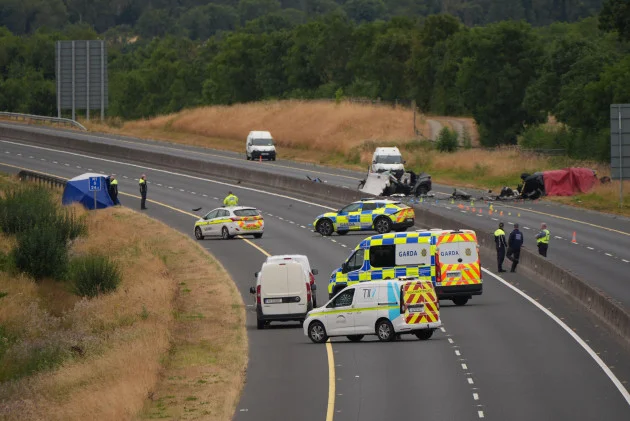
The Fianna Fáil MEP’s comments follow two separate crashes on Ireland’s motorways in which cars being driven the wrong way collided with other vehicles.
The latest such incident on the M9 in the early hours of Sunday morning resulted in the deaths of five teenage boys who were in the car driving the wrong direction on the motorway.
In the other car, three women and a seven-year-old boy were seriously injured.
In a post to X on Tuesday evening, Kelleher wrote, “Intentionally driving down the wrong side of a motorway should not be a traffic offence, it should be classified as Attempted Murder.
‘The very least we should expect is that cars travel in the same direction on a motorway. We must stamp [out] this very serious criminal behaviour.”
The charge of attempted murder requires prosecutors to prove the accused had intent to kill with their actions.
Speaking to The Journal, Kelleher said, although it is illegal to drive the wrong way down a motorway, some “people obviously view that as an insignificant deterrent”.
It is his belief that the crime should be upgraded to a “very serious criminal offence” to send out a message that such behaviour is “wholly unacceptable”.
“It’s not a victimless crime, and we saw the tragic consequences on two occasions in recent times,” he said. “It is becoming more prevalent and I think the idea that its just seen as a traffic offence, in my view, is not enough.”
Despite the legal limitations around applying a charge of attempted murder, Kelleher said, “in my view, if you go on the wrong way intentionally, you are intentionally putting lives at risk.”
Kelleher’s party colleague Jim O’Callaghan said in the wake of Sunday’s crash that he would examine making driving the wrong way on a motorway a separate offence.
“These types of offences are way above and beyond what is considered the normal threshold for traffic offences,” Kelleher continued, arguing that he feels many of the sanctions for road traffic offences are insufficient to apply to this act.
“That it would just be seen as a road traffic offence where you lose a licence or get penalty points is not good enough. A lot of these people aren’t even of the age to have a licence in the first place, or have never had a licence.”
He said he is in the process of sharing his views with O’Callaghan, and hopes the two incidents will spur on gardaí and legislators to take serious action.
“The idea that people can sit into a motor car, drive the wrong way, put people’s lives at risk, and not have it seen as a very serious criminal offence, in my view would be an abdication of our responsibilities as legislators to legislate to protect people on the roads.”
To embed this post, copy the code below on your site