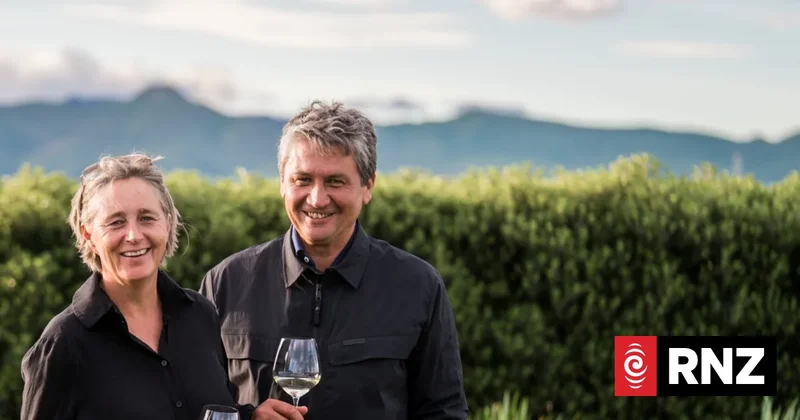
Tiki is New Zealand's first certified regenerative vineyard and winery
Its founder says the achievement is rooted in values passed down through his whānau.
A Māori-owned North Canterbury wine producer has become New Zealand's first certified regenerative vineyard and winery.
McKean says those values weren’t something the whānau developed as part of a business strategy, but were passed down from his mother, Sally Hariata McKean (Ngāti Uenukukōpako, Ngāti Ranginui, Ngāi Te Rangi).
"Mum was a very big part of it, so we had the feeling with kaitiakitanga," he says.
"It's not so much just that you decide to, it was more that Mum had instilled in us, that we had an obligation really around it.
"It was not an obligation in terms of a negative weight, it was that we were very lucky to have that obligation."
The name 'Tiki' honours McKean's great-great-great grandfather, Ngāti Uenukukōpako (Te Arawa) chief Tikitere Mihi, a farmer and kaitiaki of the land.
That sense of responsibility shaped the approach to the 325-hectare vineyard - the goal was always to leave the whenua better than they found it.
"Right from the outset, we would think of things that we could do that would make the land better and things that would make it better for our people."
He says the philosophy reflects a longstanding Māori understanding of the relationship between people and the natural world.
"It's also about, rather than feeling as though you're separate from nature, you are part of it.
"The former is illogical... whatever you do to Mother Earth, you're doing to yourself."
Working with nature - rather than against
The McKeans planted their first vines in 2005/06, after buying an old sheep farm in Waipara, despite having little experience in viticulture.
Royce McKean says the path to regenerative farming hasn’t been easy.
The whānau initially ploughed the land, only to see topsoil blow away in the wind.
They later moved into organic practices, but found that simply removing conventional inputs without replacing them with another system left their vines struggling.
"We made plenty of mistakes along the way - the intention was to do it, you know, and try and learn from it."
Now, rather than working against natural systems, their approach focuses on soil health, biodiversity and allowing nature to do more of the work.
"You're looking to farm with nature as versus against it," he says. "What I like about regen [regenerative farming] is it's trying to have a more holistic picture like kaitiakitanga in terms of it's looking at everything, it's looking at the people and the whole effect that you have."
That has included planting different cover crops between the vines, reducing tillage and chemical intervention, using compost and bringing sheep into the vineyard.
They aim to create a diverse ecosystem, rather than a monoculture.
"When you see things in nature, it's pretty rare to see a monoculture. Generally, it's lots of different things growing together and that's what regen is trying to do.
"You walk into a regen farm... and you just feel it. It's friggin' beautiful.
“There's life and energy, there's a lot of diversity in terms of what's going on."
The connection between regenerative agriculture and Māori values is not new, he says.
"Within Māoridom, it's something that intuitively we know is right and it's something that we've done for, you know, millennia, a long period of time.
“It's no new knowledge, and we're no smarty pants or anything in relation to it, we're just doing things and allowing nature to do most of the work."
Healthier soil benefits both the taiao (environment) and the people consuming what’s grown from it, McKean says.
"Healthier vines produce healthier fruit and, we believe, better wine."
Tiki plan to head overseas, bound for a sustainability and drinks event in London, seeking new distributors and retailers.
"Māoridom resonates - it doesn't resonate with everyone and it doesn't have to, but with many - it could be distributors, it could be retailers - it does, and those are the ones that we want to partner with and who we want to work with."
Jeremy Gardiner, New Zealand Trade and Enterprise’s head of Māori export customers, says regenerative farming could help Māori businesses communicate concepts such as kaitiakitanga and whakapapa to international consumers.
"Sustainability, regenerative practices become a bit of a translation tool to help people understand that story."
He says it is part of a wider push to move New Zealand exports towards higher-value products.
Growing presence in international markets is an opportunity for Māori businesses to tell their own stories, he says.
"It's exciting to see our culture and stories told in a way by us, in a way that makes sense to people around the world, and then gives them the opportunity to look for our products and buy our products."
He says authenticity "is the big thing for consumers”.
"You can tell a good story, but if it's not true, consumers will hear it pretty quickly.
"The ability to be just true to yourself, true to culture and telling your story your way is going to be valuable, regardless of the product."