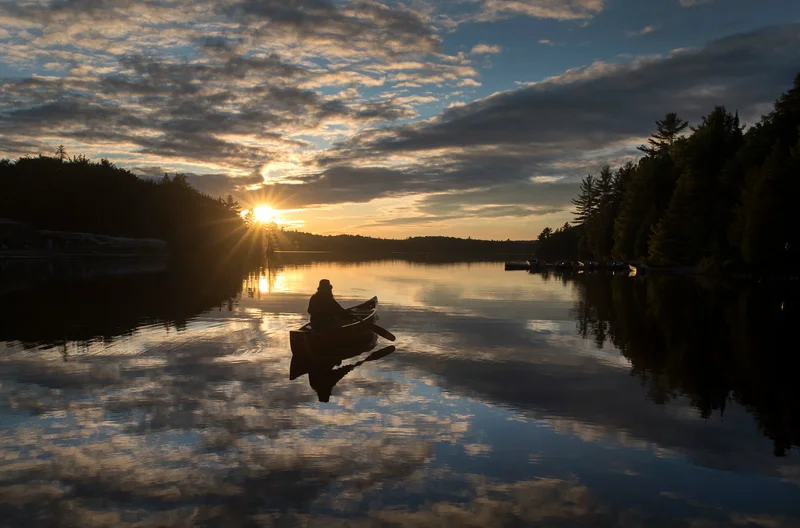
Camping is a way of life in the summer for many Canadians. It is also the budget-friendly vacation par excellence.
But snatching a campsite at provincial and national parks during peak season has become something of a Hunger Games-like endeavour.
Most park agencies use a first-come, first-served system for online camping reservations with bookings opening months in advance on a rolling basis. For popular destinations, securing a site often involves monitoring the clock in the early hours of the morning – finger hovering over the mouse ready to book as soon as the time changes from, say, 6:59:59 a.m. to 7:00:00 a.m.
I spent the past couple of weeks looking into how the spread of AI bots could finally spell the end of this high-adrenaline (and, often, highly frustrating) booking ritual – or make it much worse, if park agencies stick to the status quo. (Spoiler: The Globe was able to nab a campsite with an AI bot we built as a proof of concept.)
You can read the article here.
In this newsletter, though, I thought I’d share what readers and experts told me about their best tips and hacks for finding campsites – both on and off the beaten track. Here’s what I heard:
If you’re canoeing or kayaking:
Parks Canada waterways:
From Ottawa-based David Bell:
Paddlers travelling along Parks Canada waterways (for example, the Rideau Canal system from Kingston to Ottawa and the Trent-Severn system from Trenton to Georgian Bay) are allowed to camp at most lockstations for a nominal fee.
“Some of these sites are absolute gems seeped in history (e.g., Jones Falls on the Rideau system); and we experienced lots of camaraderie among fellow paddlers and boaters (we’ve even kept in touch with some people).”
Backcountry paddling at Algonquin Park:
Also from Bell:
At Ontario’s oldest provincial park, backcountry paddlers can reserve a particular lake or pre-defined zone, but within those areas, they can camp any available site that isn’t already occupied.
“My son and I just returned from a week in the western section of Algonquin Park. We paddled beyond the easily accessible lakes, endured a couple long and difficult portages, plus navigated over multiple beaver dams on a river system, but all the hard work paid off – we camped on a series of lakes over three days and didn’t see a soul.”
Monitor cancellations:
One reader in Victoria shared that they’ve had luck snagging cancellations refreshing the BC Parks website throughout their work day.
If you’re not quite prepared to do that, several park agencies, including BC Parks, have cancellation alert services you can sign up for. The downside is everyone interested in the same spot and dates will be alerted at the same time.
Then there’s Campnab, a platform that lets you set up more finely customized cancellation alerts for your favourite campgrounds. The cost is typically between $10 and $20.
Boondocking:
If you’re okay with off-grid camping, you can often camp for free – or for a small fee – on Crown land, though the rules vary slightly by province.
In B.C., Eric Karjaluoto, co-founder of Campnab, recommends checking out the Recreation Sites and Trails BC program for a list of such camping spots. The province has arguably the most accessible public-land camping systems, with designated sites that often include picnic tables and toilet facilities.
Private campgrounds:
Karjaluoto also suggests looking at private campgrounds. Sites such as Campspot and Hipcamp list anything from RV pad to tent sites to glamping destinations.
Erica’s personal finance reading list
“For years, the fees you pay to own mutual funds, ETF and segregated funds have been scattered, buried or simply never shown to you in dollar terms,” writes financial advisor Robb Engen. That’s about to change, thanks to new rules mandating that annual statements show the total cost of the fund in actual dollars and not just a percentage. The first such statements will land in early 2027.
Sales of new condos in and around Toronto and Hamilton jumped more than 50 per cent between April and June of this year compared to the same period last year, according to real estate research firm Urbanation. Now, to put that number in perspective: Sales were sill 86 per cent below the average for the past 10 years.
We’ve been measuring homeownership rates wrong, argues economist Mike Moffatt. Statistics Canada’s current methodology doesn’t take into account the increasingly common scenario of people in their 20s and 30s who still live with their parents. The U.S. Federal Reserve Bank of Minnesota has come up with a better measure, and Mr. Moffatt applied it to Canada. The results are eye-opening.
A TD customer says he lost almost $15,000 when fraudsters tapped his line of credit. The bank says he wasn’t hacked and is responsible for the missing money. A cybersecurity expert quibbles over the bank’s evidence.
Chart of the day
Workplace pension plans have failed most Canadians, says Fred Vettese in this chart, where he suggests Canadians should consider a more equitable arrangement where employers contribute the same percentage of pay for all workers – public or private.
The Economist magazine has a new tool to help you understand whether a high-wage city merely attracts well-paid people or actually lifts their wages. It’s for subscribers only, but you can have a peek with a free trial.
In the social sphere
Have a burning investing question? Chances are, you’ll see yourself reflected in this ask-me-anything session the crew of the Rational Reminder podcast recently held with their listeners. Answering questions were Ben Felix, Dan Bortolotti and Ben Wilson of PWL Capital.
The money-free zone
You may have seen the social media meme that laments that while AI is writing and making art, humans are still stuck washing the dishes and doing laundry. I have good news: Robots are working on this very issue.
Technology writer Joanna Stern recently shared her experience wearing a head harness and recording herself doing house chores to train cyborgs at a German startup.
The training: Fold clothes, clean the table and pick up dog poop. The future can’t come fast enough.
ICYMI
Globe and Mail stories from the last few days
- Coinbase Canada seeks to build ‘everything exchange’ as new CEO plans first crypto futures offering
- The best savings rates out there may not be the highest ones
- End of carbon tax rebates a financial hit for Canada’s poorest, research shows
- Amex partners with hotel loyalty program ALL Accor, giving consumers more choices