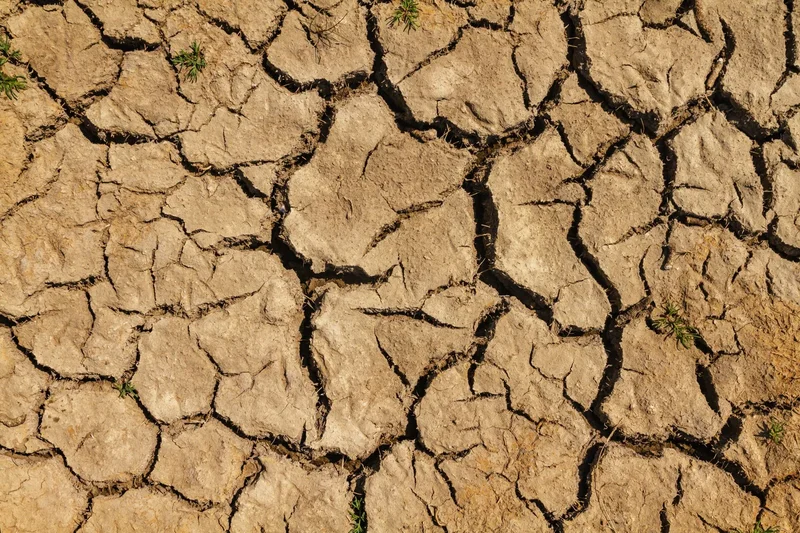
Honduras Puts 75 Municipalities on Red Alert Over Drought
Honduras · CLIMATE
Key Facts
- Red alert75 municipalities, declared 19 August 2026.
- Yellow and green alerts71 and 88 municipalities respectively.
- Total under alert234 of the country’s 298 municipalities.
- Declared byCOPECO, the national risk management agency.
- President’s estimatethe crisis runs to March or April 2027.
Honduras has declared a red alert in 75 municipalities because of drought linked to El Niño. The declaration was made on 19 August 2026.
What has been declared
COPECO, the Honduran risk management agency, declared a red alert in 75 municipalities. The reason given is drought associated with El Niño.
A further 71 municipalities are on yellow alert and 88 on green. Together that is 234 municipalities.
Honduras has 298 municipalities in total. So 234 is 78.5 percent of them.
Wire coverage rounded that to 80 percent of the country, including the capital. Both descriptions come from the same underlying count.
The red alert was declared for an indefinite period, with some reports citing a 120-day validity on the initial decree.
Infobae reported the total of 234 municipalities affected. Prensa Libre carried the COPECO declaration itself.
What a red alert means
Red is the highest of the three levels in the Honduran system, and the Honduras drought has now reached it. It unlocks emergency powers and budget reallocation for the affected municipalities.
Yellow and green are lower tiers, indicating preparation rather than active emergency. All three appear in the same declaration.
The alert level is a measure of administrative response, not of rainfall. It does not tell you how much rain has failed to fall.
That distinction is worth keeping in mind when comparing across countries.
The Honduras drought declaration covers meteorological drought specifically. It is separate from any flood or storm alert.
What is actually happening on the ground
Wire reporting describes El Niño scorching harvests and livestock dying of thirst. Those are the visible effects.
Honduras sits in Central America’s Dry Corridor, a belt running from Guatemala through El Salvador and Nicaragua. It is the region that suffers first in an El Niño year.
Subsistence maize and bean farmers are the most exposed to the Honduras drought. They have no irrigation and no financial buffer.
Coffee, the country’s main export crop, grows at higher altitude and is affected differently.
The Dry Corridor is one of the most climate-exposed farming regions in the Americas. It has suffered repeated failed harvests over the past decade.
El Niño years are consistently the worst of them.
How long the president expects it to last
President Nasry Asfura said the crisis will take the country until March or April next year. That was reported on 19 August 2026.
That timeline matches the forecast El Niño cycle. Meteorological agencies have put the odds of a strong event over the coming Northern Hemisphere winter above 90 percent.
A drought that runs to March covers the entire dry season. It also covers the planting decisions for next year’s first harvest.
That is the part with the longest economic tail.
Asfura’s estimate is a political statement rather than a meteorological forecast. It happens to align with the seasonal outlook.
The other thing that happened this week
On the same day, Asfura met representatives of Standard & Poor’s at the presidential palace. The stated purpose was to review the economic situation and the fiscal, financial and institutional outlook.
S&P moved Honduras from a negative to a stable outlook in March 2026. It kept the long and short-term sovereign ratings at BB-/B.
Those are letter grades rather than monetary figures. BB- sits below investment grade.
Meeting a rating agency the same week you declare a drought emergency is a coincidence of calendar rather than of substance.
It is also a reminder that emergency spending and sovereign ratings pull against each other.
The meeting took place at Casa Presidencial in Tegucigalpa. The account comes from the presidency.
The fiscal problem underneath
The Honduras drought emergency costs money that has not been budgeted. Honduras has limited room to absorb that.
The country returned to ICSID, the World Bank’s investment arbitration body, this month. It has also been reworking its power sector with European support.
Those are the moves of a government trying to restore external confidence. An unbudgeted Honduras drought response complicates them.
None of the reporting quantifies the cost of the emergency.
A sovereign at BB- has limited access to cheap external borrowing. Emergency funding usually comes from multilateral lenders instead.
What it means for the region
The Honduras drought sits in a corridor where dry years drive migration. That link is well documented across previous El Niño cycles.
Honduras is already a major origin country for migration north. A failed harvest season increases the pressure.
Food prices in the region rise with a maize and bean shortfall. Neighbouring countries import from the same market.
The Panama Canal is separately restricting ship draft over the same El Niño forecast.
Guatemala, El Salvador and Nicaragua share the same corridor. None has declared an emergency at this scale so far this season.
The Honduras drought is the first formal declaration of the cycle.
What to watch
The first thing is whether the Honduras drought alert is extended beyond its initial 120 days. That decision would come around December.
The second is the primera harvest assessment, usually published in the autumn. That gives the first hard number on crop losses.
The third is any international appeal. Emergencies of this scale usually generate one.
We will report figures on the Honduras drought as agencies publish them.
COPECO publishes municipality-level alert changes as they happen. Those are the most current source.
The alert levels can be lowered as well as raised.
Frequently Asked Questions
How many municipalities are affected?
234 of Honduras’s 298 municipalities are under some level of alert: 75 red, 71 yellow and 88 green. That is 78.5 percent of the total.
Who declared the alert?
COPECO, the Secretaría de Gestión de Riesgos y Contingencias Nacionales, on 19 August 2026.
How long will the drought last?
President Nasry Asfura said the crisis will run until March or April next year. Forecasters put the odds of a strong El Niño through the coming winter above 90 percent.
Why do reports say 80 percent of the country?
That is the rounded share of municipalities under alert. The precise figure from the counts published is 78.5 percent.
What did the S&P meeting concern?
The president met Standard & Poor’s representatives on 19 August to review Honduras’s economic situation and fiscal outlook. S&P rates Honduras BB-/B with a stable outlook.
Sources
This article was produced by The Rio Times’ automated newsroom system. How we use AI · Report an error