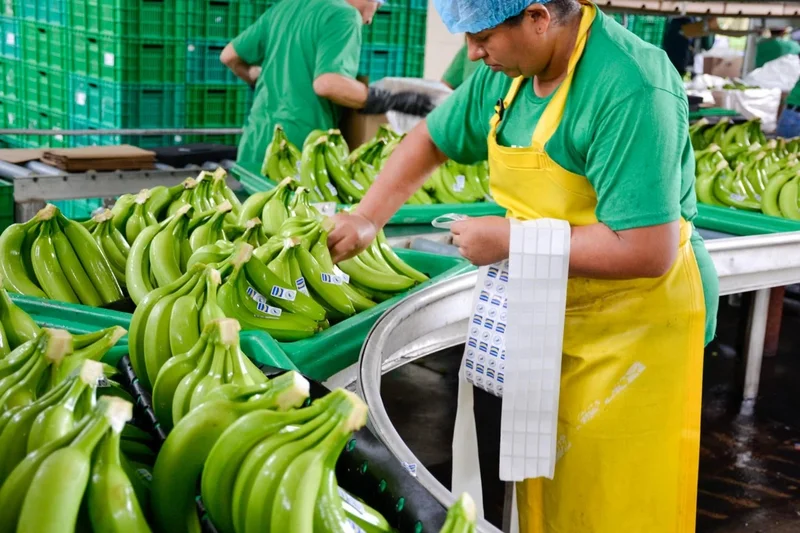
Ecuador Plans Its First Banana Shipment to Brazil in Years
Ecuador · EXPORTS
Key Facts
- Whata trial shipment of Ecuadorian bananas to Brazil.
- Whenin the coming months; no fixed date published.
- Closed sinceroughly seven years, on phytosanitary and legal grounds.
- Ecuadorian regulatorAgrocalidad, which has sent the technical file.
- Exporter bodyAEBE, whose head confirmed the plan.
Ecuador’s banana export sector is preparing a trial shipment to Brazil. The market has been effectively closed for almost seven years.
What has been announced
Ecuador’s banana export sector is preparing what it calls an embarque de prueba, a trial shipment, to Brazil. The plan was reported on 19 August 2026.
The comments come from José Antonio Hidalgo, who heads AEBE, the Ecuadorian banana exporters’ association. He described legal and phytosanitary barriers being eased.
Agrocalidad, Ecuador’s plant and animal health regulator, has coordinated the technical work. It has already sent the required information.
Brazil’s phytosanitary authority issued a formal request to process the admission of Ecuadorian bananas.
That request is what restarted the process.
The Ecuador banana sector has pushed for this opening for years. AEBE speaks for most of the country’s exporters.
What has not been announced
There is no shipping date. The wording is that the sector is preparing a shipment in the coming months.
No volume has been published, in tonnes, boxes or containers. No value has been published either.
The specific exporting company or companies are not named in the reporting. AEBE and Agrocalidad are described as the actors organising it.
The date and title of the Brazilian regulatory document are also not in the public record.
We are reporting what was said, and marking the gaps.
We looked for a named exporter and a sailing date and found neither. Both would normally appear in a commercial announcement.
Why the market was closed
The barrier was phytosanitary and legal rather than commercial. Brazil grows bananas itself and applies plant health rules to imports.
Ecuador banana exports have therefore gone almost everywhere except its large neighbour. Russia, the European Union, the United States and China are the main destinations.
Reopening requires the importing regulator to accept the exporting country’s controls. That is a technical negotiation, not a trade deal.
It is slow by design. Seven years is not unusual for this kind of file.
Ecuador banana shipments already meet European and Chinese plant health standards. Brazil applies its own.
Mutual recognition is not automatic between neighbours.
Why Brazil matters to Ecuador
Brazil has a population of more than 200 million and a well-developed retail sector. It is the largest consumer market in South America.
Ecuador is the world’s largest banana exporter by volume. Having no access to the biggest market on its own continent has always been an anomaly.
Brazil also produces bananas domestically, mostly for its own market. Imports would compete with that production.
How much room there is depends on price and on season.
Ecuador exported record banana volumes to China in recent years. Brazil would be the first large new market on its own continent.
Sea freight from Guayaquil to Santos is short by comparison with the Asian routes.
What a trial shipment actually does
A trial shipment is a supervised test of the whole chain. It checks packing, cold storage, transit time and inspection at the destination.
If the fruit arrives in condition and passes inspection, regular trade can follow. If it does not, the file goes back to the regulators.
That is why no volume figure exists. The point is not to sell a large quantity.
Commercial flows would come afterwards, and would need their own agreements.
Inspectors at the destination will look for pests and for compliance with packing rules. A single interception can halt the process.
That is why the Ecuador banana sector is treating this as a technical exercise.
The infrastructure behind it
Ecuador banana exports depend on cold chain capacity at the ports. We reported on 18 August on new cold storage at Puerto Bolívar, the main banana terminal.
That kind of investment is what makes new destinations viable. Bananas are shipped green and ripened at the destination.
A longer route needs tighter temperature control. Brazilian ports are close by sea, which helps.
The technical challenge here is regulatory rather than logistical.
Puerto Bolívar in El Oro province handles the bulk of the trade. Guayaquil handles the rest.
Who gains if it works
Ecuadorian growers gain a nearby market that does not depend on the long Pacific and Atlantic routes. Freight cost per box falls with distance.
Brazilian consumers gain supply, particularly out of season. Brazilian growers face a new competitor.
The Brazilian producers’ associations have not commented publicly on the reopening. That may change once volumes are real.
Trade openings of this kind are usually contested at home.
Ecuador banana growers have had a difficult run on price. A new outlet helps, even a small one.
Whether it changes farmgate prices depends entirely on volume.
What to watch
The first thing to watch is a published shipping date. Until there is one, this remains a stated intention.
The second is the Brazilian regulator’s formal authorisation text. That document sets the conditions any Ecuador banana shipment has to meet.
The third is whether a named exporter steps forward. Trials are usually run by one company on behalf of the sector.
We will report each of those when they appear.
An Ecuador banana consignment arriving in Brazil and clearing inspection would be the real milestone. Everything before that is paperwork.
Frequently Asked Questions
When will the shipment leave?
No date has been published. AEBE says the sector is preparing a trial shipment in the coming months.
How long has the market been closed?
Almost seven years, on phytosanitary and legal grounds rather than commercial ones.
Who is organising it?
AEBE, the Ecuadorian banana exporters’ association, with Agrocalidad handling the technical and phytosanitary file.
How much fruit is involved?
No volume or value has been published. A trial shipment is a test of the chain rather than a commercial consignment.
Does this mean regular exports will start?
Only if the trial passes inspection in Brazil. Regular trade would need its own commercial and regulatory arrangements afterwards.
Sources
This article was produced by The Rio Times’ automated newsroom system. How we use AI · Report an error