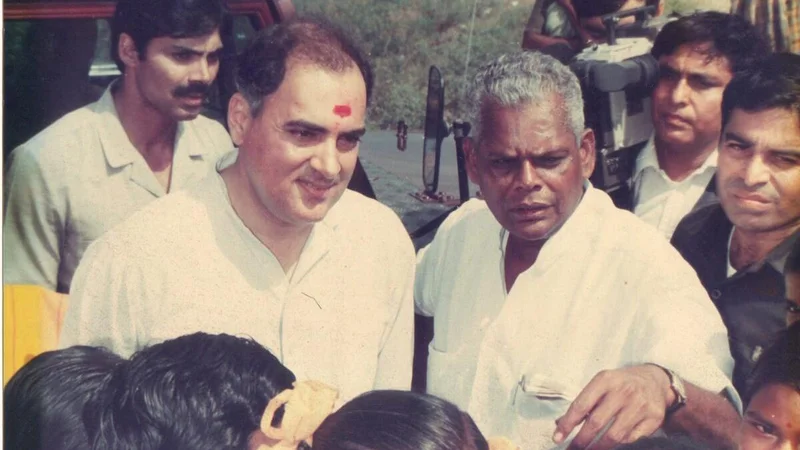
Rajiv Gandhi became the youngest Prime Minister of India, after his mother Indira Gandhi’s assassination in 1984. At the time, India’s basic infrastructure was crippled, with limited access to telecommunications and increasingly high disparities in education. Despite the roadblocks, the PM pioneered several initiatives that marked a sharp shift from the erstwhile governance. On Rajiv Gandhi’s 82nd birth anniversary on August 20, 2026, here’s a look at the three measures taken during his tenure, including lowering the voting age. He was also instrumental in setting up C-DOT and introducing the National Policy on Education.
18-year-olds enter the electorate
The Sixty-First Amendment Act, 1988, of the Constitution enacted during Rajiv Gandhi’s rule lowered the minimum voting age from 21 to 18 by amending Article 326. Parliament passed the legislation in 1988, and it came into force on March 28, 1989. This catapulted a massive youth population to vote in the November 1989 Lok Sabha election. This move added a 3.57 crore people between 18-21 years of age to the electorate.
C-DOT and the rural telephone experiment
On August 25, 1984, the government set up the Centre for Development of Telematics (C-DOT) as an autonomous telecommunications research organisation, aiming to develop a cluster of digital electronic switching systems within 36 months and a budget of ₹36 crore. The initiative faced its first litmus test when it installed a 128-line Rural Automatic Exchange (RAX), designed to operate in conditions of high temperature, dust and unreliable electricity, on a field deployment drive at Kittur in Karnataka on July 22, 1986.
During this period, the rural tele-density was extremely low. The Kittur exchange had only capacity to serve 80 subscribers and provide connections to the larger city exchange. Later, the system was manufactured by multiple companies. By March 1993, more than 10,000 RAX units had been produced, according to the data shared by Department of Telecommunications.
Eventually, the project yielded an unusual local result, recording a reported increase in the local bank’s cash deposits and a rise in business income among subscribers after telephone connectivity was set up in the area.
National Policy on Education, 1986
The National Policy on Education (NPE), 1986, introduced during Rajiv Gandhi’s tenure dealt with elementary education, adult literacy, teacher education, school infrastructure, vocational education and access for disadvantaged group.
This was exemplified by its programme Operation Blackboard, which aimed to provide primary schools with minimum essential facilities. The policy highlighted the basic infrastructure that must be committed to a school. It also proposed school-level surveys to identify deficiencies and a phased implementation beginning in 1986–87.
The policy capitalised on the core ideals of universal elementary education and retention of children up to 14 years of age to ensure low dropout. In 1988, the government launched the National Literacy Mission, targeting functional literacy among adults aged 15–35. The programme dealt and achieved success in substantiating adult literacy as a major driver of education reform in society.
Rajiv Gandhi’s ascension to power
Gandhi, who served as India’s sixth Prime Minister from 1984-89, was reluctant to step into political arena after his brother Sanjay Gandhi’s death in a plane crash in 1980. He decided to join politics at the behest of his mother Indira Gandhi and few senior Indian National Congress leaders.
**
Also Read : Rajiv Gandhi: The original ‘Accidental Prime Minister’**
Subsequently, he contested from Amethi constituency, secured earlier by Sanjay Gandhi, winning the by-election in 1981. Later, Gandhi assumed the role of general secretary of the Congress party in 1982. His ascension to become India Prime Minister hurtled after his mother Indira Gandhi’s assassination in 1984, shortly after Operation Bluestar. After assuming the leadership through the troubled period anti-Sikh riots in Delhi, he drove the party to a thumping victory in elections in December. The Congress clinched 414 of 541 seats in the election.
What is Sadbhavana Diwas?
On August 20 every year, Sadbhavana Diwas, also known as Harmony Day, is observed in a bid to commemorate the birth anniversary of former Prime Minister Rajiv Gandhi. The day is observed annually to promote national integration, harmony, and social cohesion.
Published - August 20, 2026 12:41 pm IST