Republic of the Congo Oil Contracts Lock In a US$90 Windfall Trigger
REPUBLIC OF THE CONGO (BRAZZAVILLE) · ENERGY
What the new Congo oil contracts change
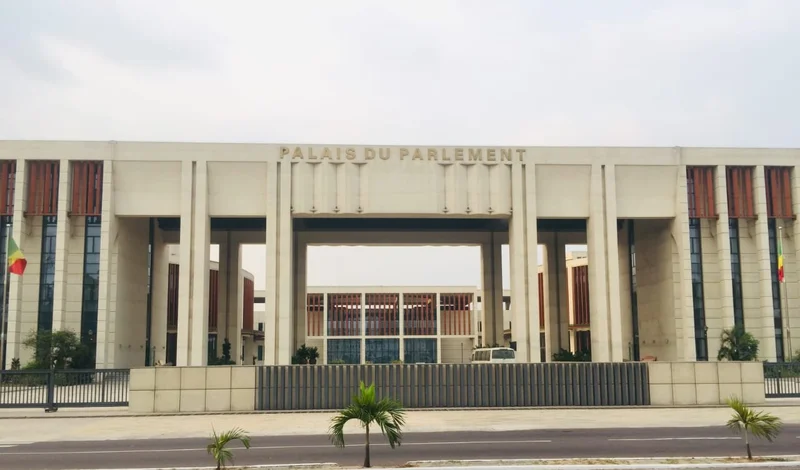
The Council of Ministers met at the Palais du Peuple in Brazzaville on Tuesday 18 August 2026, chaired by President Denis Sassou N’Guesso. Hydrocarbons Minister Stev Simplice Onanga brought four bills and two decrees to the table. The bills were approved and will now be sent to Parliament for examination and adoption.
The four bills approve the first amendment to four petroleum agreements. Their stated purpose, in the government’s own communique, is to modify the technical mechanism known as the high price by instituting a single threshold of 90 US dollars per barrel, applicable throughout the duration of the contracts.
That last clause is the substance. A windfall trigger that does not move is a windfall trigger that erodes, because the number is nominal and the contracts run for decades. Brent crude traded in the high US$80s to low US$90s a barrel through August 2026, so the new trigger sits at about the going market price rather than well above it.
The government frames the change as a way to sustain investment, keep the Coraf refinery at Pointe-Noire supplied, and raise fiscal returns over time. The first two are near-term aims; the third is explicitly deferred.
Which agreements are covered
Two of the four, Nanga II Bis and Nanga IV, are onshore exploration permits in the coastal Kouilou basin. Both were signed on 23 November 2023 between the Republic of the Congo, the national oil company SNPC and Dingheng Mining Co. Limited, and each is amended by its own separate bill.
The other two involve Oriental Energy SAU, the Congolese subsidiary of the Chinese group Ganergy Heavy Industry Group Co. Ltd. They are the Nanga V production-sharing contract, also onshore in Kouilou, and the shallow-water offshore permit Marine XXIX, which the communique dates to 25 April 2025. Parliament approved both of those underlying contracts in August 2025.
Neither counterparty is a supermajor. Both are Chinese-linked newcomers rather than the TotalEnergies and Eni ventures that produce most of the country’s crude. That matters, because a fixed ceiling on state upside is a concession usually extracted by companies bringing scale and technology a state cannot source elsewhere.
No tax rate is attached to the threshold in the published text, and no revenue figure is given. The US$90 number is a trigger, not a rate, and any estimate of what it costs the treasury would be guesswork.
The stakes behind it are not small. The country’s 2023 extractive industries transparency report put the sector at 66.4% of government revenue, 72.4% of exports and 53.3% of gross domestic product. How much the state collects when prices rise moves a large share of the budget.
An 85% share of the flagship project
The first of the two decrees records that Wing Wah Exploration and Production Petroliere SAU has renounced the Banga Kayo permit. SNPC has been awarded a new liquid and gas exploitation permit in its place, Banga Kayo II.
The contractor group on the new permit is SNPC at 15% and Wing Wah at 85%. The communique attaches an expected investment of US$23 billion to the integrated redevelopment.
That figure is presented without a breakdown, a timetable or a financing structure. It is the government’s own expectation rather than a committed capital programme.
The second decree extends the Holmoni and Cayo development plan by three years, pushing expiry to 4 December 2045. The same 15/85 split between SNPC and Wing Wah applies there.
The China file, read in one sitting
The same cabinet session heard Vice Prime Minister Jean-Jacques Bouya report on a mission to China that ran from 24 July to 6 August 2026. The list he brought back is unusually explicit.
It includes a confirmed state visit by President Sassou N’Guesso to China, a FOCAC senior officials meeting in Brazzaville, and a FOCAC ministerial conference in the Congolese capital between June and July 2027. It also includes an agreement for the new presidential palace to be financed entirely by grant.
An agreement in principle was reached for Congo to join the Asian Infrastructure Investment Bank. Six structural projects were validated, among them the rehabilitation of the Congo Ocean Railway, a potash-to-fertiliser plant in the Pointe-Noire special economic zone, an aeronautical maintenance centre and the overhaul of three MA60 aircraft.
The financing model named for that portfolio is invest-build-operate. That phrase places the capital, the construction and the running of the assets with the same foreign partner.
Why an outside investor should read this session whole
Taken separately, none of these items would carry far. A fiscal amendment, a permit reshuffle and a diplomatic readout are routine cabinet business anywhere.
Taken together in one sitting, they describe an alignment. The Republic of the Congo has fixed its price upside, concentrated its flagship gas project in one foreign operator’s hands, agreed to host the continent’s main China-Africa forum, and agreed in principle to join a Beijing-led development bank.
The Republic of the Congo is a modest producer by global standards but the third largest in sub-Saharan Africa, behind Nigeria and Angola, at roughly 268,000 barrels a day over the first seven months of 2025. It has been an OPEC member since June 2018, and its terms are read by neighbours as a reference point.
There is a governance flag worth naming. In June 2024 Amnesty International documented oil spills on the soil and water sources of Banga Kayo village, said Wing Wah’s operations had been suspended twice by the environment ministry between 2020 and 2022, and reported that no figure was ever published for the volume spilled when the pipeline to the Djeno terminal leaked in December 2022.
The other item on the agenda
Trade Minister Jacqueline Lydia Mikolo reported that Congo was elected second vice-president of the bureau of the African Continental Free Trade Area council of ministers, alongside Nigeria, at meetings in Abuja from 22 to 30 June 2026.
Brazzaville is also due to host the 22nd session of that council in 2028. A sub-regional forum for the ECCAS bloc of Central African states is scheduled in the capital for the end of October 2026.
The continental trade agenda and the bilateral China agenda are being run in parallel rather than in tension. For a small producer with limited fiscal room, that is a deliberate hedge.
Frequently Asked Questions
What did the Republic of the Congo change in its oil contracts?
The Republic of the Congo’s Council of Ministers approved four bills on 18 August 2026 instituting a single windfall threshold of US$90 a barrel. It applies for the entire duration of the contracts concerned, and the bills still need parliamentary adoption.
Which contracts are affected?
Four separate bills amend Nanga II Bis and Nanga IV, both signed on 23 November 2023, the Nanga V production-sharing contract, and Marine XXIX, signed on 25 April 2025.
Who holds the Banga Kayo project now?
Wing Wah renounced the original permit and SNPC was awarded a new liquid and gas permit, Banga Kayo II. The contractor group is SNPC at 15% and Wing Wah at 85%.
What did the Republic of the Congo agree with China?
The cabinet recorded a fully grant-funded new presidential palace, an agreement in principle to join the Asian Infrastructure Investment Bank, and a FOCAC ministerial conference in Brazzaville between June and July 2027.
This article was produced by The Rio Times’ automated newsroom system. How we use AI · Report an error
LatAm Markets: Live Signals → — real-time movers, turnover leaders and FX across Latin America.