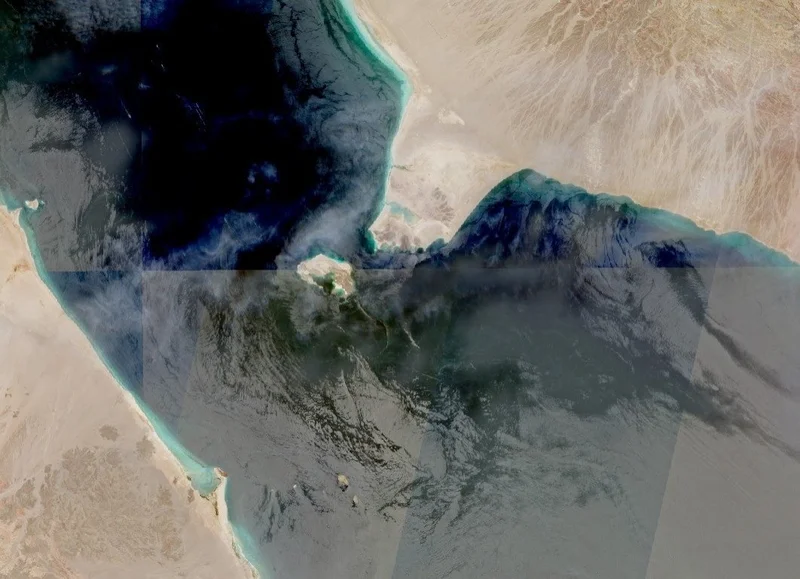
Two Chinese supertankers carrying a combined 4 million barrels of Saudi Arabian oil exited the Red Sea via the Bab el-Mandeb Strait on Thursday, shipping data showed, apparently escaping a blockade on shipments of Saudi oil by Yemen's Houthi rebels even as other vessels came under attack.
The Red Sea blockade by the Iran-aligned Houthis is worsening global energy supply disruption, coming at the same time the key Strait of Hormuz has practically shut due to the resumption of fighting between the U.S. and Iran.
The Singaporean-flagged VLCC Xin Long Yang, which made a U-turn and paused in the middle of the Red Sea on Tuesday, resumed its journey southward late on Wednesday, LSEG shipping data showed. The Chinese-flagged VLCC Cosnew Lake followed and both tankers exited the Red Sea later on Thursday, the data showed.
The Xin Long Yang was heading to the port of Qinzhou in southern Guangxi province, while Cosnew Lake is expected to discharge its cargo at the port of Huizhou, in the southern Chinese province of Guangdong, the data showed.
Both vessels indicated through their automatic identification system transmitters that there were Chinese crew onboard, the data showed. The vessels are chartered by Unipec, the trading arm of Asia's largest refiner Sinopec, and loaded crude at Saudi Arabia's port of Yanbu earlier this week.
At least two other VLCCs chartered by Unipec and scheduled to enter the Red Sea and load Saudi crude at the Yanbu port later this month slowed their advance toward Bab el-Mandeb and were making small circles in the Gulf of Aden, LSEG data showed.
Earlier on Thursday, the Houthis announced they had carried out a military operation targeting two Saudi oil tankers they said violated the blockade.
Shipping data showed both tankers supply crude to Saudi power plants and local refineries. The Saudi Arabian news agency SPA later said the Saudi vessel Encelia was attacked in the Red Sea and was on fire, though the crew was safe.
Because of the Middle East conflict, shipping traffic through the Bab el-Mandeb declined and movement through the Strait of Hormuz remained subdued on Wednesday, data from LSEG and data analytics firm Kpler showed.
Twenty-seven vessels, including five oil tankers and a liquefied petroleum gas (LPG) carrier, crossed the Bab el-Mandeb Strait on Wednesday, LSEG data showed, down from 38 the previous day. Data from analytics firm Vortexa showed one VLCC exited Bab el-Mandeb with its transponder switched off on Wednesday.
Two VLCCs emerged from the Strait of Hormuz on Thursday, LSEG data showed. The New Giant, carrying 2 million barrels of Iraqi crude, was headed for the eastern Chinese port of Rizhao, while the Rotterdam Energy, loaded with 2 million barrels of Upper Zakum crude from the United Arab Emirates (UAE), appeared off Fujairah, according to LSEG and Kpler data.
Three commodity vessels transited the Strait of Hormuz on Wednesday, down from four a day earlier and 18 the previous Wednesday, according to Kpler.
Two vessels entered the strait from the Gulf of Oman, including a tanker carrying dirty petroleum products that sailed through Iranian waters and a dry bulk carrier operating in dark mode, with its tracking signal switched off, Kpler data showed.
As of July 20, there were 253 laden tankers in the Gulf, including 102 oil tankers, 64 liquefied natural gas carriers and 66 liquefied petroleum gas carriers, according to LSEG data.