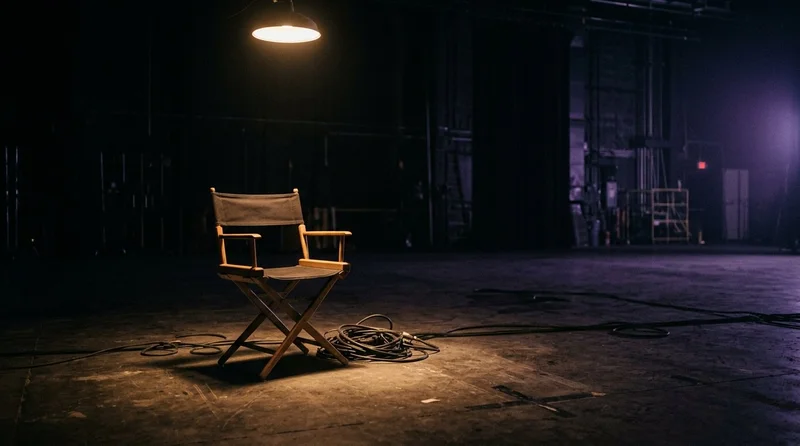
I finished a scene on Lost Garden at two in the morning, watched it back four times, and felt nothing wrong with it. The isolation that comes with AI filmmaking is not about working alone in a room. It is about losing the other person whose job was to tell you when a shot doesn’t work. Two days later I sent the same cut to a friend who has never opened an editing timeline in her life. She watched it once and said the fight went on ten seconds too long. She was right, and I had missed it completely, because I was the only person who had looked at that footage in a week.
That gap has a name now. In February 2026, TechCrunch’s Rebecca Bellan spent five weeks with independent filmmakers who used Google’s Flow Sessions cohort, an early-access program built around Veo and the image model Nano Banana Pro, to make short films from scratch. The films premiered at Soho House New York, and by every account they were good: Brad Tangonan’s “Murmuray,” built from his own family story, used AI to generate a flying-chase shot he could never have afforded to rig practically. Keenan MacWilliam’s “Mimesis” was built entirely from her own scanned photographs of plants and fish, run through custom-trained tools so the film stayed “a true extension of [her] visual language” instead of a blend of someone else’s work.
None of that is the interesting part. The interesting part is what the filmmakers said when TechCrunch asked them how it felt.
Why does AI filmmaking feel lonely, even when the film turns out well?
Because the tools that replace a crew also replace the friction a crew provides, and friction is where most of the good calls get made. Director Hal Watmough put it plainly in the TechCrunch piece: ”I know I’m a one-man band, and I just made all this by myself… but that should never be the way that anyone tells a story or makes a film.” He still brought in an actor friend to voice his short, on purpose, because he’d noticed how far the work drifted when nobody else had a stake in it.
Keenan MacWilliam, who worked her long-time composer and sound designer into “Mimesis” specifically so she wouldn’t lose that layer, said the quiet part out loud: ”I think efficiency in general is not the best friend of creativity.” That is not a complaint about the technology. It’s an observation about what gets cut first when one person can suddenly do the job of six.
The mechanism is simple once you see it. A cinematographer used to suggest an angle you hadn’t considered. A sound designer used to push back on a music cue that didn’t earn its moment. Every one of those was a small argument, and small arguments are how a scene gets tested before an audience ever sees it. A generative model doesn’t argue with you. It renders what you asked for, as well as it can, and waits for the next prompt.
What do solo AI filmmakers say they actually lost?
Not the film. The departments. TechCrunch’s filmmakers described suddenly playing every role a production used to split across a dozen people, with none of the training that normally comes with any one of those jobs:
- Set design and lighting, decisions a solo creator now makes by prompt instead of by walking a location with a gaffer.
- Costuming and continuity, tracked alone across every generated take instead of caught by a script supervisor.
- Color and sound, both final-pass crafts that used to belong to a specialist who did nothing else all day.
- The blunt, outside readon whether a scene actually works, which used to come free from anyone else in the room.
TechCrunch’s own framing for this was direct: the filmmakers found the extra roles “frustrating and draining, pulling them away from the work they actually cared about.” Nobody in that piece said the tools were bad. They said the job had quietly changed shape, and most of them hadn’t agreed to the new shape in advance.
“It should be a collaborative process because the more people that are involved, the more accessible it is by everyone and the more it reaches and connects with people.” Hal Watmough, to TechCrunch, February 2026
Does the isolation actually show up in the finished film, or is it just an uncomfortable feeling?
Both, and the second one is the reason to take it seriously. A film made entirely inside one person’s head is a closed loop: the same taste choosing the shot, choosing the take, and approving the cut, with nothing pushing back at any stage. That loop can still produce something good, as “Murmuray” and “Mimesis” prove. But it drifts in a specific direction over time, toward whatever already sounds right to the one person making every call, and that person is the worst-positioned judge of when the drift has gone too far.
I’d watched my own corridor scene enough times that my brain had started finishing it for me before the footage caught up. That’s not a metaphor. Editors call it fatigue; I call it the reason my two a.m. cut felt finished when it wasn’t. The fix isn’t more AI. It’s borrowing a nervous system that hasn’t stared at the shot for a week.
How do you replace a second opinion when you’re the only person on the crew?
You schedule the friction back in on purpose, because it will not show up on its own. Three habits have actually changed my output on Lost Garden, and none of them require another full-time collaborator:
- Never lock a scene the day you generate it.Sleep on every cut, minimum. Fatigue hides pacing problems that are obvious the next morning.
- Show a rough cut to one person outside the project before it’s final, and pick someone who isn’t a filmmaker on purpose. They won’t be polite about the craft; they’ll just tell you if it’s confusing or if it drags, which is usually the note that matters.
- Write the note down next to the shot, not just in your head.I keep this log attached to the shot plan in ScreenWeaver, the workspace I built for exactly this, so the reason a scene got recut is still there next time I touch that episode, not lost the moment I move on to the next shot.
None of this restores an actual crew. It restores the one function a crew reliably provided, which is somebody whose first reaction isn’t shaped by having stared at the footage for six hours straight. That’s the specific thing worth rebuilding, not the org chart.
The trade is real in both directions
It would be dishonest to pretend the tools only take something away. Tangonan’s flying-chase shot in “Murmuray” would have needed a stunt rig and a VFX budget his short never had. MacWilliam avoided AI entirely for anything she could shoot with a camera or hand to her actual collaborators, and used it only to unlock a look she couldn’t get any other way. Even James Cameron, who has called AI-generated performances “horrifying,” has said in the same breath that cheaper generative VFX could put ambitious sci-fi back in reach of filmmakers who’d never afford it otherwise. The tools expand who gets to make a film. They don’t expand who’s in the room while you’re making it. Those are two different problems, and only one of them gets solved by better models.
Two of the tools behind this shift, for reference:
FAQ
Does using AI to make a film mean working completely alone?
Not necessarily. Several filmmakers in TechCrunch’s 2026 reporting deliberately kept human collaborators for the parts that mattered most to them, like voice acting or sound design, while using AI for shots they couldn’t otherwise afford.
What is “collaborative friction” and why does it matter for AI filmmaking?
It’s the pushback a director gets from other crew members during production, the angle suggestion, the note that a scene runs long. AI tools execute what you ask for without disagreeing, so that friction has to be reintroduced deliberately, usually by showing work to someone outside the project before locking it.
Can one person really replace a whole film crew with AI in 2026?
Technically, often yes, for the departments a generative pipeline covers: cinematography, VFX, some sound and color. What doesn’t transfer automatically is the outside judgment a crew provided for free, which has to be rebuilt as a habit rather than a feature.
If you’ve made something alone with AI and felt the same gap TechCrunch’s filmmakers described, I’d genuinely like to hear how you closed it.