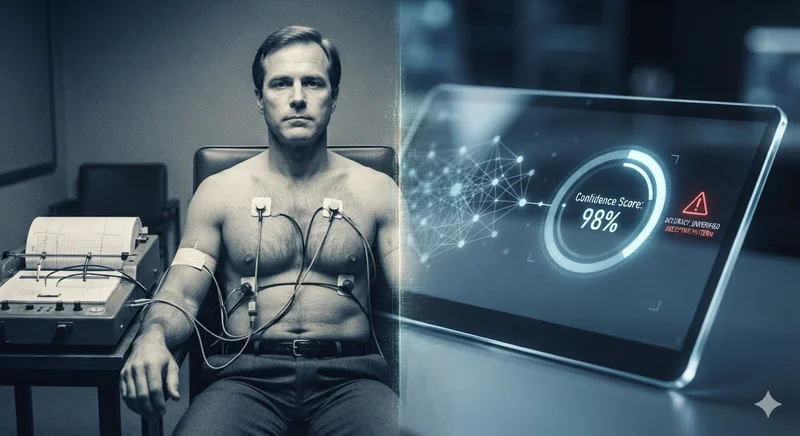
Aldrich Ames was not a good spy. That's the part that should keep you up at night…
For nine years, from 1985 to 1994, Ames sold America's deepest, darkest secrets to the Soviet Union. He handed over the names of at least ten people secretly working for the United States, and most of them were rounded up and shot. As simple as that.
It was, by body count, one of the worst betrayals in the history of American intelligence. And the man who pulled it off was, by every account of the people who worked next to him, a certified mess.
His own bosses thought he was mediocre, if even rising to that. One supervisor said Ames "exuded this feeling of superiority to everyone else" while sitting on what he called "a rubber rung of a career ladder." And he drank. He drank so much that at one Christmas party in Rome he passed out in a gutter and had to be carried home. He once even left a briefcase stuffed with classified documents on a New York subway train. His performance reviews were bad. His personnel file was a hornet’s nest of red flags, and the CIA review team lit up on each and every one of them and still he kept walking.
And then there was the money. On a salary of about seventy thousand dollars a year, Ames paid cash for a Jaguar, bought a house worth over half a million – and back then that was serious coin. He even got himself expensive new teeth and a bespoke wardrobe of tailored suits. And he wasn’t hiding any of this. He was practically wearing a sign saying, “I’m being paid to spy!”. One colleague even made note of the fact that the Ames household was running up five thousand dollars a month in phone bills and that was in an era when landlines and long-distance calls were the standard of the day.
So how does a sloppy, boozy, obviously-living-beyond-his-means officer sell out his country for nearly a decade right under the noses of the most paranoid organization on earth?
Simple. He passed the test.
The machine that measured the wrong thing
Twice during his years of treason, the CIA sat Ames down and hooked him up to a polygraph. The lie detector. The gold standard, the thing that was supposed to catch exactly this. And twice, while actively betraying his country, Ames sailed straight through without a care.
He had no special training. No fancy countermeasures. When he was asked years later how he beat the machine, his answer was almost insulting in its simplicity.
"There's no special magic," Ames said. "Confidence is what does it. Confidence and a friendly relationship with the examiner."
That's it. That's the whole trick. Be calm, be pleasant, be sure of yourself.
His Soviet handlers had told him the same thing before his tests. Just relax, they said. You've got nothing to worry about. And they were right, because they understood something about the polygraph that most people never stop to think about.
The polygraph doesn't measure truth. It can't. On its own, it has no idea what's true. What it actually measures are stress, the sweat, and the racing heart, and the little physical tremors of a nervous person. The entire machine runs on one enormous assumption, which is that liars get nervous and honest people stay calm.
And that assumption is about as reliable as a teapot made of chocolate. So, a calm, practiced liar like Ames glides right through. Meanwhile a jittery, honest person who's terrified of the machine itself can fail it while telling the 100% total and unequivocal honest truth.
The polygraph mistook the feeling of certainty for the actual fact of it. And that one confusion got at least ten people killed and did significant other damage to the American CIA.
Now look at the thing on your desk
Here's why a Cold War spy story matters to anyone typing questions into an LLM AI in 2026.
We’re all making the exact same mistake that the CIA made, every single day, with our chatbots. We read fluency, self-assurance, and practiced confidence as accuracy. And when the machine answers in that smooth, steady, authoritative voice, that feels as buttery and as relaxed as Morgan Freeman, we believe it, in exactly the same way the examiners believed Aldrich Ames because he seemed so relaxed.
But an LLM’s confidence and an LLM AI's accuracy have absolutely nothing to do with each other. A large language model sounds exactly as sure of itself when it's inventing a fake statistic as it does when it's stating a real one. It's the calm liar and the honest witness rolled altogether into one, and you have absolutely no way to tell which one is talking, because they use the identical voice.
In fact, it’s not a stretch to say that the most sure-sounding answer in the room is very likely, and more often than not, the made-up one. We built a whole generation of LLMs that's essentially one enormous polygraph machine running backwards, a machine optimized to sound convincing, when sounding convincing is the one thing that can do you the most harm and that tells you absolutely nothing at all about whether it's right.
Measuring the right thing, for once
The fix isn't an LLM AI that sounds more sure of itself. Truth be told, that's the last thing we need. The fix is an intelligence that actually measures its own certainty honestly, and tells you the truth about it, instead of performing some sort of confidence game like a spy sitting for a polygraph.
That's what
It's the exact opposite of Ames sitting cool in that chair. It doesn't perform certainty. It doesn’t pull facts from a hat. It doesn’t pretend that it knows more than it does. It simply measures it, honestly, and it tells you when it’s really positive about something or if it’s somehow grasping at straws and reaching for the truth. When it knows, it says so. When it doesn’t, it says that instead. It would rather tell you "I'm not sure about this one" than sail through the assignment on a friendly smile and leave you holding a bag loaded with nothing more than lies.
Drop it into reality
The tragedy of Aldrich Ames wasn't that he was a brilliant deceiver. He wasn't. He was a sloppy drunk with new teeth and a Jaguar he couldn't afford. The tragedy is that everyone trusted a machine that measured the wrong thing, and by the time anyone realized the machine had been fooled, the people it was supposed to protect were already dead.
We've spent three years being dazzled by how sure our LLM AIs sound, and almost no one has bothered to make the companies that make them stand up and answer for whether sounding sure and being right have anything to do with each other. They don't. Ames could've told us that. He beat the world's most trusted lie detector with nothing but a steady voice and a firm handshake.
So the next time an LLM gives you an answer in that calm, self-assured tone, drop it into reality and remember the man in the polygraph chair. Don't ask whether it sounds true. Ask whether it actually knows what it’s talking about and what’s actually true.
Vertus was built to know the difference between sounding right and being right. Turns out that's the standard that everything should have been built to in the first place.
This story was distributed as a release by Jon Stojan under HackerNoon’s Business Blogging Program.