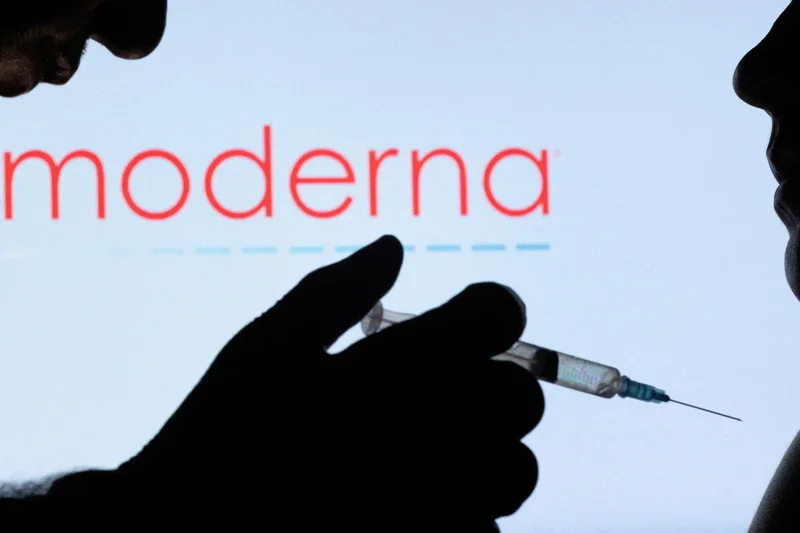
A personalised vaccine given in combination with a drug has been shown to stop tumors returning in skin cancer patients.
The experimental mRNA cancer drug, called intismeran, which is personalised for each patient, was developed by pharmaceutical companies Merck and Moderna.
It was given to patients with high-risk melanoma - the most aggressive form of skin cancer causing about 2,600 deaths a year in the UK.
Early results show the jab can extend the length of time a patient is cancer free, but it’s unclear how long this new jab could help patients live cancer free for.
Normally, only around a third of patients with the worst form of the disease live for five years after diagnosis.
This phase three trial involved more than 1,000 patients with advanced melanoma, some had large tumours in a specific area and others the cancer had spread to other parts of the body.
**How does the mRNA vaccine work? **
The vaccine is made for the individual by analysing the tumour and creating a vaccine that shows the immune system what to look for
“Personalised cancer vaccines are a fundamentally different way of thinking about cancer treatment. Rather than giving every patient the same medicine, a treatment is designed specifically for the individual patient and the unique genetic fingerprint of their cancer,” Dr Lennard Lee, Consultant Medical Oncologist, at the University of Oxford said.
Doctors first remove each patient's tumour. The DNA in that biopsy is then analysed for mutations in the tumor's cells.
“These mutations can generate abnormal proteins, known as neoantigens, which can potentially be recognised by the immune system,” Dr Lee explained.
“The vaccine uses mRNA to provide instructions corresponding to selected neoantigens, with the aim of training the patient’s immune system, particularly its T cells, to recognise and attack cancer cells carrying them,” he added.
The vaccine is given in nine doses every three weeks, along with one course of Keytruda, an immunotherapy drug, every three weeks.
Dr Lee added: “In this trial, each personalised treatment encodes up to 34 neoantigens and is given alongside pembrolizumab, an established immunotherapy.
“In simple terms, one treatment helps show the immune system what to look for, while the other helps release the brakes on the immune response.”
**Could it work for other types of cancer? **
Merck and Moderna are testing other similar personalised vaccines for lung, bladder and kidney cancers.
Trials for the lung cancer vaccine have reached the final stage three phase, while kidney and bladder trials are still in phase two.
But it’s hoped this type of vaccine could work across many different tumour types.
“This is an exciting time for cancer immunotherapy. Vaccines are likely to make a difference in certain settings where the cancer burden is low,” Dr Nina Bhardwaj, Director of Immunotherapy at the Icahn School of Medicine at Mount Sinai, told The Independent.