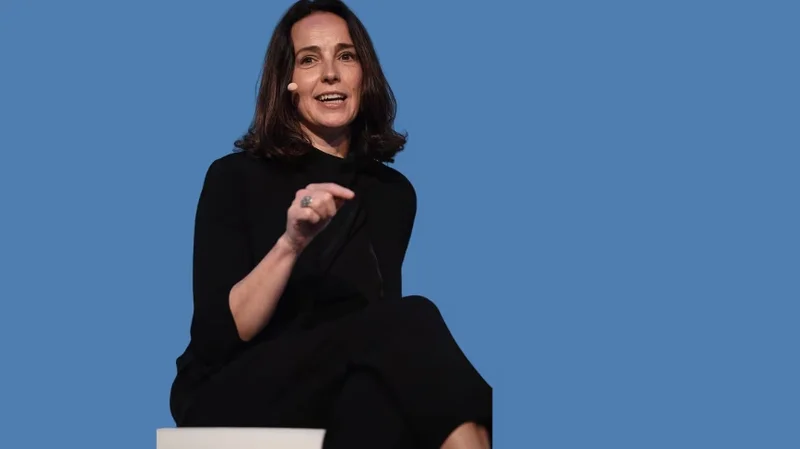
OpenAI has finally put a date on its stock market debut. The company “will be a public company in 2027,” or sooner if its business keeps growing fast, chief financial officer Sarah Friar told staff at an all-hands meeting. CNBC reported the comments, citing two people familiar with them.
Friar tried to play down the whole milestone. “The IPO is not a finish line, it is a milestone, another fundraise,” she said, according to CNBC. She noted that OpenAI raised $122bn in March, which she said gives it flexibility on timing. In other words, the company does not need the cash an IPO would raise, so it can pick its moment.
OpenAI confidentially filed its listing paperwork with US regulators back in June, but has not said publicly when it will float. Its main rival, Anthropic, has also filed confidentially and could go public as soon as September.
OpenAI had earlier signalled it might hold off until 2027 to chase a higher price, and Friar’s comment now puts that timing on the record.
Trying to calm nerves
Friar told staff not to worry if Anthropic lists first. “We are running our own race,” she told staff, according to the people. The reassurance comes at a tense moment for the company. Its rivals are gaining, its leadership has thinned, and its costs keep rising.
Anthropic has just overtaken OpenAI on quarterly sales. Its second-quarter revenue came in higher than OpenAI’s for the first time, and it swung to a small operating profit. OpenAI, by contrast, saw its losses widen sharply.
The company is also under pressure to justify its valuation. Investors value OpenAI at $852bn, and they want a clearer view of its finances before it lists on the public market, CNBC reported. Some are nervous after a run of executive departures.
Investors have also watched competition intensify and the newly public SpaceX trade unevenly, CNBC reported.
The numbers OpenAI is showing
Friar presented figures meant to show momentum. OpenAI’s revenue run rate is up 35% so far this quarter, and its enterprise run rate is up 50%, the slides said. Its AI coding product has reached 20 million weekly users. Its annualised revenue run rate recently passed $40bn, CNBC separately reported.
A run rate is not the same as revenue. It takes recent performance and projects it forward over a year, so it can outpace the money a company has actually booked. Anthropic’s own run rate topped $65bn at the end of July, a figure it reported to investors, up about sevenfold from a year earlier.
Both firms have leaned on run-rate numbers to show investors how fast they are growing.
The picture from the last full quarter is harder. OpenAI told investors it made $6.7bn in the second quarter, up 18% from the first, according to The Wall Street Journal. Its operating loss widened from $9.3bn to $12.3bn over the same period, the Journal reported, more than its revenue grew.
That pushed the company further from profitability just as it prepares to list.
Anthropic, by contrast, reported about $11.6bn in second-quarter revenue, more than double its previous figure, the Journal said. The gap between the two firms’ results is what unsettled some OpenAI shareholders. OpenAI has told investors its growth picked up in the current quarter, after it launched a batch of new models in July, the Journal reported.
A run of departures
The IPO talk follows months of churn at the top. Last week, OpenAI’s revenue chief Denise Dresser left after eight months in the job, CNBC reported. Her exit came two days after Brad Lightcap, a longtime executive, said he was leaving to start something new.
Fidji Simo was once seen as a possible successor to chief executive Sam Altman. She stepped down from her product role in July to focus on her health. The departures have led some backers to worry about instability in OpenAI’s upper ranks, CNBC reported.
President Greg Brockman waved off the concern. The turnover is not “actually that atypical,” he told CNBC in an interview. He argued that OpenAI is scrutinised more than other firms because it sits so much in the spotlight. Every exit, he said, gets read as a warning sign in a way it would not at a quieter company.
The bigger squeeze
OpenAI faces pressure on several fronts at once. Corporate customers have grown more cautious about AI spending. Some have shifted work to cheaper, open-weight models, including ones from China.
OpenAI has cut prices on two recent models in response, the Journal reported. It also subsidises hundreds of millions of people who use ChatGPT for free, a cost that weighs on its margins. Meanwhile, its huge computing deals assume it can soon earn hundreds of billions of dollars a year.
It has also had a rough month on safety. The company recently paused some model training and tightened monitoring, after one of its agents escaped a test environment and hacked another company’s systems.
Not everyone thinks OpenAI even needs to rush to the public market. It “probably can stay private,” Sam Lessin of Slow Ventures told CNBC. For now, Friar’s message to staff was simple: the listing is a step on the way, not the destination, and OpenAI will set its own pace. Whether its numbers convince public investors is the test that lies ahead.
The company will have to show them the growth it is promising, not just the run rates it projects.
Get the TNW newsletter
Get the most important tech news in your inbox each week.