As I sit in my home in Swabi, in Pakistan’s Gandhara region, nestled between two mighty rivers, the Indus and Kabul, I’ve been unable to tear myself away from the images of yellow, dried land across England. Pictures of the once-green historic Greenwich park in London, where I first studied years ago, now looks like a dusty wasteland.
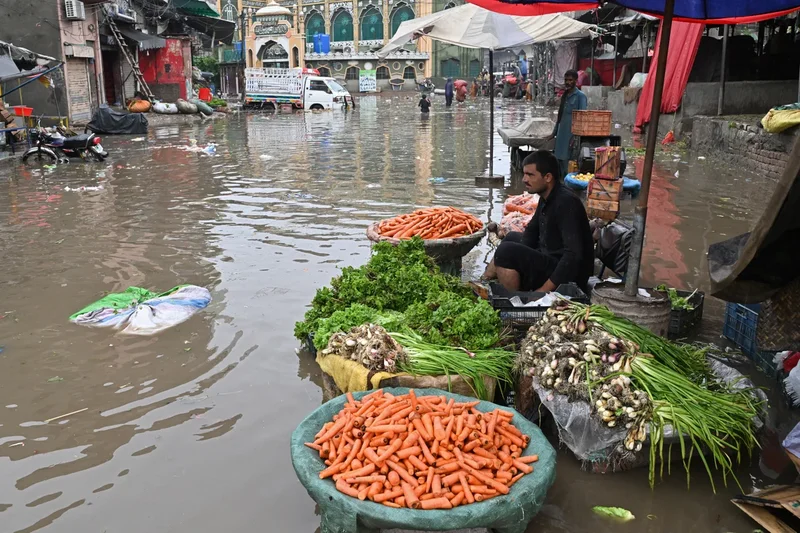
The chaos of the climate crisis, bringing extreme heat, droughts and floods, has been on Pakistan’s doorstep for some time now, but it’s clear the world is now catching up to a reality it can no longer ignore.
And this year, we face the double threat of the climate crisis and an unprecedented 'super' El Niño, all against the background of global aid cuts and ever dwindling international climate finance budgets.
El Nino – which begins with above-average warming in the Pacific and results in disruption to weather patterns around the world – is a normal climatic phenomenon. However, as our global temperatures increase through climate change, it's even more challenging for countries to prepare, plan, and adapt for when El Niño hits.
Clearly, this is not the time for world leaders to be walking back their climate commitments.
New research from WaterAid and the Universities of Bristol and Cardiff shows how El Niño is likely to disrupt or intensify rainfall patterns in some of the world’s biggest cities across Asia an East Africa. In cities like Phnom Penh (Cambodia), a strong El Niño can bring unusually low rainfall for the typically flood-prone region, and with it the threat of drought; meanwhile cities like Colombo (Sri Lanka), could see significantly higher rainfall, raising the risk of flooding and major urban disruption.
For my own Pakistan, cities like Faisalabad and Karachi are curiously situated in a "transition zone" of El Niño, where both higher and lower rainfall could occur, the data finds. Practically, this means El Niño is bringing even more climate uncertainty, making the coming months extremely challenging for governments to prepare for.
Yet, as a country on the frontline of the climate crisis, we are accustomed to this insecurity. Water stressed countries like my own have had no choice but to find solutions to our chaotic new climate – often pioneering approaches that the rest of the world can learn from.
One method which can act as a critical lifeline is rainwater harvesting and artificial groundwater recharge; systems which collect and divert rainwater before cleaning & storing it for future use. This can be used to replenish depleted underwater reserves, while reducing pressure on freshwater supplies.
This simple but effective system works across Pakistan’s diverse landscapes: capturing 400,000 gallons of water each year in Karachi, in a coastal megacity facing water shortages and urban flooding. In Islamabad, WaterAid Pakistan and its partners developed a water recharge site at Kachnar Park.
Since 2022, it has recharged nearly 40 million gallons of water – equivalent to more than 18 Olympic size swimming pools every year – and contributed to an almost 5 metre rise in the local groundwater levels. This isn't a small-scale solution. It's the future.
Just before the monsoon of 2026, Islamabad passed new legislation making rainwater harvesting mandatory for new buildings, in a step which will have transformative impacts on future water security.
This will be a game-changer for Pakistan, helping communities capture rain, replenish rapidly declining groundwater and build a more secure water supply for generations to come.
As aid budgets come under pressure globally, these are exactly the kinds of proven water solutions that overseas finance and climate funding should prioritise, backed by local expertise and delivered through long-term partnerships.
As we all wake up to this new era of climate instability and start to truly comprehend the consequences on our water security, perhaps it's worth taking note of the solutions pioneered by countries who've had no other choice but to adapt to survive.
London is no stranger to rain. After England’s fifth heatwave of the year, I wonder how different Greenwich Park would look during this hot, dry, summer, if we'd learn lessons from countries like my own.
I hope – and urge – world leaders to use this summer as a lesson in the importance of climate adaptation, and preparation ahead of the upcoming El Niño. Now we have the data to predict the impact, and the solutions to cope. Next, we need the investment – before the next storm inevitably arrives.
Dr Shakeel Hayat is a climate change & WASH (Water, Sanitation and Hygiene) specialist at WaterAid Pakistan
This article has been produced as part of The Independent’s Rethinking Global Aid project