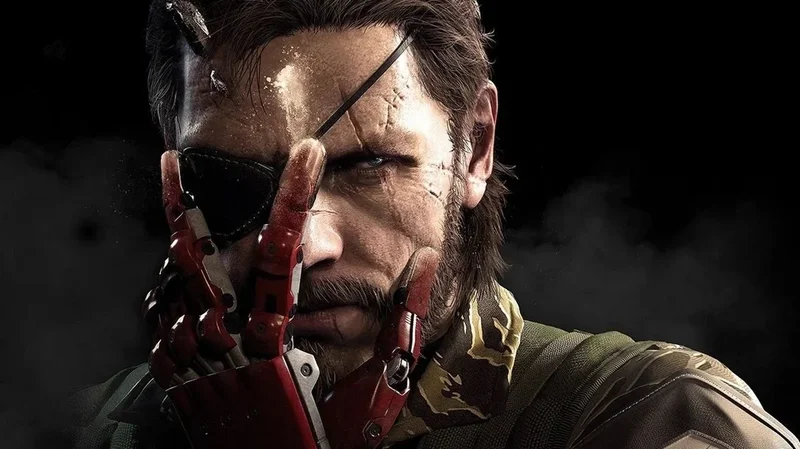
Metal Gear is a wonderful mess. Hideo Kojimaâs sweeping spy-thriller series has sometimes been the sword tip of innovation for action games. Throughout the years, itâs been packed with new approaches to narrative and amazing innovations in what the hell a boss fight can be. Itâs also sometimes full of stuff that simply doesnât work. Thereâs big gameplay ideas that can actually break games or make them unwinnable, messy character writing with gross implications, and games that flat out arenât finished. Also: Johnny Sasaki is here.
Iâve played this series a lot and written about them a lot. When I worked here, I wrote a huge critical breakdown of what they were doing and even, to my dismay, had to review Metal Gear Survive. I have some thoughts! So here are the best and worst things about each game.
Metal Gear
Best: It Set The Standard For Everything.
That sounds like an obvious thing to say when talking about the first game in a series, but Metal Gear in particular creates a template that the rest of the games follow. All the way through Metal Gear Solid 2: Sons of Liberty, every new game is refining moments introduced here. For example, the first boss battle here is a fight against four mercenaries in a room. Metal Gear Solid will turn this into an ambush by invisible troopers on an elevator. Sons of Liberty turns the idea into a hallway shootout at the end of the Tanker chapter. The core idea starts here.
Time and time again, something in this game is repeated elsewhere. A puzzle requiring the brief use a guardâs uniform here is later expanded to an entire undercover section for Raiden in Sons of Liberty. That then becomes an entire camouflage and disguise system in Snake Eater. All those ideas are here now in Metal Gear, even if thereâs only 8 bits to work with! Itâs very cool.
Worst: You Can Make It Unwinnable.
Metal Gear has a sort of RPG-lite progression system in which defeating bosses expands your health and inventory. Some later games will continue this idea to some extent; Metal Gear Solid increases your life bar upon defeating a boss, for instance. But Metal Gear also makes it possible to âdemoteâ and lose your bonuses. This mostly happens if you accidentally shoot a hostage. This makes sense on paper! Donât shoot innocent people, Snake! Watch out!
But in practice, you NEED the increased ammo to win some fights. Famously, if your rank is low enough when you head into the final boss fight, it can become impossible to finish the game. You might simply not have enough explosives to kill the boss. I canât imagine how many players, even now, stumble a little and reach that last screen only to find out they can beat the game.
Turns out it takes a very specific number of explosives to blow up a Metal Gear.
Metal Gear 2: Solid Snake
Best: The Final Boss.
Itâs a little anti-climactic from a lore perspective for me to say âBig Boss, the greatest soldier in the world, was killed by a zippo lighter and a spray can,â but thatâs what happens! The thing is? When you play the section, itâs pretty cool. Youâre trapped in a small warehouse with Big Boss and no obvious way to fight him. What follows almost feels like an adventure game.
You dart around, finding key cards to open special rooms and slip through vent spaces. Each new item leads to the next until you can scrounge the lighter and spray can. Then you can finally cut loose and fight back. In some ways, this feels like the earliest possible version of an idea that games would deliver on much better later. If you like the Mister Freeze fight from Batman Arkham City or think the tense confrontation with David in The Last of Us is coolâ¦this is maybe the earlier version of that idea. And even in 1990, it led to a tense and exciting finale.
**Worst: The Swamp Sequence. **
Metal Gear 2 adds a lot of improvements that help make things feel a bit more like the series we all know. Longer codec calls, a basic (if unrefined) radar for tracking enemy positions. But it also has some bullshit. Thereâs a guard-tailing sequence in the jungle thatâs pretty finicky, but thereâs also the swamp maze. This only takes up four screens of the game but it’s pretty strict. Snake needs to walk on a very small, not well-indicated path through a bubbly swamp in order to reach an arsenal warehouse. Step off the path even a little? Youâll slowly sink and die.
This isnât a game with entirely refined controls! Walking a basically invisible line that you need to trace out on a map or try to commit to memory, even if itâs only for a few screens, completely slams the pace to a halt. Woe unto anyone who just canât get this shit done right.
Metal Gear Solid
Best: Early Infiltration.
Itâs tempting to pick one of Metal Gear Solidâs famous boss fights and call it a day. The memory card reading and control fuckery of Psycho Mantis is incredibly famous. The duel against Sniper Wolf in the snow field is great and leads into one of the most well-known villain death scenes in the medium. Those are great, but theyâre not what Metal Gear Solid is. Not entirely.Â
When I think of Metal Gear Solid, itâs hard not to think of the first thirty minutes or so. Snakeâs sneaky underwater insertion into the cold docks on Shadow Moses Island, the elevator ride upward, the searchlights on the helipad, your footsteps leaving imprints in the snow. Thereâs an incredibly tight stretch of stealth action that is SO DAMN GOOD and iconic. Thatâs Metal Gear Solid.
Worst: The Car Chase.
The ending of Metal Gear Solid is a gauntlet of boss battles and sacrifices. Thereâs a giant robot, Grey Fox saves you but gets squished, more robot fighting, the reveal that Solid and Liquid Snake are clones, and a tense fistfight on top of the ruins of Metal Gear Rex.
And then thereâs the jeep sequence. Snake escapes in a jeep alongside either Meryl or Otacon and it leads to a series of explosions and machine-gun turret-shooting segments. This gets crazier when Liquid gives chase as well. The controls are odd, the sequence lasts too long, and as a gameplay experience itâs a rare dud in a game thatâs otherwise basically perfect.Â
Liquidâs death is good though! FOX⦠ Dieâ¦
Metal Gear Solid 2: Sons of Liberty
Best:Â Raiden.
** **I have just written one word but somewhere many cranky forty-year-olds have activated. They will soon be here to tell me how much of a little bitch Raiden is. Those people are wrong. Raiden, the bait-and-switch protagonist that you play most of the game as, is so important to this story and so crucial to what makes
Sons of Libertyspecial. Heâs an extraordinary character.
Sons of Libertyis a game about identity. It is a game about whether someone else could ever become like Solid Snake. Itâs a story about games, itâs a story about
Metal Gearitself, and it is a story about the player. The conclusion is simple: no one should want to be Solid Snake. Snake is great but being an action hero kind of sucks. And Raiden, tricked and shaped into an obedient soldier through VR training (kinda like video games!) and a secret tragic background, gives us a rich, complicated, and often really messy look at the damage war and manipulation does to a person.
He needs to be the person at the center of this story. It canât be Snake.
Worst: All Of Big Shell After The Harrier Fight.
Whoa, thatâs highly specific! Itâs not just the awkward swimming section or the clumsy escort mission? No, itâs the whole damn thing! Raidenâs first half exploring the Big Shell facility is pretty fun! Itâs a large circular loop, but there are ways to get items early, travel through a few alternate routes, and unlock hidden conversations. The bomb disposal sequence really forces you to learn the lay of the land, and an undercover section among enemy soldiers can feel quite tense.
Then you fight a harrier jet and get cut off from the first half of the Big Shell. The game, still good, becomes very linear, and is touched with some awkward sections including a baffling underwater swimming section. You can get through it quickly once you know the path through the murky brine, but first-time players might struggle. Toss in a clumsy escort section with Emma, along with some baffling plot revelations about Otacon, and you get the gameâs worst stretch.
Metal Gear Solid 3: Snake Eater
**Best: The Drama Of It All! **
Metal Gear isnât a clinical series or anything like that. Thereâs action and rage and a lot of surprising empathy, even for the villains. That said, sometimes these games try to be too clever. They weave overly complicated historical fiction, or dive deep into whatever obsession Kojima is interested in at the time, be it nukes or the internet or anything else, and sometimes this means the storytelling gets distracted. Snake Eater threads the needle. This story has heart.
This is the game that many people say is their favorite, and at a minimum it tends to be treated as the one with the best story. Considering itâs the one with the guy who shoots bees, that’s saying something. The core relationship between Snake and the Boss remains the most complex and interesting in the series; sheâs perhaps one of the most interesting women in video games. Not entirely without issues in the storytelling, but complex and multifaceted. This is not always something that happens in Kojimaâs stories, which are often broad and a little bit sexist.
Itâs okay to say that, by the way. Kojimaâs writing of women is often weird! And yet within all the mess and mistakes and all the hyperfixations, Snake Eater is an amazing political thriller with a lot of emotion at the center. Thatâs not an easy thing to do, but this game makes it look easy.
Worst: That Ugly-Ass Remake.
Sorry! Iâm going to be a hater for a second, but I think the remake (Metal Gear Solid Delta: Snake Eater) is just a significantly uglier looking game than the original. There may be folks out there who are wondering how a game from 2025 can be âuglierâ than a much older game from 2004, and the answer is mostly lighting and color. Delta is a very washed-out-looking game, even if you apply some of the filters meant to make it look a little more like the original.
Itâs a matter of richness and vibrancy. Many scenes in Snake Eater use sunlight and fire prominently. In the original game, the oranges and reds are stronger. Thereâs a lot of depth to the resulting image; this is lost in the remake. Everything is a little more flat, a little more washed out, and much cooler in hue. As a game it plays mostly fine and I think itâs a fairly acceptable way to play the game if you want. As a visual experience? I think itâs ugly as sin.
Metal Gear Solid 4: Guns of the Patriots
Best: MECH FIGHHHHT
Guns of the Patriots pack a great deal into one game. Itâs a true globe-spanning adventure that covers the Middle East, Europe, and even locations from the earlier games. Thereâs stealth in active battlefields, yet another car chase, a nostalgic return to Shadow Moses, and much more.
Thereâs also a goddamn robot battle and itâs pretty amazing. Snake leaps into the wreckage of Metal Gear REX while Liquid pilots Metal Gear RAY. The result is a moment that feels truly unique and also pretty therapeutic. Most fights against Metal Gears are intense and dangerous affairs in which you scurry around on foot and fire missiles. Here? You get to go apeshit.
Kojima has always channeled Michael Bay for key moments of action. Metal Gear Solid: The Twin Snakes flat-out had cutscenes directed by Ryuhei Kitamura. But the mech fight is a one-time game within a game that takes all the action-movie impulses and turns them into one of the seriesâ coolest moments.
Worst: Johnny Sasaki Is An Important Character Now?
Johnnyâs been around since Metal Gear Solid as the bumbling guard who often a) gets caught with his ass literally out and b) has terrible stomach problems. His presence in the games was mostly on the margins. You could find him through easter eggs or heâd slip into the plot briefly, but he wasnât important. In Guns of the Patriots, he does become important and it sucks.
Johnny, going by the name Akiba, is part of Merylâs Rat Patrol Team 01, and acts as the team’s hacker. He has minor significance in the game because heâs one of the few people who has no nanomachines in his blood; this means that when Liquid later takes over the system regulating the nanomachines of pretty much every soldier in the world, Johnny suddenly becomes a bit of an ace in the hole. He also somehow becomes Merylâs love interest. Again, this sucks.
During the gameâs finale, he and Meryl get into a crazy gunfight against waves of soldiers and he asks her to marry him. For some reason, she says yes?! Then her part of the epilogue is all about getting married to the ass-out diarrhea man she has zero chemistry with.
Plainly put: this shit stinks. Absurd plot point, absurd use of a character, absurd reduction of Meryl into a blushing bride. This is my least favorite plot point in the entire series.
Metal Gear Solid: Peace Walker
Best: Co-Op Multiplayer.
Metal Gear multiplayer modes are often slept on except for a core group of dedicated sickos. For instance, I played a ton of Guns of the Patriotsâ amazing online multiplayer (Metal Gear Online 2) and have still never had anything else like it in my life since. Peace Walkerâs crown jewel is its co-op multiplayer, which allows two players to team up for an infiltration mission.
This was pretty standard for a PlayStation Portable game. Part of the promise of handheld gaming was the idea that from time to time, you could gather people around for some weird multiplayer sessions of Monster Hunter or a mission that casts you as different Organization XII members in Kingdom Hearts 358/2 Days. That odd little insistence is here in Peace Walker, and itâs a lot of fun. Sneaking into a base with a friend, waiting for a convoy, and striking? Thatâs awesome.
Thankfully, this mode is returning in the upcoming Master Collection release of Peace Walker. So if you missed out before, nowâs a chance to enjoy some crunchy fun with your pals.
Worst: The Boss Fights Are Pretty Dull.
Do you like fighting cool and memorable bosses with unique mechanics and weird solutions to countering their funny powers? Cool! This is the right series of games for that. The bad news is that this is not the best game for it. Instead, youâre going to be shooting tanks and robots.
Thatâs not bad in and of itself. It definitely doesnât stop Peace Walker from being a good game or anything like that. What it unfortunately does is cause a bit of samey-ness in the gameâs biggest moments. Add the fact that a lot of these bosses are prettyâ¦well, tanky in the hit point department, and they become the most obviously dull part of an otherwise good game.
Metal Gear Solid 5: Ground Zeroes
Best: Camp Omega
As a fictional place, Camp Omega sucks. It is a U.S. âblacksiteâ in Cuba with no rules or real standards for how prisoners are treated; this makes it one of the grittiest settings in the entire franchise, allowing Kojima to touch on some pretty intense issues. Itâs also, I have to say, a really great place to sneak about. Maybe the best since Shadow Moses Island.
Ground Zeroes is weird. Itâs technically a game unto itself but itâs really just the prologue to Phantom Pain, snipped off and sold to players by Konami separately for extra money. Thereâs only Camp Omega to work with and no other locations. This means that besides the story missions, Ground Zeroes attempts to justify its price with tons of side missions and alternate-continuity infiltrations with different objectives. Assassinations, extractions, destruction of missile batteries. And somehow Camp Omega manages to make all of them work, no matter what.
Thatâs impressive because itâs not really that big of a map, but that doesnât mean itâs not full of side paths to slink through, trucks to stow away on, and vents to crawl through. Camp Omega is dense, dense, dense! You can and will lose up to eighty hours or more sneaking here.
Worst: Oh my God, the terrible shit they do to Paz Ortega.
Big Bossâ mission in Ground Zeroes is to extract Paz and Chico, two characters from Peace Walker, from Camp Omega. Make sense! That place sucks! But man, oh manâ¦Paz..
This is some of the most vicious shit Iâve ever seen done to a character in a video game. To be clear, Iâm not against blood and guts. Iâm not even against truly bad things happening to someone in a story written for adults. That said, Paz goes through it. Sheâs tortured terribly and in awful pain throughout the extraction. Once everyone escapes on the helicopter, it becomes clear thereâs a bomb in Pazâs stomach. With little time left, the doctor needs to operate without anesthesia and we see pretty much all of it. All the guts and blood and screaming.
This is all pretty gory and explicit but what follows crosses the boundary of good taste even for a mature series. It is discovered that there is still a second bomb inside Paz. Let your imagination figure out where it might be. Without any time left to remove it, Paz leaps out of the helicopter and blows up. The explosion, basically at point-blank range with the helicopter, leads to a crash that will leave Big Boss in a coma. Or does it? Dun dun dunnnnnnâ¦
Plot twists aside, this is a really mean thing for a character to go through and I donât think itâs done well. It ends up feeling schlocky and a bit like a snuff film, honestly. You can argue thatâs the point. This is supposed to feel sudden and terrible. But in a series that usually manages to preserve a surprising amount of dignity for its characters, this death feels wrong.
Metal Gear Solid 5: The Phantom Pain
Best: Shining Lights, Even In Death.
The Phantom Painâs largely regarded as a real high-water mark for stealth gameplay in the series. With wide open maps, all kinds of weapons to work with, unique sidekicks to help you, and an amazing amount of freedom in how you tackle obstacles, itâs easy to see why people think this. But very rarely, there are also moments in which the game contracts again to control the narrative. These are incredible moments in their own right, although theyâre frustratingly rare and hard to come by.
Among these is Mission 43, in which the game forces a tragic decision. Throughout the game, thereâs evidence that Big Bossâ enemies are working on a strange virus that can spread based on language. This is fictional nonsense but it leads you to do some investigation as you start to realize why your soldiers are getting sick and how the virus is spreading. At first, it only affects soldiers who are speaking Kikongo. If you examine whoâs getting sick, you can actually notice this if youâre observant, and quarantine some of these soldiers to prevent the spread. But eventuallyâ¦
Well, another strain of the virus hits that affects the majority of the base. In Mission 43, thereâs a massive outbreak that locks down a large portion of the facility. Without a cure, Big Boss turns to a dire solution: killing all the affected soldiers. The resulting mission is somber, horrific, and one of the few moments when Phantom Pain really fires on all cylinders. Everything comes together.
All the base building, the soldier managementâ¦it all falls apart. So while itâs a bit odd to mark this as the best moment (it kinda sucks too!), this is where all the mechanics and systems interlock to create a powerful, perhaps even unforgettable moment in the story.
Worst: Most of the other pieces of âstorytellingâ are pretty bad.
The Phantom Pain is pretty stacked as a gameplay experience, but itâs maybe among the worst-told stories that Kojimaâs ever delivered. Some of this is probably due to interference from Konami; the game famously has an entire third act that was left unfinished. Some of this is also just because Kojima and his team decided to tell the story in optional cassette tapes and awkwardly half-baked sequences. Who can forget that weird-ass jeep ride with Skullface?
This is a series renowned for tightly controlled stories and amazing cutscenes. There are emotional reunions, tragic deaths, shocking twistsâ¦and while Phantom Pain sometimes hits the mark (as noted in our âbestâ moment), more often than not the story feels like a wet noodle.
Thereâs no weight, no bite, no focus. Itâs there if you look for it, but you shouldnât need to look.
Metal Gear Rising: Revengeance
Best: The Boss Fight Music!
Revengeance is a unique game. The development process was a bit messy, and a reboot of the core concept (the original idea was a bit more stealth-focused) resulted in one of the best character-action games of all time. The script and story are refreshingly angry, the game is bloody, and the bosses? Well, they each have amazing theme music.
Whether itâs âThe Only Thing I Know For Realâ or âIt Has to be This Way,â every boss fight has music that isnât just catchy and kickass but is stuffed with lyrics talking about the characters and the current moment. I actually wrote a book about this game! A big part of each chapter was able to focus on lyric breakdowns and analysis. Thatâs pretty damn cool for an action game!
Worst: Denver.
On the one hand, rampaging through a big city and taking on corrupt cops and corporate cyborgs is pretty bold. Sometimes, itâs pretty exciting! But as a string of levels, the Denver section goes on a bit too long. One climb through multiple floors of a skyscraper is particularly exhausting, and thereâs a few slow walking sections that make things dull on repeat plays.
As a story beat, itâs a big moment for Raiden. Heâs really putting himself out there and not letting anything get in his way. As the middle point of the game? It’s something of a drag.