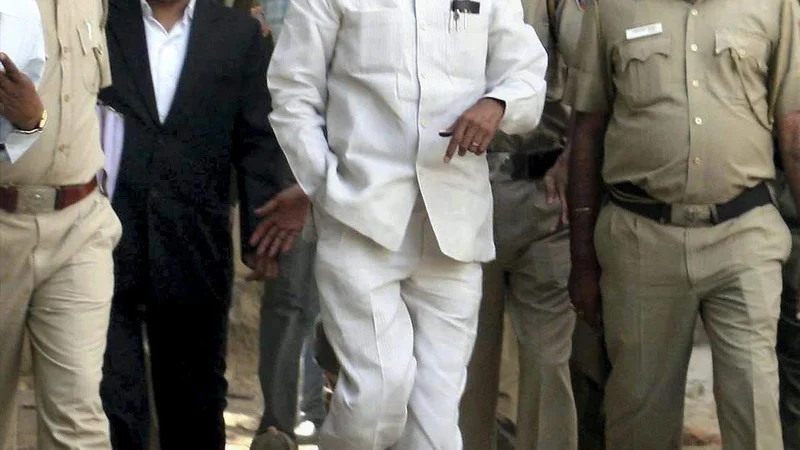
Former Congress MP Sajjan Kumar, who was serving a life sentence after being convicted in the 1984 anti-Sikh riots in Delhi, died on Thursday (August 20, 2026). He was convicted only in 2018, more than three decades after the carnage, which broke out following the assassination of then Prime Minister Indira Gandhi. The riots, which claimed over 3,000 lives, have been probed by various commissions and committees over the years.
Marwah Commission (1984)
IPS offcer Ved Marwah was assigned the job of enquiring into the role of the police during the November 1984 carnage. A committee under the name of Marwah Commission was constituted to look into the case. While Marwah was still conducting the inquiry, many police officers approached the Delhi High Court opposing it. As Marwah completed his inquiry towards the middle of 1985, he was directed by the Home Ministry not to proceed further. Complete records of the Marwah Commission were taken over by the government and later transferred to the Misra Commission.
**
Also read | Police role was shameful, says Ved Marwah**
Misra Commission (1985)
Appointed in May 1985, the Misra Commissionn was headed by Justice Ranganath Misra, then sitting Judge of the Supreme Court. Misra submitted the report in August 1986 and it was made public in February 1987. The commission recommended the formation of three more committees.
Jain-Banerjee Committee (1987)
The Jain-Banerjee Committee, headed by former Judge of Delhi High Court Justice M.L. Jain, and retired Inspector-General of Police A.K. Banerjee, recommended registration of cases against the then Congress MP Sajjan Kumar in August 1987, but no case was registered. The Delhi High Court disbanded the committee in October that year.
Potti-Rosha Committee (1990)
Formed by the V.P. Singh-led National Front government, the Potti-Rosha Committee with former Gujarat High Court judge Justice P.S. Poti, and retired Indian Police Service officer P.A. Rosha as its members, also recommended filing of cases against Kumar. The Central Bureau of Investigation made an attempt to arrest the senior Congress leader, but he managed to secure anticipatory bail. Justice Poti and Rosha resigned, and the panel’s term ended in October 1990.
Jain-Aggarwal Committee (1990)
Retired judge of the Delhi High Court Justice J.D. Jain, and retired Uttar Pradesh DGP D.K. Aggarwal were the members of the Jain-Aggarwal Committee formed in 1990. It recommended registration of 48 cases, including cases against Congress leaders H.K.L. Bhagat, Kumar, Dharamdas Shastri and Jagdish Tytler. It wound up operation in August 1993 with no action taken against the politicians.
Narula Committee (1993)
The Narula Committee, headed by Punjab and Haryana High Court Chief Justice Ranjit Singh Narula was appointed in December 1993 by the Madan Lal Khurana-led BJP government in Delhi. It submitted its report in January 1994, recommending registration of cases against Bhagat, Kumar and Mr. Tytler.
Nanavati Commission (2000)
Constituted by the NDA government, the Nanavati Commission headed by retired Supreme Court judge G.T. Nanavati, submitted its report in 2005. It also recommended filing of case against Kumar and the reopening of only four of the 241 cases closed by the police. A case was registered against Kumar following the Commission’s report.
Centre-appointed Special Investigation Team (2015)
The Special Investigation Team, appointed by the Narendra Modi government in 2015, re-investigated a number of cases linked to the riots. But it closed 186 cases without any further investigation.
Supreme Court-appointed SIT (2018)
A Supreme Court bench, headed by Chief Justice Dipak Misra, formed its own three-member Special Investigation Team in 2018 to probe the 186 cases that were not investigated further by the Centre-appointed SIT.
Published - August 20, 2026 08:01 pm IST