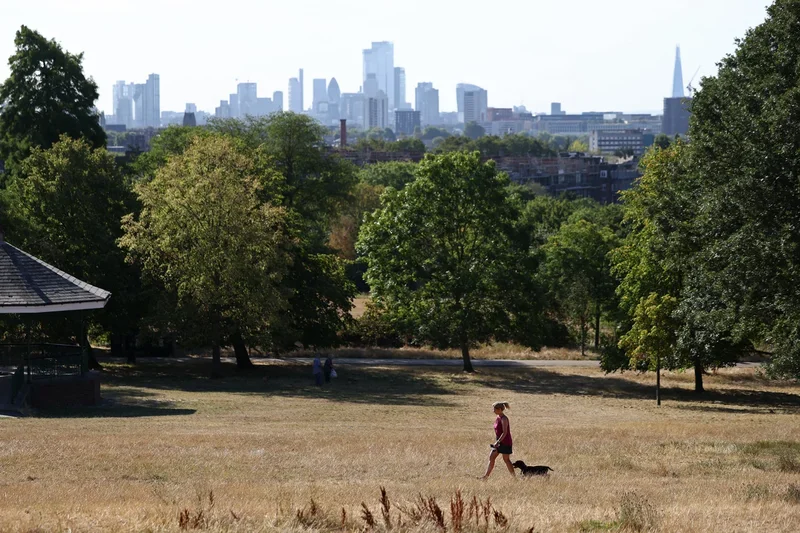
Thames Water has said its hosepipe ban is likely to be enforced until the end of the year.
More than 27m people across England have now had hosepipe use restricted in their area, including Thames Water’s 10.1m customers after a ban was put in place last month.
After several heatwaves over a record-breaking summer and historic lows of rainfall, hosepipe restrictions in England’s capital and surrounding areas could last for several months, the water firm said.
Nevil Muncaster, strategic water resources director at Thames Water, told Times Radio: “I think realistically, it’s going to be towards the end of the year before that comes off.
“That’s something that we need to make sure we do just to protect the environment.”
Earlier this week, it urged customers to continue efforts to reduce water use as it revealed household demand has fallen by 3 per cent across London and more than 6 per cent across the Thames Valley and Home Counties since a hosepipe ban began on 23 July.
In an update on Tuesday, the utility said London reservoir storage was at 74 per cent, which is lower than what the firm would expect for this time of year but the Farmoor Reservoir in Oxfordshire is 92 per cent full.
It also said rainfall in the Thames catchment area during July was less than 1mm, which is just 2 per cent of the long-term average, while customers used around 100 million litres more water every day than normal, adding further pressure to rivers, reservoirs and the water network.
Mr Muncaster said that dry conditions were still expected, even though some rain is forecast to fall.
“The Environment Agency forecast is that it will be drier than normal for the next few months, but we’ll wait and see,” he added.
The beleaguered water firm, which is the country’s largest, is struggling under almost £20bn in debt, with cash running out to see the firm through beyond the end of this year and widespread concern about which direction is best for the future of the business.
Mr Muncaster told Times Radio that a new reservoir at Abingdon in Oxfordshire is unlikely to be ready until 2040.
He also defended the fact the company’s £250m Beckton desalination plant, which opened in 2010 to provide water during droughts, had been offline this summer.
He said: “It was something we planned. We had a very wet winter, so we took the opportunity to do that maintenance, expecting us to be able to work through the summer.”