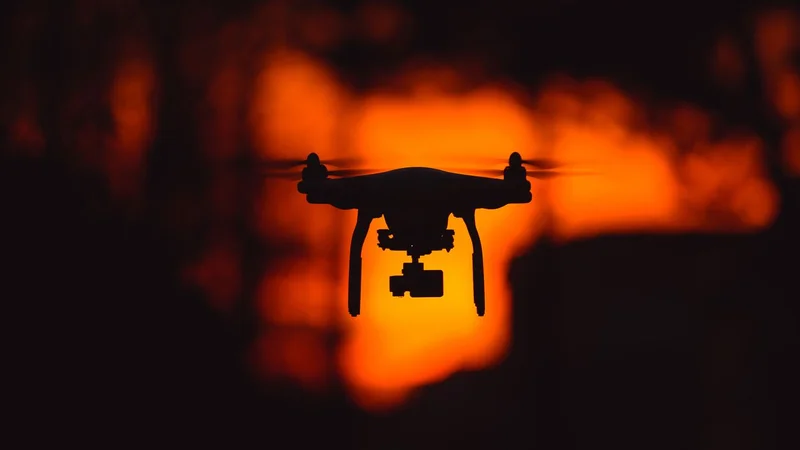
- The US Army is phasing out its relatively new drone and robot assault battalion
- The change is part of a "back-to-basics" push from acting chief of staff of the Army Gen. Christopher LaNeve
- The battalion will "refocus on its core warfighting tasks as an airborne infantry battalion" rather than continuing the development of drone capabilities
The sudden transformation of drone tactics demonstrated in the Ukraine war since 2022 has prompted the militaries of the North Atlantic Treaty Organization (NATO) and other world powers to shift their focus to a new asymmetric battlefield where drones play a major role.
Former chief of staff for the US Army Gen. Randy George set up a futuristic drones and robot assault battalion specifically to meet the needs of new forms of warfare. The Defence Innovation Unit previously said it would draw on Ukrainian expertise to become “the world champions” of drone production.
But now, under the orders of Gen. Christopher LaNeve, acting chief of staff, the US Army has decided to phase out the futuristic drone and robot assault battalion in a “back-to-basics” approach, drawing criticism from military experts.
US Army to go “back-to-basics”
The Army has not said how the service’s drone abilities would adapt following the phase-out of the drone battalion.
Speaking to the Wall Street Journal, a spokesperson for the Army said it “is committed to accelerating U.S. military drone dominance to meet the demands of large-scale combat operations”.
The drone battalion, issued with the moniker of ‘3rd battalion of the 504th Parachute Infantry Regiment’, is composed of around 600 soldiers from the 173rd Airborne Brigade. Once the battalion is phased out, it will “refocus on its core warfighting tasks as an airborne infantry battalion,” the spokesperson said.
A memo written by LaNeve, also obtained by WSJ, said, “U.S. Army forces must be prepared to overcome the most complex challenges our adversaries can impose and master an operational environment that looks fundamentally different from the battlefields of yesterday.”
“Ukraine has essentially revolutionized the close fight. Gen. George was starting to get that, and any setback in what he was doing would be deeply regretful and dangerous," said Michael O’Hanlon, a defense expert at the Brookings Institution speaking to WSJ.
Before being phased out, the battalion will participate in the annual Saber Junction exercise in Germany through August and September, before reporting on its findings to the Army to help guide future experimentation.
The direction of drone warfare in the US Army
The decision to phase-out the drone battalion may be a move by the US Military to unify its doctrine. As has been demonstrated in recent wars, the US military tends to prefer quick, decisive action, such as the capture of Venezuelan president Nicolás Maduro, and long-range engagement, as demonstrated during the war with Iran.
These forms of warfare avoid the boots-on-ground tactics that can quickly turn into the protracted warfare seen in Afghanistan and Iraq that lead to far higher casualty rates and a quick erosion in public support.
This isn’t to say that the US military isn’t preparing for the battlefields where drones can give a smaller, less well equipped adversary the upper hand - as Ukrainian troops demonstrated during exercise Combined Resolve. The US Marine core has been experimenting with tactics to counter consumer-sized drones using the automatic rifles, shotguns, and grenade launchers troops already carry with them.
But electronic warfare systems still remain a key part of the military’s doctrine for countering drones. The Army is working with private firms to test and deploy countermeasures such as radio-frequency jamming to cut communications between drone and operator, GPS spoofing to confuse operators as to the location of their drone, and high-powered microwave (HPM) systems to disable drones entirely.
LaNeve’s predecessor George introduced the drone battalion as part of a wider push for “transformation in contact”, allowing troops on the ground to have a say in how new technologies and tactics are adopted rather than relying on decision makers behind the frontlines to develop new battle plans.
Benedict is a Senior Security Writer at TechRadar Pro, where he has specialized in covering the intersection of geopolitics, cyber-warfare, and business security.
Benedict provides detailed analysis on state-sponsored threat actors, APT groups, and the protection of critical national infrastructure, with his reporting bridging the gap between technical threat intelligence and B2B security strategy.
Benedict holds an MA (Distinction) in Security, Intelligence, and Diplomacy from the University of Buckingham Centre for Security and Intelligence Studies (BUCSIS), with his specialization providing him with a robust academic framework for deconstructing complex international conflicts and intelligence operations, and the ability to translate intricate security data into actionable insights.