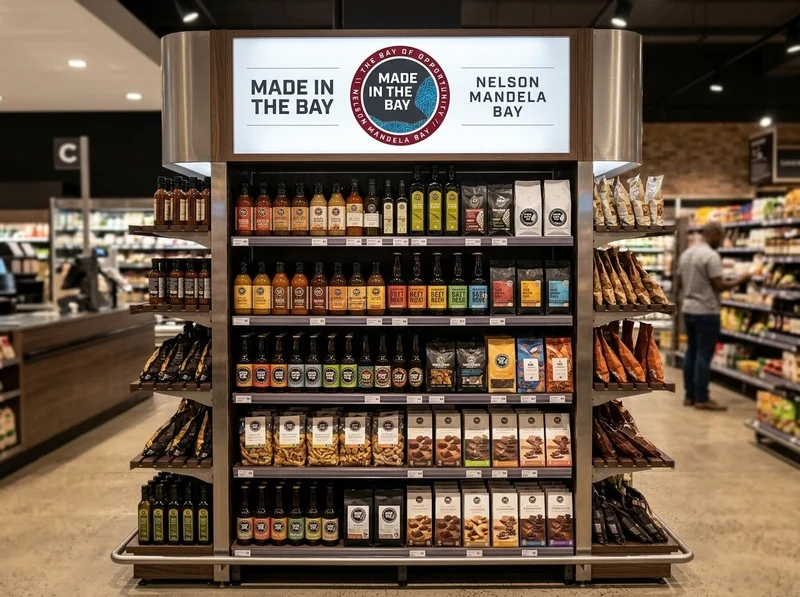
The Nelson Mandela Bay Business Chamber has spent years promoting the metro as a place to invest, manufacture and do business. Now it is putting that message on products, packaging and shopfronts across the region.
Just weeks after launching its Made in the Bay region-of-origin brand, the chamber has seen more than 70 businesses â from multinational manufacturers and exporters to long-established family businesses and growing local enterprises â commit to displaying the seal on their products, marketing material and digital platforms.
For chamber chief executive Denise van Huyssteen, the enthusiastic response signals that local businesses are ready to rally behind a shared identity.
But, she says, the initiative was never intended to be just another branding exercise.
âThe intention behind Made in the Bay is that it must be much more than just a logo on a product, building, website or delivery van. While the seal of origin becomes associated with quality, innovation, sustainability, and trust, it must also create real economic impact by enabling local businesses to leverage the assets and advantages of the Bay of Opportunity positioning into new business growth opportunities and job creation.â
The initiative forms part of the Chamberâs broader âBay of Opportunityâ campaign to promote Nelson Mandela Bay as a destination for investment, trade and tourism by showcasing the products, services, skills and innovation that originate in the metro.
Van Huyssteen said regions around the world had successfully built global reputations around products that proudly carried their place of origin.
âProtected designation of origin products exist around the world â Champagne from France, Parmesan cheese and Parma ham from Italy, rooibos tea and Karoo lamb from SA, for example. Global cities and regions put their stamp of authentic origin on products grown and made locally. Why not Nelson Mandela Bay?â
She believes the metro already has the credentials.
Nelson Mandela Bay remains the hub of South Africaâs automotive industry, accounting for 41% of national vehicle production and more than 44% of vehicle exports. More than a third of the countryâs automotive component manufacturers are based in the metro, while more than 40% of automotive sector employment is concentrated in Nelson Mandela Bay.
The region is equally significant in agriculture, says Van Huyssteen, with the Eastern Cape contributing 28% of South Africaâs gross agricultural income from citrus, leading national milk production with a 30% share, producing 36% of the countryâs wool and supplying more than half of the worldâs mohair, with much of that produce exported through the Bay or processed locally before reaching international markets.
Alongside its manufacturing strength, Nelson Mandela Bay has quietly developed a globally connected technology ecosystem, with software developers, automation specialists and systems integrators serving clients across the world.
It is also home to businesses that have become national success stories, including bakery chain Vovo Telo, while Mastertonâs Coffee Roasters has continued roasting coffee in the city where it was founded more than a century ago.
Among the first companies to embrace the campaign is Gentech Engineering Plastics.
The manufacturer has already incorporated the logo into its marketing material after first displaying it at the Chamberâs annual general meeting. It is now adding Made in the Bay stickers to product packaging while including the logo on invoices and employee email signatures.
Operations manager Anita Vehbi said the decision reflected a belief that backing local businesses also meant investing in local people.
âWe believe the Bay has immense potential that is often overlooked simply because it is not one of South Africaâs larger metros. By adopting the logo, we are making a statement that we believe in our city and its people.â
Vehbi said the logo had already sparked conversations with customers, suppliers and fellow businesses about supporting homegrown manufacturers and recognising local talent.
âEvery successful local business strengthens our economy and showcases what our city is capable of. The more visible the logo becomes, the more awareness it creates around the incredible businesses, products and talent that exist right here in our city.â
Matthys Ras, founder and group creative director of Globecreative, who helped pull the logo together, said that he hoped Made in the Bay became much bigger than a visual identity.
âI would like to see it become a recognised badge that businesses actively want to display because it says something meaningful about who they are and where they come from.
âOver time, I hope it strengthens collaboration between local businesses [and] encourages people to support companies that are creating jobs in the Bayâ¦â
Although Globecreative was established in Cape Town in 1999, its founder has deep roots in Nelson Mandela Bay. After studying in the metro, he built his career in Cape Town and Johannesburg before returning to Nelson Mandela Bay.
âReturning wasnât just a lifestyle decision. It was a conscious choice to invest my time, experience and energy back into Nelson Mandela Bay. Through Globecreative, I want to help local businesses build stronger brands, become more competitive and grow beyond the region, because every successful business creates opportunities for others.
âWhile Globecreative itself wasnât founded in Nelson Mandela Bay, I believe deeply in what the Made in the Bay initiative represents. Itâs about celebrating the businesses that were built here and recognising the people who continue to invest in this city and its future.
âFor me, displaying the Made in the Bay mark is a way of showing my support for that vision. Iâve always had a deep love for the Eastern Cape, and especially Nelson Mandela Bay.
âI genuinely believe this city has far more potential than many people realise, and if this initiative helps create greater pride, stronger businesses and more investment in our region, then it has achieved exactly what it was designed to do.â
Engineering and technology company MC Design has also woven the Made in the Bay brand into its corporate identity.
The company, which was founded in Nelson Mandela Bay and has since expanded to Pretoria and Durban, now proudly displays the logo on its website.
Business development manager Saleem Noorshib said the logo reinforced the companyâs roots as it continued to grow nationally and internationally.
âAs we continue to present our brand on a national and global stage, the Made in the Bay logo highlights where our journey began and reinforces our connection to the region that helped shape our success,â said Noorshib.
Noorshib said the logo also sent a broader message about the calibre of businesses that call Nelson Mandela Bay home.
âThe Made in the Bay logo is more than just a symbol of origin. It represents quality, high standards, innovation and reliability. By using the logo, businesses can proudly showcase their connection to a region that consistently delivers world-class products, services and talent. It is a meaningful way to celebrate and promote the strength of our local business community.â
Northfield Engineering, established in Nelson Mandela Bay 77 years ago, has also joined the initiative.
Although the engineering company operates across South Africa, marketing manager Neil Bisseker said its roots remained firmly in the Eastern Cape.
âWe do operate all over the country, but strongly believe in The Bay and its future prosperity. The Chamberâs Made in the Bay campaign sends out such a positive message. We are excited to be a part of this message by adopting their logo,â Bisseker said.
Rolland Eboru, managing Executive of Fred Footwear, says, âThe Made in the Bay initiative represents a deliberate intent to promote unique capabilities that originate from the Bayâ.
âThe logo is a representation of an initiative that supports awareness, collaboration and empowerment of capabilities in the Bay.â
Van Huyssteen says the long-term ambition stretches well beyond branding. She envisages consumers around the world recognising the Made in the Bay seal on products manufactured in the metro and wanting to learn more about the businesses behind them.
âUltimately, our vision is to see vehicle buyers in the Bay and around the world clicking a link to find out more about the âMade in the Bayâ seal on their Isuzu pick-up or VW Polo, or a QR code on their package of medication, oranges or mohair scarf, while local consumers give preference to local fresh produce and diverse goods in the dedicated âMade in the Bayâ aisle in their local supermarket.â
If that vision becomes reality, the chamber believes the logo will represent far more than where a product was made. It will become a symbol of a metro confident enough to tell its own story â and ambitious enough to compete with the worldâs best.
For Van Huyssteen, those businesses tell a story that deserves to be recognised.
âMade in the Bay gives tangible life to the Chamberâs Bay of Opportunity trade, investment and destination promotion initiative, by telling the stories of local people, products and capabilities that represent a place where world-class solutions are conceived, built and delivered to local and global markets.â
Van Huyssteen says businesses wanting to use the Made in the Bay seal will be subject to a verification process to protect the credibility of the brand, while the Chamber plans to support participants through a dedicated trade portal, joint participation in trade shows and trade delegations, mobile exhibitions and an envisaged permanent showroom showcasing products from across the metro. DM