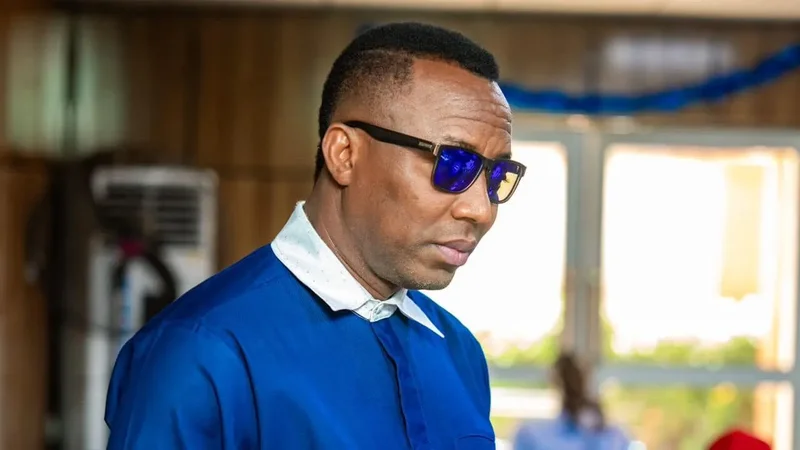
Omoyele Sowore, the African Action Congress presidential candidate in the upcoming 2027 general election, has responded to Yusuf Datti Baba-Ahmed’s criticism of his comments about former military ruler Ibrahim Badamasi Babangida.
In a Facebook post made on Wednesday titled, ‘MY RESPONSE TO Mallam Yusuf Datti Baba-Ahmed OVER MY COMMENTS ON EX-NIGERIAN MILITARY DICTATOR IBRAHIM BADAMOSI BABANGIDA AT 85: COMPASSION DOES NOT REQUIRE HISTORICAL AMNESIA.’
Mr Sowore said he learnt about the 2023 vice-presidential candidate’s article, published by Daily Trust, through through Mr Baba-Ahmed’s elder brother, Hakeem Baba-Ahmed, whom the activist said he met at a National Peace Committee event on Wednesday.
He accused Mr Baba-Ahmed, the Labour Party vice-presidential candidate during the 2023 general election of attempting to “whitewash Babangida’s legacy” while attacking him personally.
| | |
|---|
He said Mr Baba-Ahmed devoted much of his response to references to drugs, alcohol, prison and intensive care, while also preaching about compassion and human decency.
Mr Sowore rejected the argument that his criticism of Mr Babangida was inappropriate because of the former military ruler’s age.
“I did not attack Ibrahim Babangida because he is 85 years old. My criticism was about his record in power and what his decisions did to Nigeria.”
He argued that age should not erase a person’s political record and that “Growing old is a privilege. It is not immunity from history,” he said.
Sowore recalls June 12, Dele Giwa, Vatsa
Mr Sowore said Nigerians should continue to examine Mr Babangida’s record, including the annulment of the 12 June 1993 presidential election.
He recalled that Mr Babangida acknowledged in his 2025 autobiography, A Journey in Service, that Moshood Abiola won the election.
Mr Sowore noted that the annulment amounted to a betrayal of Nigerians’ democratic choice.
The publisher of Sahara Reporters also referred to the killing of journalist Dele Giwa and the execution of Mamman Vatsa, a close friend of Babangida who was convicted of plotting a coup.
“A man whose regime executed his close friend, Mamman Vatsa, after a coup trial cannot simply have that history erased by the passage of time.”
Mr Sowore also rejected the practice of addressing former leaders with familial titles such as “Uncle”, “Daddy”, “Baba” and “Leader”.
He argued that such practices could weaken public accountability.
“A president should be viewed as a public servant, not a family figure.”
“Former military rulers should be examined critically, not revered,” he added, and said that “Respect is earned; accountability is mandatory.”
Mr Sowore also criticised Mr Baba-Ahmed’s description of Babangida as a “revered former Nigerian leader”. “Revered by whom?” he asked.
Sowore’s earlier criticism of Babangida
Mr Sowore’s latest criticism echoes his reaction to Babangida’s autobiography after its launch in February 2025.
Mr Babangida launched “A Journey in Service” in Abuja on 20 February 2025. The memoir covered his military career, the Nigerian Civil War, his eight-year military rule and the controversies surrounding his administration.
Before the launch, Mr Sowore had demanded answers over several unresolved issues linked to Babangida’s years in power.
They included the killing of Dele Giwa, the execution of Vatsa, the annulment of the 12 June election, the C-130 military plane crash and the alleged disappearance of billions of dollars from Nigeria’s Gulf War oil windfall.
After the launch, Mr Sowore described the memoir as “A Journey in Criminality” and criticised Babangida’s account of his years in power.
He also challenged Babangida’s attempt to attribute responsibility for the annulment of the June 12 election to other actors.
Babangida in the book had acknowledged that Abiola won the election but also attributed the annulment to pressure from senior military officers, including Sani Abacha.
The former military ruler also addressed why he did not retire Abacha, saying he feared his removal could trigger bloodshed within the military.
But Mr Sowore has continued to reject what he considers attempts to soften Babangida’s legacy.
In his latest response, he said Nigerians must remember the political detentions, killings, military executions, economic hardship and other consequences of military rule.
“Historical amnesia is dangerous. Accountability is necessary,” he said.
He also rejected the suggestion that criticism of Babangida amounted to hatred.
“That is not hatred,” Mr Sowore said. “That is how a serious country learns from its past and builds a different future.”
Find Sowore’s full statement below:
MY RESPONSE TO Mallam Yusuf Datti Baba-Ahmed OVER MY COMMENTS ON EX-NIGERIAN MILITARY DICTATOR IBRAHIM BADAMOSI BABANGIDA AT 85: COMPASSION DOES NOT REQUIRE HISTORICAL AMNESIA
Dear Datti Baba-Ahmed,
Yesterday, at the National Peace Committee event, I met Dr. Hakeem Baba-Ahmed, Datti Baba-Ahmed’s elder brother and PRP chairman. I gently tapped him on the shoulder to say hello while he was standing with others. He immediately turned to me and, in the presence of his party’s presidential candidate, former Cross River State Governor Donald Duke, declared that he was my “number one fan.”
We laughed about it, but he reiterated that he wasn’t kidding. Donald Duke and I also exchanged a few words on the sidelines, including about something he has always enjoyed teasing me about. My advocacy for the legalization of cannabis.
Later, when all the presidential candidates gathered to sign the “Peace Accord,” Dr. Hakeem Baba-Ahmed met me again. He handed me his business card and told me that no matter what I faced, I should never change my…
I had not seen Mallam Yusuf’s piece in Daily Trust until later. When I eventually read Datti’s response, I pitied him. He avoided discussing Babangida’s dictatorship, instead delivering a sermon on compassion while personally attacking me and attempting to whitewash Babangida’s legacy. Datti belongs to a class of Nigerians whose fortunes and opportunities were substantially influenced by Babangida’s regime.
During the National Peace Committee event in the 2023 election cycle, Datti confronted me over seating arrangements near Peter Obi. Later, when APC candidate Asiwaju Bola Ahmed Tinubu arrived and sat next to me, Datti’s demeanor shifted from opposition to deference. This highlighted inconsistencies in his behavior.
I also witnessed deferential behavior from Mr. Peter Obi toward Tinubu. Despite public rivalry, Nigerian establishment politicians appear more comfortable with each other than their followers might think.
Their supporters fight bitterly online and sometimes in the streets. They insult, threaten, and destroy relationships, defending political figures who, behind the curtains, address one another as “Uncle,” “Daddy,” “Sir,” brother, and friend.
That experience stayed with me, and it provides useful context for Datti’s latest lecture about how Nigerians should treat members of the old political and military establishment. The records are there.
Now, let us deal with his arguments about General Ibrahim Babangida, history, compassion, and accountability.
I have read Datti’s lengthy response to my comments about former military ruler Ibrahim Babangida. Datti devoted considerable space to insulting me, suggesting drugs, alcohol, prison, and even an ICU, while simultaneously delivering a sermon about compassion, morality, and human decency. The contradiction is difficult to miss.
First, I did not attack Ibrahim Babangida because he is 85 years old. My criticism was about his record in power and what his decisions did to Nigeria.
Age does not erase history; in fact, the world is replete with people facing punishment in old age for atrocities committed in their prime. Ill health does not confer political sainthood, and compassion for an elderly person does not require Nigerians to pretend that decisions made while that person wielded enormous power had no consequences.
I wish no illness upon Ibrahim Babangida, but I will not participate in rewriting his record simply because he has grown old.
Datti asks where Sowore will be at 85.
I do not even know if I will make it to 85; Nigerian wicked leaders, including Babangida, have dealt heavy blows on my body and soul; however, wherever I am at 85, Nigerians will have every right to examine what I did with whatever power or influence I possessed. If I betray the democratic will of Nigerians, they should say so.
If I impoverish people through disastrous policies, they should say so. If I violate their rights, they should say so. If I leave behind institutions weaker than I found them, history should say so.
Datti lectures about compassion and humanity, but I have lived through prison and detention due to political activism. He described Babangida as a “revered former Nigerian leader.” Revered by whom?
We must remember MKO Abiola and the annulled June 12, 1993 election. Babangida acknowledged Abiola’s victory and accepted responsibility for his decisions. Democracy involves respecting citizens’ votes, and the annulment betrayed Nigerians’ democratic choice.
Nigerians must stop addressing leaders with familial titles like “Uncle,” “Daddy,” “Leader,” “Baba,” and “Your Excellency.” Such practices hinder accountability. A president should be viewed as a public servant, not a family figure. Former military rulers should be examined critically, not revered.
Respect is earned; accountability is mandatory.
Datti says courtesy does not mean surrender. Fine. But neither does criticism mean cruelty. I wish I could separate respect for Babangida’s humanity from condemnation of his political record, but IBB’s record leaves me with little humanity to celebrate. A man whose regime executed his close friend, Mamman Vatsa, after a coup trial cannot simply have that history erased by the passage of time.
What I will not do is confuse respect for old age with surrendering historical truth.
Datti says political disagreement should not make us lose our humanity. I agree. So apply that principle universally. Apply it to the poor. Apply it to protesters. Apply it to political prisoners. Apply it to workers whose livelihoods have been destroyed by bad government.
Apply it to young Nigerians whose futures have been repeatedly squandered by leaders celebrated at elite birthday parties. Humanity must be applied universally.
Mallam Yusuf Datti Baba-Ahmed says Sowore poses a danger to Nigeria. The real danger lies in a political culture that protects privilege, rehabilitates failure, and silences dissent. Historical amnesia is dangerous. Accountability is necessary. Nigeria must reform institutions rather than perpetuate power among the same elites.
Respect for Tinubu or Babangida does not mean forgetting June 12, Dele Giwa’s death, military executions, political detentions, killings, or the looting of $12 billion from the Gulf War oil windfall. The Structural Adjustment Program devastated Nigerians economically.
We remember the corruption. We remember the deception.
We remember the self-styled “evil genius” and the political and economic legacy his years in power left behind.
We remember the endless transition program.
We remember what military dictatorship did to Nigeria. And we will continue to interrogate the records of those who exercised enormous power over our country.
Growing old is a privilege. It is not immunity from history. Nigeria must stop worshipping its rulers and start holding them accountable.
That is not hatred.
That is how a serious country learns from its past and builds a different future.
#RevolutionNow