Washington: Oil is trading at above $US100 for the time since the last phase of the Iran war after Houthi rebels fired at two Saudi oil tankers in the Red Sea, prompting US President Donald Trump to warn of bigger strikes against the Iranian regime and its surrogates.
The price of Brent crude rose more than 8 per cent on Thursday (US time), amid widespread fears that Houthi attacks in the Bab el-Mandeb Strait will disrupt shipping in another crucial waterway.
Trump warned that if the Iran-backed militants in Yemen fired on another ship, he would inflict “major military punishment” on Iran and the Houthis themselves – “who I am very disappointed with in that they have, until now, acted very professionally and smart”.
The president also told US news site Axios that he was considering a “massive attack, bigger than ever before” against Iran, and that the military was prepared to execute.
Iranian parliamentary speaker Mohammad Bagher Ghalibaf seized on the rapidly rising oil price to declare victory. “They wanted to punish Iran. Punished themselves with triple-digit oil instead,” he wrote on X.
Despite the attacks, two supertankers carrying an estimated 4 million barrels of Saudi oil exited the Red Sea through the Bab el-Mandeb Strait on Thursday, shipping data showed, apparently escaping the Houthis’ announced blockade.
The Singapore-flagged tanker Xin Long Yang, which made a U-turn and paused in the middle of the Red Sea on Tuesday, resumed its journey south, followed by the Chinese-flagged tanker Cosnew Lake. Both exited the Red Sea later on Thursday, the data showed.
Gregory Brew, an Iran and oil analyst at the Eurasia Group consultancy, said some cargo vessels were turning around and heading north, with at least one large tanker offloading some of its load to cross the Suez Canal to the Mediterranean Sea.
It was “a reminder that the Houthis can ‘disrupt’ crude flows, but they can’t stop them, Hormuz-style, from reaching their destination”, Brew said on X.
Meanwhile, the US House of Representatives again passed a resolution calling on the president to stop the war against Iran unless it was specifically authorised by Congress, after four Republicans crossed the floor. The resolution carries no practical effect, and it stalled in the Senate.
Democrats used the rising price of oil to sharpen their attacks on Trump ahead of the summer congressional recess.
“The American people are against this war,” said Chuck Schumer, leader of the Democrats in the Senate, adding that it had “no direction or purpose”.
“They’re definitely against paying over four bucks for a gallon of gas.”
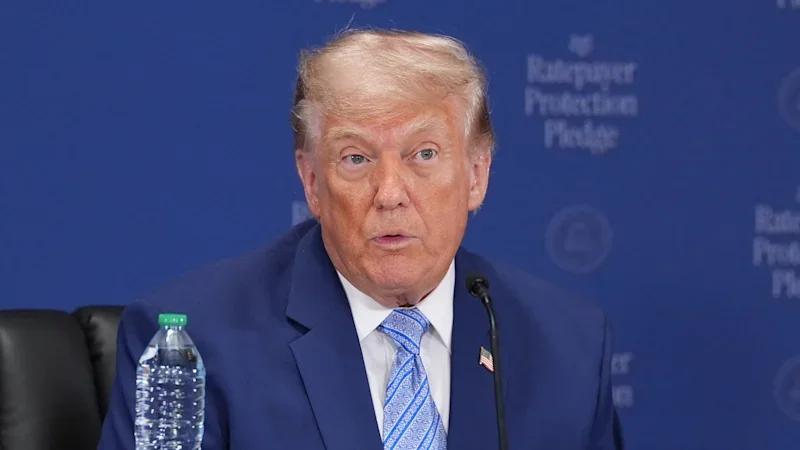
Speaking at an event spruiking data centres, Trump defended the ongoing war, noting it was far shorter and less deadly than American campaigns in Vietnam, Afghanistan and Iraq.
“We want to get it over with, and we want to do it right, but we have to do what we came to do,” he said.
Trump also attempted to impose a caveat on a deal signed with Saudi Arabia on Wednesday that provides US companies access to the kingdom’s civilian nuclear energy program – a controversial move worth billions of dollars for those American firms.
In a TruthSocial post, the president said the deal was conditional on Saudi Arabia joining the Abraham Accords, an initiative from Trump’s first term by which Arab nations normalise their relations with Israel.
Riyadh has long insisted that it must see meaningful progress towards a two-state solution for Palestine before it would consider joining the Accords.
The deal announced on Wednesday made no mention of Saudi Arabian policy on Israel changing, and White House press secretary Karoline Leavitt provided no further information at a briefing.
“If they don’t join the Abraham Accords, the deal is off,” she said of Trump’s position. “This agreement is still being worked out. It will eventually hopefully be finalised ... with the condition that the president spoke about this morning.”
With Reuters