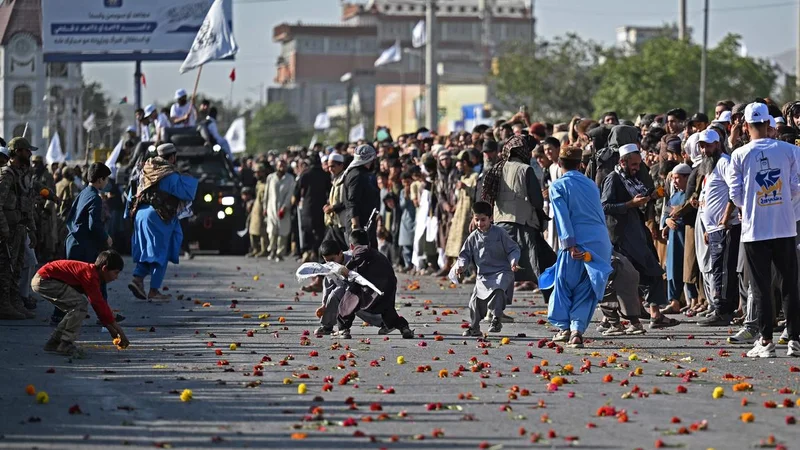
It has been five years since the Taliban returned to Kabul, bringing an end to the U.S.-led military presence in Afghanistan and the Islamic Republic that had ruled the country for two decades. On August 15, 2021, the Taliban entered the Afghan capital as President Ashraf Ghani fled the country. The collapse of the government marked the end of America’s longest war and the Taliban’s return to power.
Five years later, the Taliban remain in control of Afghanistan.
So, what has changed since 2021? The most immediate change was the end of the war between the Taliban and the then Afghan government.
The U.S. and NATO completed their military withdrawal in August 2021. Afghan security forces collapsed soon afterwards. The Taliban took control of Kabul and established themselves as the country’s de facto government.
There is now no nationwide armed conflict comparable to the fighting that took place before 2021. The Taliban control Afghanistan’s major government institutions, security forces and borders, and the armed Opposition groups have not been able to mount a significant nationwide challenge.
For many Afghans, the reduction in fighting has meant improved security. Roads that were previously affected by battles and checkpoints are generally more accessible, and the risk of being caught in clashes between the Taliban and government forces has fallen.
But that does not mean Afghanistan is free of violence.
The Islamic State-Khorasan Province, or the ISKP, remains active and has carried out attacks against civilians, Taliban officials and foreign nationals. The Taliban have also carried out operations against the group.
There are also growing tensions with Pakistan. The two countries have repeatedly accused each other of allowing militant groups to operate from their territory, while clashes along the border have become more frequent. Pakistan had been an important supporter of the Taliban for years, but since 2021, Islamabad’s concerns over militant attacks and border security have increasingly complicated relations with Kabul.
Restrictions on women
If the end of the war is one of the biggest changes since 2021, the restrictions on women and girls are another. The situation of women and girls has changed sharply since the Taliban returned to power.
When the Taliban took control in 2021, they said they would respect women’s rights under their interpretation of Islamic law. But restrictions on women have steadily increased.
Girls remain barred from secondary education and higher education. Women have been excluded from many areas of employment and face restrictions on movement and access to public spaces. The restrictions have affected almost every aspect of women’s participation in public life.
The education ban has also created a longer-term problem. Girls who are unable to complete school cannot easily move on to university or professional training. This means fewer women will enter professions such as medicine, teaching, journalism and public administration, says Zan times, an exiled media organisation led by Afghan women.
Economic picture
The economic picture is a bit complicated. Before the 2021 takeover, international aid accounted for a significant part of government spending and economic activity. The withdrawal of foreign troops and the sudden reduction in aid created a major economic shock.
There were fears that the Afghan economy could collapse but that did not happen.
The Taliban have increased domestic revenue collection and have tried to expand trade with neighbouring countries. The regime has also invested in infrastructure and attempted to increase economic activity within the country.
Afghanistan has therefore achieved a degree of economic stability since the severe crisis that followed the Taliban takeover. But economic stability should not be confused with economic recovery.
Poverty remains widespread, unemployment remains a major problem and humanitarian assistance continues to be important for millions of Afghans. The country is also dealing with the return of large numbers of Afghans from Pakistan and Iran. Their arrival has created additional pressure on housing, employment and public services.
The Taliban regime has not received widespread international recognition. Most countries continue to avoid formally recognising the Taliban as Afghanistan’s legitimate government. The main concerns include restrictions on women, the absence of an inclusive political system and questions about terrorism and human rights.
At the same time, countries have increasingly had to deal with the Taliban because they control Afghanistan.
Russia has formally recognised the Taliban regime. China and the UAE have accepted Taliban-appointed ambassadors, while several Western governments have maintained contact with Taliban officials.
Ties with India
India has followed a cautious but increasingly pragmatic approach towards the Taliban since they returned to power in August 2021.
New Delhi did not recognise the Taliban regime. But it has gradually expanded diplomatic engagement with Kabul. India reopened its diplomatic mission in Kabul in 2022 and continued providing humanitarian assistance, including food, medicines and other supplies.
The engagement became more significant in 2025. In October, Taliban Foreign Minister Amir Khan Muttaqi visited New Delhi — the first official visit to India by a senior Taliban leader since the group returned to power. He met External Affairs Minister S. Jaishankar and held talks on political, economic and security issues.
Other Taliban officials followed. Taliban Commerce Minister Nooruddin Azizi visited India in November 2025 to discuss trade and investment, while Health Minister Noor Jalal Jalali visited in December to strengthen cooperation in healthcare.
Afghanistan remains important to India for several reasons. Security is one of the biggest concerns and Pakistan is another factor.
Five years after the Taliban returned to Kabul, the Taliban have demonstrated that they can maintain control of the state. But the country continues to face major challenges. The economy remains weak; humanitarian needs are high and security threats have not disappeared; relations with Pakistan have become difficult; and the restrictions on women and girls have significantly changed.
Published - August 21, 2026 06:00 am IST