First, Bill Howard surrendered his cellphone. Then he signed the nondisclosure agreement. He sat for an hour and a half that day on the Universal Pictures studio lot with a single paper copy of a script for an upcoming movie. He pored over it, alone, scribbling in the one notepad he was permitted, thinking about his craft. How would he bring his unique set of skills to bear on this particular project and help to make it a blockbuster?
Many a Hollywood elite has entered a sealed room to read a top-secret script. But Mr. Howard is not an A-list actor. He’s not a cinematographer or a CGI artist. What Mr. Howard makes is buckets.
Popcorn buckets — or, as they are more formally known, collectible concession vessels. These special-edition snack receptacles are designed for major movies and can sell for as much as $70. All the studios and theater chains want in on them, because for somewhat inexplicable reasons, they have become astonishingly lucrative. AMC Theatres estimates that this year, buckets will generate $100 million in revenue, nearly double the level of 2023. Cinemark Theatres, the country’s third-largest chain, says bucket sales helped its merchandise revenue increase 40 percent from 2024 to 2025.
“Seven years ago, this business effectively didn’t exist for AMC,” said Nels Storm, the company’s vice president of food and beverage product strategy. “I would never suggest that popcorn buckets are the reason people go to the movies, or that movie-themed merch is saving the industry, but over the last few years they’ve become a big part of the conversation around major releases.”
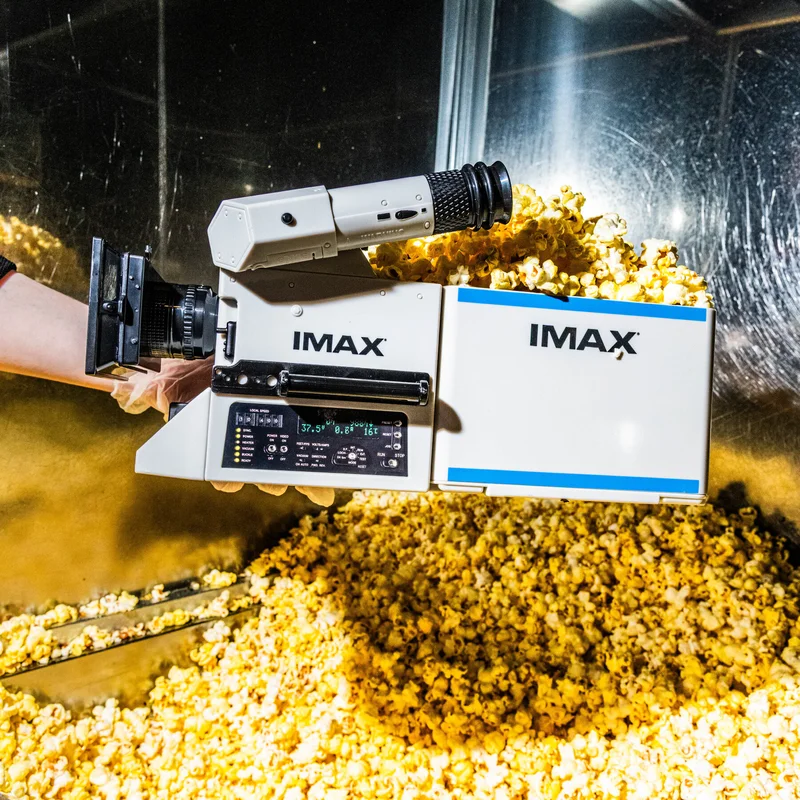
Mr. Howard, 71, is the chief executive at Snap Creative, which is based in Camarillo, Calif., and employs 55 people. Snap is behind two of this summer’s hottest buckets. Both are tied to the release of Christopher Nolan’s “The Odyssey”: One is a replica of the director’s IMAX camera, priced at $50, and the other is a 22-inch rendering of the Trojan horse, which sells for $70.
To make them, Mr. Howard and his team met early on with one of the film’s producers, Emma Thomas, to get a walk-through of the story beats. Then they approached IMAX with their ideas.