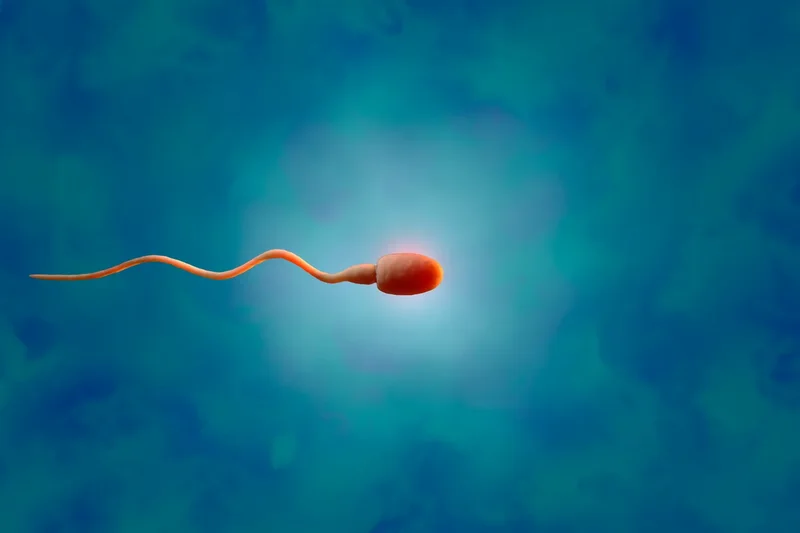
Although doctors have successfully transplanted everything from hearts to lungs to corneas, figuring out how to transfer testicular tissue, and have it work, has long eluded medicine. That barrier has now fallen, opening up new treatments for male infertility.
In a preprint paper that was posted online earlier this year and has not yet undergone peer review, a group of Belgian doctors described how they had used testicular material taken from a male patient with sickle cell disease, which can cause infertility, and reimplanted it in the same patient years later.
The transplant was decades in the making: the Belgian doctors began preserving testicular tissue from young patients undergoing treatments that had a high risk of causing sterility in 2002. To do so, they would remove one of the testicles, slice it into small fragments, and freeze them. Using cells from the same person who would ultimately be receiving the transplant was the only way to restore fertility down the line, says Herman Tournaye, the study’s co-author and an obstetrician-gynecologist at Vrije University of Brussels.
On supporting science journalism
If you're enjoying this article, consider supporting our award-winning journalism by subscribing. By purchasing a subscription you are helping to ensure the future of impactful stories about the discoveries and ideas shaping our world today.
“Implanting testes tissue from somebody else would not work,” he says. “If I would take out tissue of my testis and graft it in your testis, you would reject it. Maybe it would survive with some immunotherapy or something like that. But the idea here is: we take from a boy the testes tissue and ... graph it back to the same individual so there is no problem of rejection.”
After the researchers first started freezing the testicular tissue, they spent years perfecting their technique in animal models. The subject, who had his tissue frozen in 2008, approached the team, saying he was ready to have children with his girlfriend.
During the ensuing operation, which took place in December 2024, the doctors thawed 11 of the fragments and grafted them into eight sites in the subject's scrotum. A year later, the team retrieved the grafts and found they had begun producing sperm cells.
The history of testicular transplantation is a long one, stretching back to at least 1913, when American doctor Victor Lespinasse attempted the procedure, installing thinly sliced testicles from cadavers into recipients in a bid to cure impotence. There have even been cases of a testicle being reattached after it was “traumatically amputated,” and in some cases, sperm production in the affected testicle was restored.
Although scientists have been able to get transplanted testicular tissue to make sperm in animals since before the beginning of the 21st century—and have even seen mice that underwent the procedure produce offspring—this is the first time the feat was pulled off in a human.
The results left Emilie Johnson, an associate professor of Urology at Northwestern University, who was not involved in the work, “cautiously optimistic.”
“They observed spermatogenesis, which was amazing, but they only got a couple little sperms,” she says. “Then the morphology was not totally normal,” which could affect the sperms’ ability to produce a successful fertilization.
The procedure has another drawback: the grafts were made in tissue that doesn’t connect with the normal passageways of ejaculation. That means that in order for the recipient to have children, his sperm would need to be collected via biopsy and then implanted into his partner through in vitro fertilization, Tournaye says.
“That is the only way out for him because there is no connection,” Tournaye says.
While that may sound like an expensive and complicated way to reproduce, Johnson observes that, compared with other procedures that cancer patients must undergo, it’s “relatively minor.”
And compared with the fertility procedures many people undergo to have children, she says, "this is relatively small.”
The patient was selected because his condition, unlike cancers such as leukemia, did not carry the risk of reimplanting malignant cells along with the transplant that could lead to a recurrence. But Tournaye says the procedure could be extended to cancer survivors in the future.
“There are lots of techniques by which, on a small piece of tissue that we have been freezing, we can check whether, in the case of leukemia, there would be cells like that,” he says.