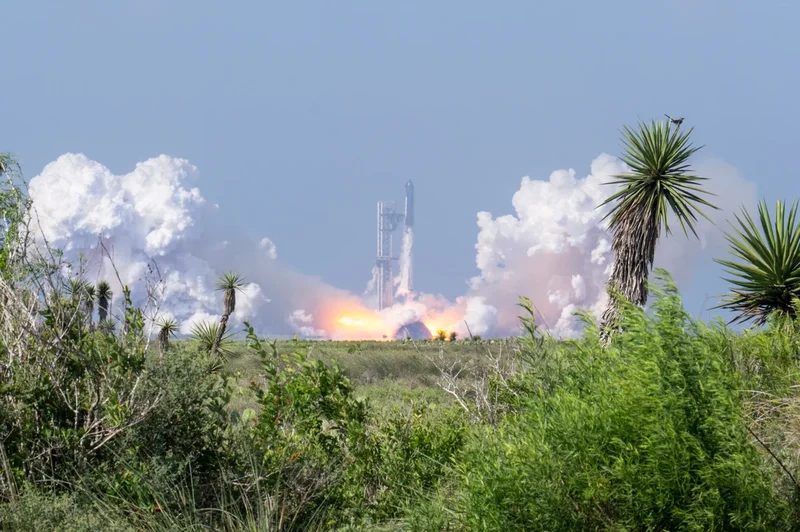
Environmental groups are suing the U.S. government over a proposed land deal with SpaceX. If approved, the deal will grant SpaceX hundreds of acres in a wildlife refuge in South Texas in exchange for slightly smaller area of nearby private land.
In a lawsuit filed last month, conservation advocates alleged that the deal would violate federal law and harm plants and animals, including endangered ocelots, in the Lower Rio Grande Valley National Wildlife Refuge. The space company’s operations, including “bright lights, loud noise, and vehicle traffic,” as well as occasional rocket explosions, have sent “debris and shrapnel into surrounding lands,” the groups wrote in their complaint. The U.S. Fish and Wildlife Service, however, argues that the exchange would improve wildlife protections by making lands more connected.
The swap would trade 715 acres in the refuge near the company’s launch site in Starbase, Tex., for 683 acres of SpaceX-owned land next to a separate refuge, Laguna Atascosa National Wildlife Refuge, and within Starbase, court records show.
On supporting science journalism
If you're enjoying this article, consider supporting our award-winning journalism by subscribing. By purchasing a subscription you are helping to ensure the future of impactful stories about the discoveries and ideas shaping our world today.
On Monday, days ahead of SpaceX’s expected Starship Flight 13 launch, the groups asked a federal judge to pause the land deal to give time for the courts to weigh in. Today SpaceX is slated to launch its 13th test flight of the massive, 408-foot (124-meter) launch vehicle.
“SpaceX has caused the loss of access to public lands and beaches because of rocket launches like this one,” says Marc Fink, director of the Public Lands Law Center at the Center for Biological Diversity, a plaintiff in the case. “If this land exchange goes through, it will mean the permanent loss of public access to more than 700 acres of a cherished national wildlife refuge and a national historic landmark,” he says, referring to Palmito Ranch Battlefield, a National Historic Landmark and a Civil War battle site.
“These lands were acquired by our government to protect wildlife for future generations, not to serve the whims of a billionaire who wants to go to Mars,” he adds.
The government and SpaceX now have until August 10 to respond to the plaintiffs’ request for a judge to intervene, Fink says, with the judge’s decision to hold a hearing not expected until late August or early September.
The U.S. Department of Justice declined to comment on the case for this article. SpaceX didn't immediately respond to a request for comment from Scientific American.
Editor’s Note (7/23/26): This article was updated after posting to note that the Department of Justice declined to comment.